Britt Alec S, Huang Caitlyn, Huang Chao H
University of Kansas Comprehensive Cancer Center, Westwood, KS, United States.
Pembroke Hill High School, Kansas City, MO, United States.
Front Oncol. 2022 Nov 29;12:996554. doi: 10.3389/fonc.2022.996554. eCollection 2022.
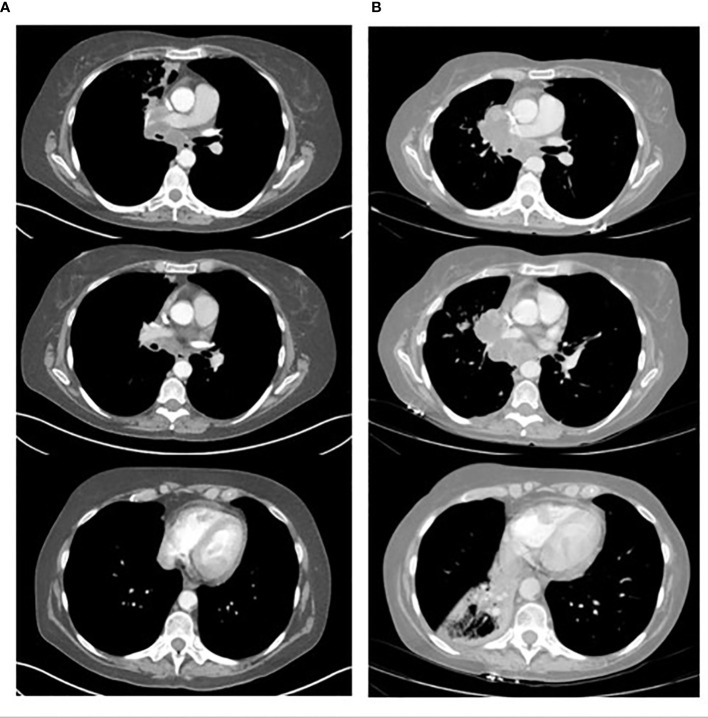
The therapeutic landscape for patients with non-small cell lung cancer (NSCLC) has dramatically evolved with the development and adoption of immune checkpoint inhibitors (ICI) as front-line therapy. These novel antibodies target the interactions in immunoregulatory pathways, between programmed death-1 (PD-1) and programmed death ligand-1 (PD-L1), or cytotoxic T-lymphocyte antigen 4 (CTLA-4) and B7, resulting in the activation of T cells and cytotoxic response to induce an immunologic response. ICIs have demonstrated significant survival benefits and sustained responses in the treatment of NSCLC leading to the long-term survival of up to 5 year. One unusual response to ICI is a phenomenon termed Hyperprogressive Disease (HYD), which occurs in a subset of patients for whom ICI therapy can induce rapid disease growth, which ultimately leads to poorer outcomes with an incidence rate ranging from 5 to 37% in NSCLC patients. Prior reviews demonstrated that HYD can be defined by rapid tumor progression, deterioration of patient's symptoms or new onset of disease. The mechanism of HYD could be related to genomic and tumor microenvironment changes and altered immune response. It will be important to establish a common definition of HYD for future research and clinical care.
随着免疫检查点抑制剂(ICI)作为一线疗法的开发和应用,非小细胞肺癌(NSCLC)患者的治疗格局发生了巨大变化。这些新型抗体靶向免疫调节途径中的相互作用,即程序性死亡-1(PD-1)与程序性死亡配体-1(PD-L1)之间,或细胞毒性T淋巴细胞抗原4(CTLA-4)与B7之间的相互作用,从而导致T细胞活化和细胞毒性反应,以诱导免疫反应。ICI在NSCLC治疗中已显示出显著的生存获益和持续反应,使患者能够实现长达5年的长期生存。ICI的一种不寻常反应是一种称为超进展性疾病(HYD)的现象,该现象发生在一部分患者中,ICI治疗可导致这些患者的疾病迅速进展,最终导致更差的预后,在NSCLC患者中的发生率为5%至37%。先前的综述表明,HYD可通过肿瘤快速进展、患者症状恶化或疾病新发来定义。HYD的机制可能与基因组和肿瘤微环境变化以及免疫反应改变有关。为未来的研究和临床护理建立HYD的通用定义将很重要。