Natural Resources Institute, University of Greenwich, London, UK.
Institute of Pest Management, Sokoine University of Agriculture, Morogoro, Tanzania.
Parasit Vectors. 2022 Dec 16;15(1):472. doi: 10.1186/s13071-022-05601-3.
Malaria vectors have a strong ecological association with rice agroecosystems, which can provide abundant aquatic habitats for larval development. Climate-adapted rice cultivation practices, such as the System of Rice Intensification (SRI), are gaining popularity in malaria-endemic countries seeking to expand rice production; however, the potential impact of these practices on vector populations has not been well characterised. In particular, SRI encourages the use of organic fertilisers (OFs), such as animal manures, as low-cost and environmentally friendly alternatives to industrially produced inorganic fertilisers. We therefore set out to understand the effects of two common manure-based OFs on the life history traits of two major African malaria vectors, Anopheles arabiensis and Anopheles gambiae sensu stricto (s.s.).
Larvae of An. arabiensis and An. gambiae s.s. were reared from first instar to emergence in water containing either cow or chicken dung at one of four concentrations (0.25, 0.5, 0.75, and 1.0 g/100 ml), or in a clean water control. Their life history traits were recorded, including survival, development rate, adult production, and adult wing length.
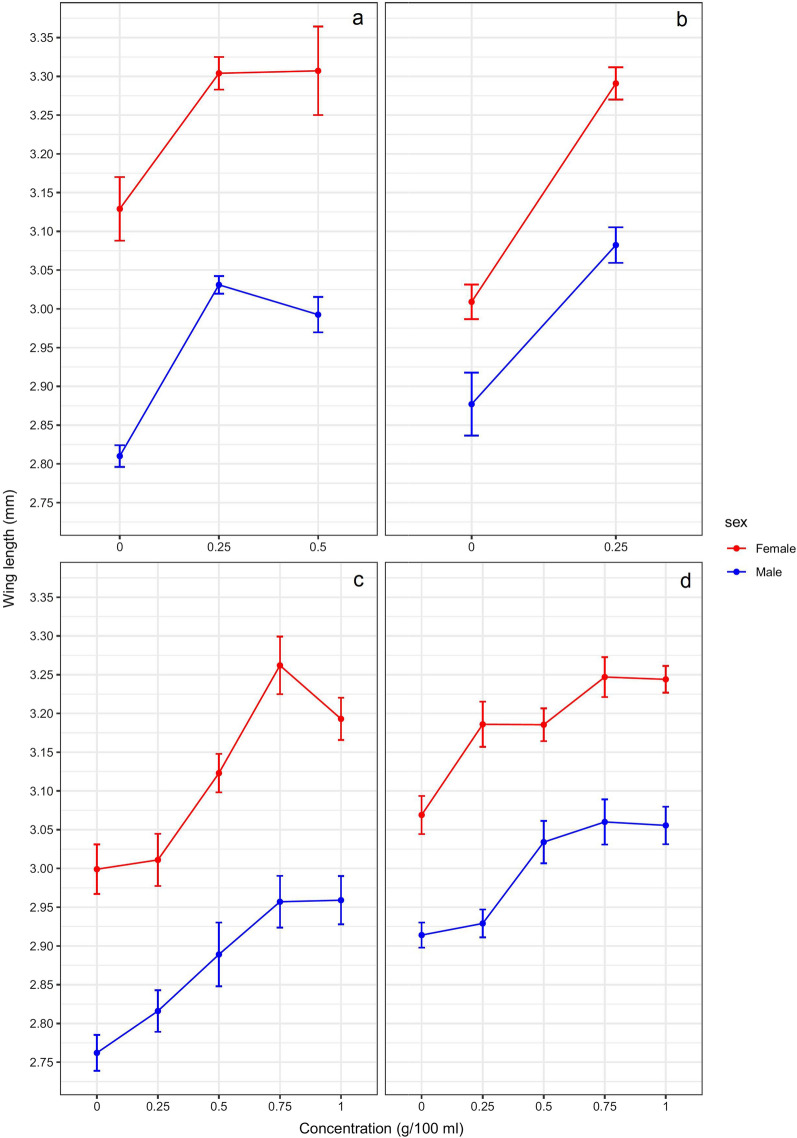
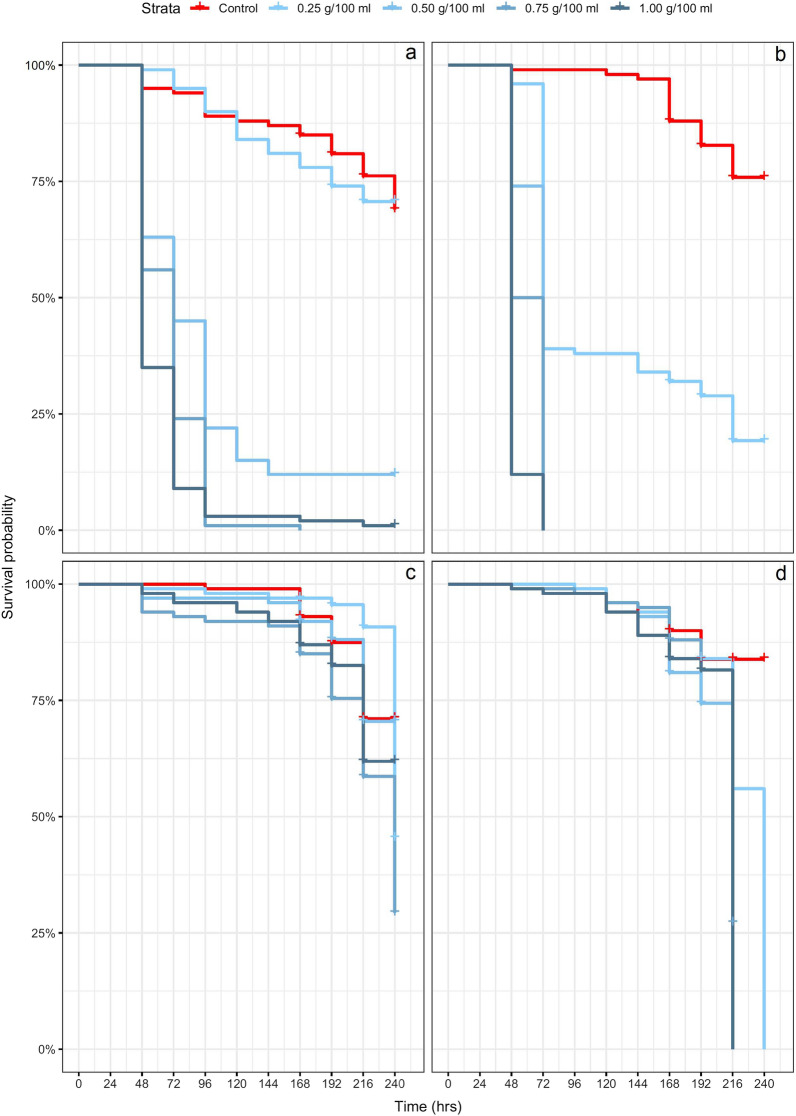
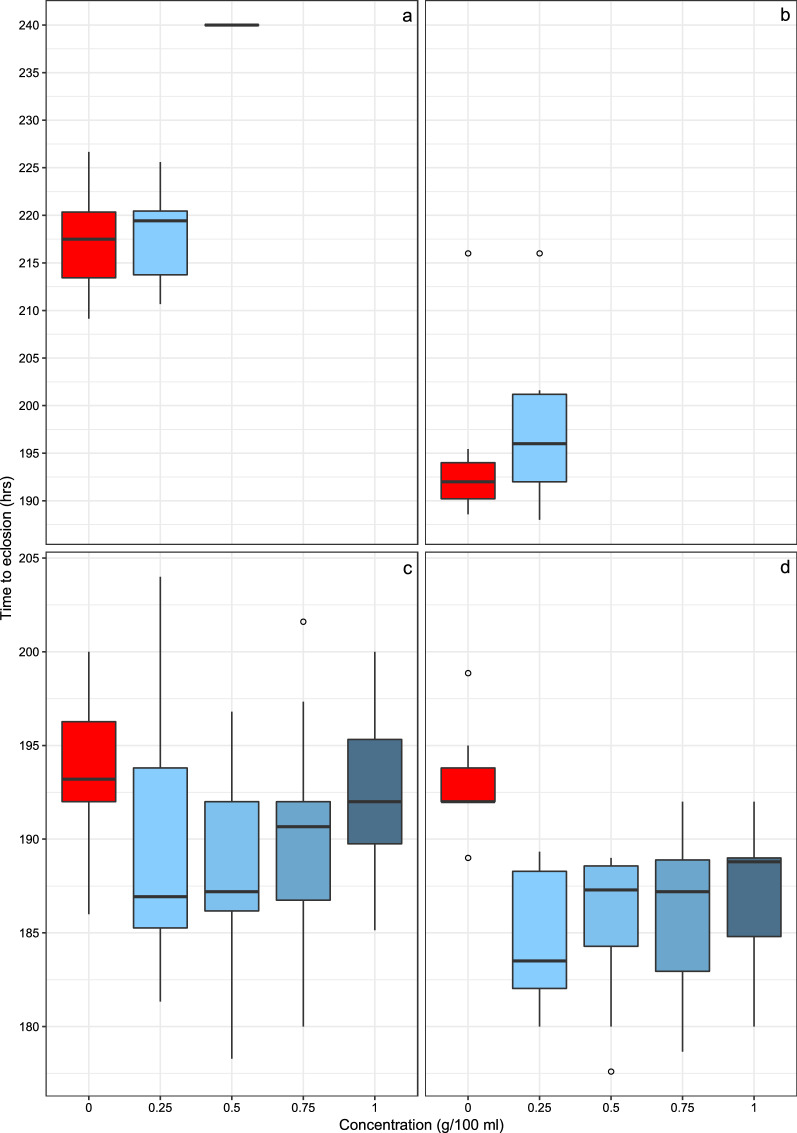
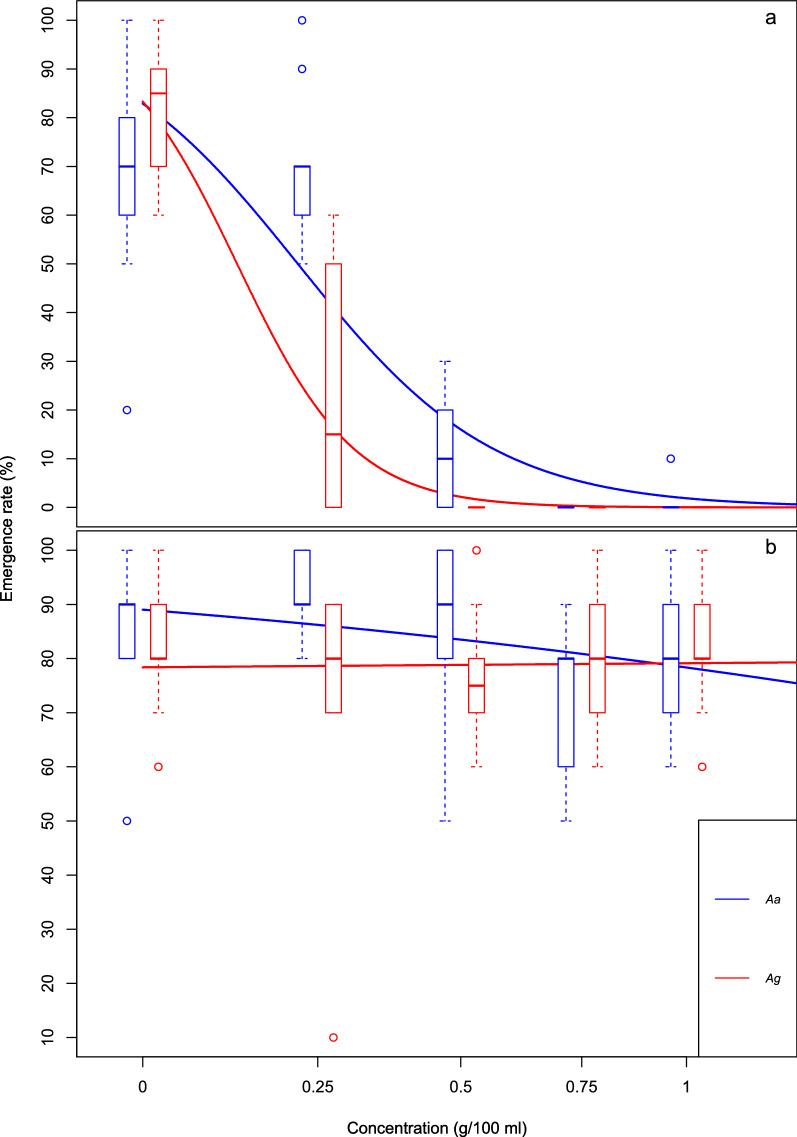
Exposure to cow dung significantly increased the development rate of An. gambiae s.s. independent of concentration, but did not affect the overall survival and adult production of either species. Chicken dung, however, significantly reduced survival and adult production in both species, with a greater effect as concentration increased. Interestingly, An. arabiensis exhibited a relative tolerance to the lowest chicken dung concentration, in that survival was unaffected and adult production was not reduced to the same extent as in An. gambiae s.s. The effects of chicken dung on development rate were less clear in both species owing to high larval mortality overall, though there was some indication that it may reduce development rate. Adult wing lengths in males and females increased with higher concentrations of both cow and chicken dung.
Our findings suggest that manure-based OFs significantly alter the life history traits of An. gambiae s.s. and An. arabiensis. In both species, exposure to cow dung may improve fitness, whereas exposure to chicken dung may reduce it. These findings have implications for understanding vector population dynamics in rice agroecosystems and may inform the use of OFs in SRI, and rice agriculture more widely, to avoid their adverse effects in enhancing vector fitness.
疟疾病媒与水稻农业生态系统有着密切的生态联系,水稻农业生态系统为幼虫发育提供了丰富的水生栖息地。适应气候的水稻种植实践,如强化水稻栽培法(SRI),在寻求扩大水稻产量的疟疾流行国家中越来越受欢迎;然而,这些实践对病媒种群的潜在影响尚未得到很好的描述。特别是,SRI 鼓励使用有机肥料(OFs),如动物粪便,作为低成本且对环境友好的工业生产无机肥料替代品。因此,我们着手了解两种常见的基于粪便的 OFs 对两种主要的非洲疟疾媒介,即阿拉伯按蚊和冈比亚按蚊亚种(s.s.)的生活史特征的影响。
从第一龄幼虫到成虫,在含有 0.25、0.5、0.75 和 1.0 g/100 ml 四种浓度之一的牛或鸡粪便或清洁水对照的水中,饲养阿拉伯按蚊和冈比亚按蚊 s.s. 的幼虫。记录它们的生活史特征,包括存活率、发育率、成虫产量和成虫翅长。
暴露于牛粪显著提高了冈比亚按蚊 s.s. 的发育率,而与浓度无关,但对两种物种的总体存活率和成虫产量没有影响。然而,鸡粪显著降低了两种物种的存活率和成虫产量,随着浓度的增加,影响更大。有趣的是,阿拉伯按蚊对最低浓度的鸡粪表现出相对的耐受性,因为存活率不受影响,成虫产量也没有像冈比亚按蚊 s.s. 那样减少。由于总体幼虫死亡率较高,两种物种中鸡粪对发育率的影响不太明显,但有一些迹象表明它可能会降低发育率。雌雄成虫的翅长随牛和鸡粪浓度的增加而增加。
我们的研究结果表明,基于粪便的 OFs 显著改变了冈比亚按蚊 s.s. 和阿拉伯按蚊的生活史特征。在两种物种中,暴露于牛粪可能会提高适应性,而暴露于鸡粪可能会降低适应性。这些发现对理解水稻农业生态系统中的病媒种群动态具有重要意义,并可能为在 SRI 中以及更广泛的水稻农业中使用 OFs 提供信息,以避免其对增强病媒适应性的不利影响。