Jelsig Anne Marie, Qvist Niels, Bertelsen Birgitte, Christensen Lise-Lotte, Grossjohan Hanne, Lautrup Charlotte Kvist, Sunde Lone, Tørring Pernille Mathiesen, Ljungman Ken, Christensen Louise Torp, Karstensen John Gásdal
Department of Clinical Genetics, University Hospital of Copenhagen, Rigshospitalet, Denmark.
Research Unit for Surgery, Odense University Hospital, Odense Denmark; University of Southern Denmark, Odense, Denmark.
Endosc Int Open. 2022 Dec 15;10(12):E1537-E1543. doi: 10.1055/a-1954-0522. eCollection 2022 Dec.
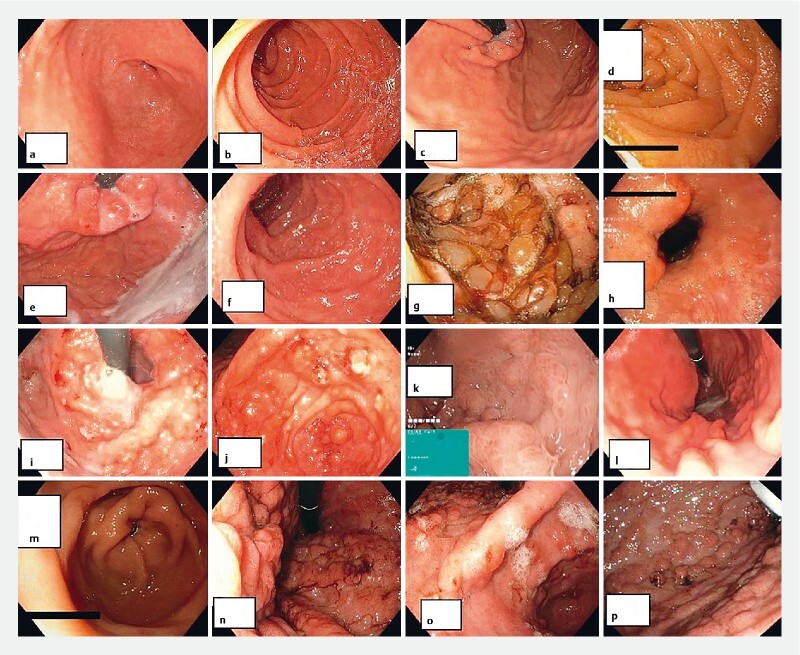
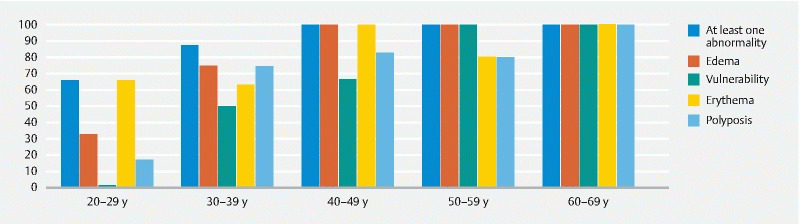
In most patients with juvenile polyposis Syndrome, it is possible to detect a pathogenic germline variant in or . It is well known that patients with a pathogenic variant in have a higher risk of gastric polyposis and gastric cancer compared to carriers, but the natural history of gastric involvement is poorly described. We aimed to systematically review endoscopic and histopathological gastric findings in Danish patients with pathogenic variants in This was a retrospective, cross-sectional study including endoscopic and histological gastric findings in all known Danish patients with pathogenic variants in . The patients were identified by data from various registries as well as from clinical genetic departments and laboratories. We identified 41 patients (2-72 years) with a pathogenic variant In 31 patients, we were able to retrieve information on upper gastrointestinal endoscopy. Eighty-seven percent had at least one gastric abnormality including erythema (72 %) and edema (72 %). Half of the patients also had vulnerability of the mucosa and 68 % had gastric polyposis. An increasing frequency of abnormalities were observed with increasing age. Gastric cancer was diagnosed in 5 % of the cases and 22 % had a gastrectomy mainly because of massive polyposis. This study showed that most patients with pathogenic variants have a distinct phenotype of the gastric mucosa, and with an increasing severity in the elderly patients. These findings provide new insights into the natural history of gastric manifestations in patients with pathogenic variants.
在大多数青少年息肉病综合征患者中,可以在[相关基因]中检测到致病的种系变异。众所周知,与[另一基因]携带者相比,[某一基因]存在致病变异的患者发生胃息肉和胃癌的风险更高,但胃受累的自然病程描述较少。我们旨在系统回顾丹麦[某一基因]存在致病变异患者的内镜和组织病理学胃部检查结果。这是一项回顾性横断面研究,纳入了丹麦所有已知的[某一基因]存在致病变异患者的内镜和组织学胃部检查结果。通过来自多个登记处以及临床遗传科室和实验室的数据识别出这些患者。我们确定了41例(2至72岁)存在致病[某一基因]变异的患者。在31例患者中,我们能够获取上消化道内镜检查的信息。87%的患者至少有一项胃部异常,包括红斑(72%)和水肿(72%)。一半的患者还存在黏膜易损性,68%的患者有胃息肉。随着年龄增长,异常情况的发生率增加。5%的病例诊断为胃癌,22%的患者接受了胃切除术,主要原因是大量息肉。这项研究表明,大多数[某一基因]存在致病变异的患者有明显的胃黏膜表型,且老年患者病情更严重。这些发现为[某一基因]存在致病变异患者胃部表现的自然病程提供了新的见解。