Geological Survey of Western Australia, 100 Plain Street, 6004, East Perth, WA, Australia.
School of Earth, Atmosphere and Environment, Monash University, Clayton, VIC, Australia.
Nat Commun. 2022 Dec 22;13(1):7893. doi: 10.1038/s41467-022-35208-2.
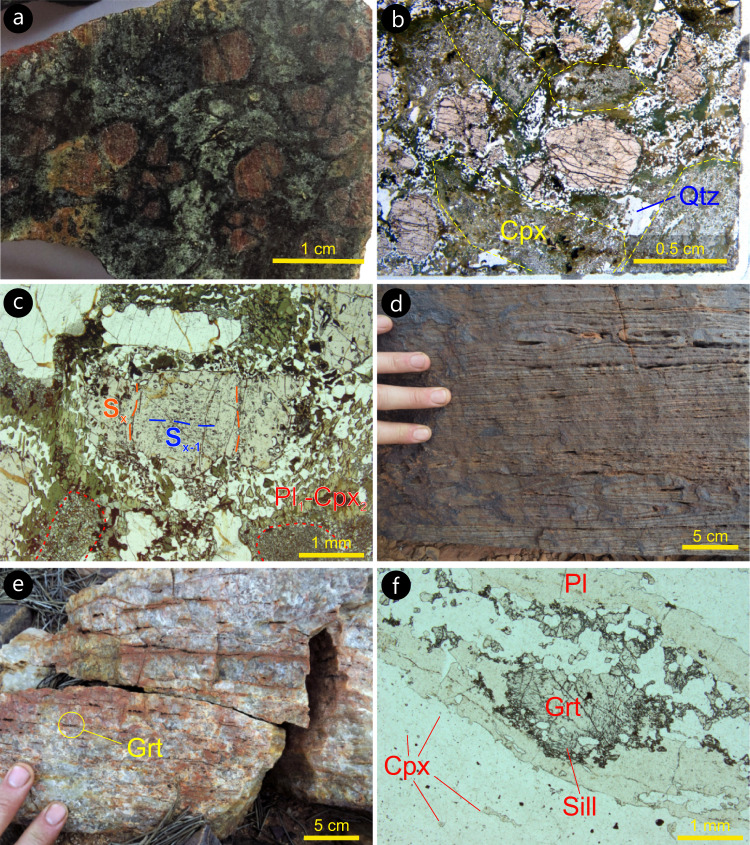
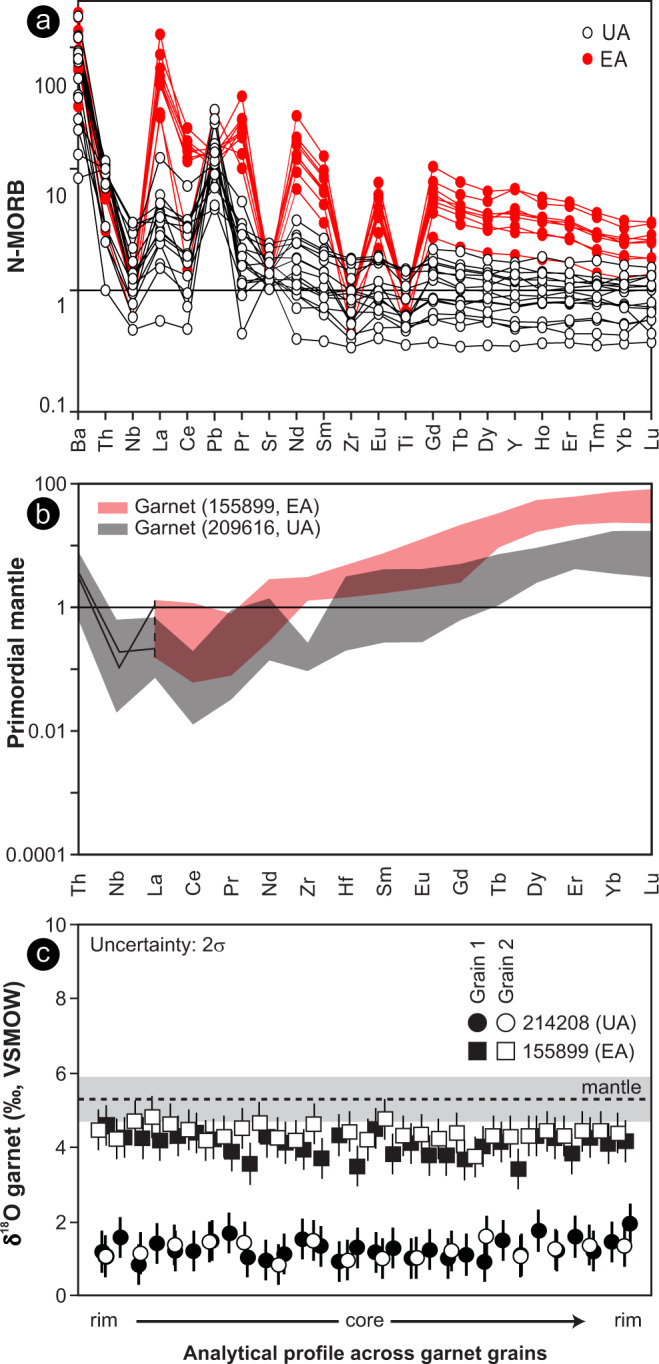
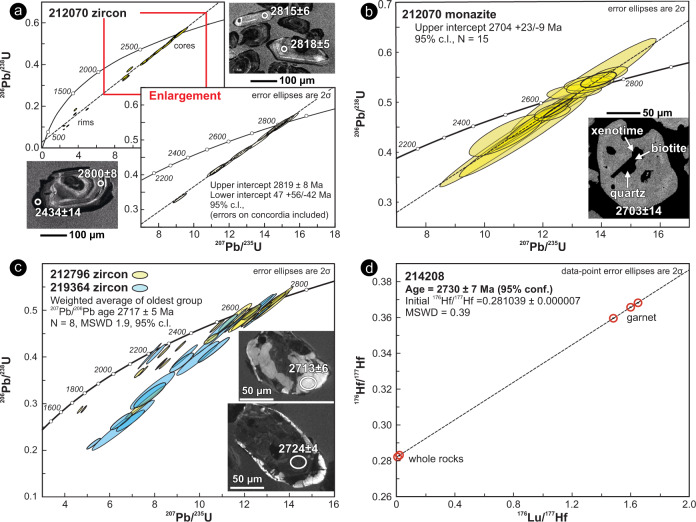
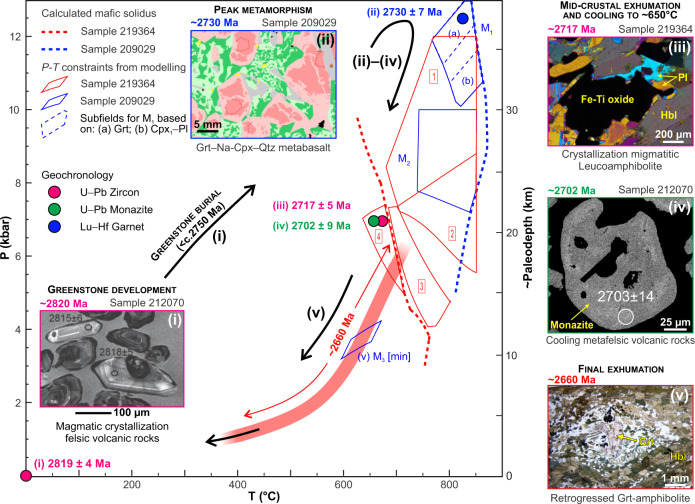
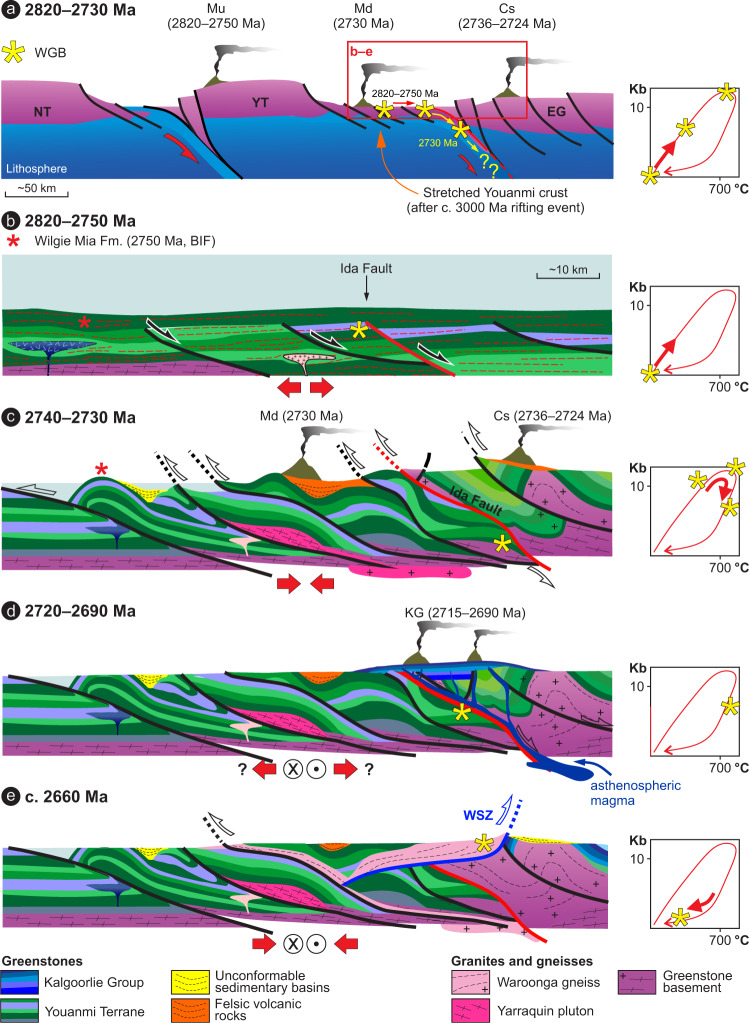
Converging lines of evidence suggest that, during the late Archean, Earth completed its transition from a stagnant-lid to a plate tectonics regime, although how and when this transition occurred is debated. The geological record indicates that some form of subduction, a key component of plate tectonics-has operated since the Mesoarchean, even though the tectonic style and timescales of burial and exhumation cycles within ancient convergent margins are poorly constrained. Here, we present a Neoarchean pressure-temperature-time (P-T-t) path from supracrustal rocks of the transpressional Yilgarn orogen (Western Australia), which documents how sea-floor-altered rocks underwent deep burial then exhumation during shortening that was unrelated to the episode of burial. Archean subduction, even if generally short-lived, was capable of producing eclogites along converging lithosphere boundaries, although exhumation processes in those environments were likely less efficient than today, such that return of high-pressure rocks to the surface was rare.
越来越多的证据表明,在太古宙晚期,地球完成了从停滞盖层到板块构造的转变,尽管这一转变是如何以及何时发生的仍存在争议。地质记录表明,某种形式的俯冲——板块构造的一个关键组成部分——自中太古宙以来就一直在运行,尽管古俯冲边界内埋藏和抬升循环的构造样式和时间尺度还没有得到很好的约束。在这里,我们提供了来自西澳大利亚伊尔岗造山带(Yilgarn orogen)的超壳岩石的新太古代压力-温度-时间(P-T-t)路径,该路径记录了海底变质岩如何在与埋藏事件无关的缩短过程中经历了深部埋藏和抬升。太古宙俯冲,即使是短暂的,也能够在汇聚的岩石圈边界产生榴辉岩,尽管这些环境中的抬升过程可能不如今天高效,因此高压岩石返回地表的情况很少见。