
热机械自蒸发(MFA)作为棕榈油的除臭工艺
Thermomechanical Autovaporization (MFA) as a Deodorization Process of Palm Oil.
作者信息
Jamoussi Bassem, Jablaoui Cherif, Hajri Amira K, Chakroun Radhouane, Al-Mur Bandar, Allaf Karim
机构信息
Department of Environmental Sciences, Faculty of Meteorology, Environment and Arid Land Agriculture, King Abdulaziz University, Jeddah 21589, Saudi Arabia.
Valorgrain Company-Technology Department "MFA Technology", 60220 Abancourt, France.
出版信息
Foods. 2022 Dec 7;11(24):3952. doi: 10.3390/foods11243952.
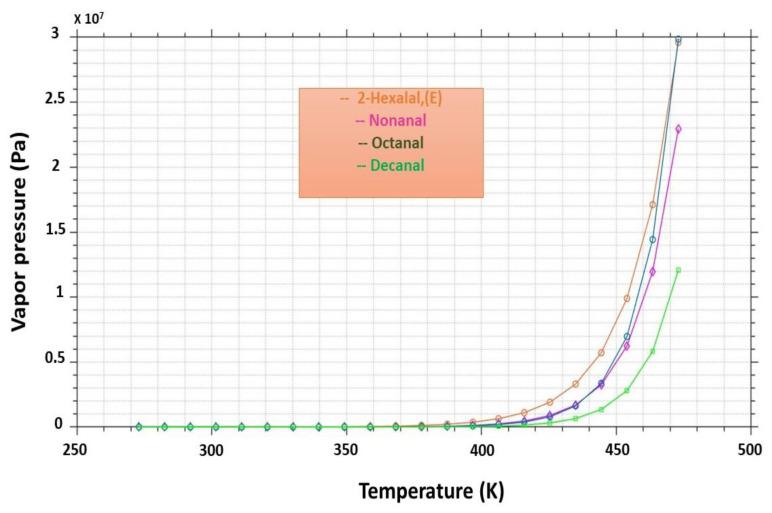
Throughout the vegetable oil industry, there is a focus on eradicating the volatile molecules affecting the aroma or taste of the crude oil, whether it is natural or derived from the extraction process. Refining aims to reduce these compounds to a level acceptable to the consumer. In addition, the famous conventional operation of deodorization calls for high levels of temperature depending on the boiling point used to remove the atmospheric pressure of each molecule. The process implies a vacuum level between 10 to 80 kPa absolute pressure, a temperature generally between 190 and 240 °C, and a duration of 2 to 3 h. These conditions necessarily (inevitably) lead to a decrease in the quality of refined oil. Recently, the application of the Multi-Flash Autovaporization "MFA" operation has shown the possibility of eradicating volatile molecules while adopting relatively low temperature and time levels. Despite the high boiling temperature of the volatile organic compounds (VOC), MFA leads to good efficiency in reducing VOCs and preserving oil quality. The main odorant compounds in the crude palm oil were E-2-Hexenal, heptanal, octanal, nonanal, and decanal. Specific literature can indicate precise boiling temperatures under atmospheric pressure. In addition, many experimental studies have explained the evolution of each molecule and shown how they depend on the operating parameters (inlet oil pressure from 200 to 450 kPa and from 5 and 30 s time of each cycle, and the number of cycles up to 7), and how the empirical mathematical models describe the MFA deodorization, estimate the efficiency of the whole process, and optimize the operating parameters. In this research, the thermodynamic data of absolute pressure volatility versus temperature was used to better identify the removal rate (up to around 87%) implied by an abrupt pressure drop to a vacuum of 5 kPa for = 450 kPa, t = 25 s/cycle, and the number of cycles (C = 6). The safeguarding of the fatty acid profile illustrated the maintenance of the oil quality.
在整个植物油行业中,重点在于消除影响原油香气或味道的挥发性分子,无论其是天然的还是源自提取过程。精炼旨在将这些化合物减少到消费者可接受的水平。此外,著名的传统脱臭操作需要根据用于去除每个分子大气压的沸点采用高温。该过程意味着绝对压力在10至80 kPa之间的真空度,温度通常在190至240°C之间,持续时间为2至3小时。这些条件必然(不可避免地)导致精炼油质量下降。最近,多闪蒸自动汽化“MFA”操作的应用表明,在采用相对较低的温度和时间水平时,有可能消除挥发性分子。尽管挥发性有机化合物(VOC)的沸点很高,但MFA在减少VOC和保持油质量方面具有良好的效率。粗棕榈油中的主要气味化合物是反式-2-己烯醛、庚醛、辛醛、壬醛和癸醛。具体文献可以表明常压下的精确沸点温度。此外,许多实验研究解释了每个分子的演变,并展示了它们如何取决于操作参数(进油压力从200至450 kPa,每个循环的时间从5至30秒,以及循环次数最多为7次),以及经验数学模型如何描述MFA脱臭、估计整个过程的效率并优化操作参数。在本研究中,使用绝对压力挥发性与温度的热力学数据来更好地确定在进油压力 = 450 kPa、每个循环时间t = 25秒以及循环次数(C = 6)的情况下,突然降至5 kPa真空度所带来的去除率(高达约87%)。脂肪酸谱的保护说明了油质量的维持。




 Zotero 插件