College of Food Engineering, Harbin University of Commerce, Harbin 150076, China.
Shandong Provincial Key Laboratory of Food and Fermentation Engineering, Shandong Food Ferment Industry Research & Design Institute, Qilu University of Technology (Shandong Academy of Sciences), Jinan 250013, China.
Molecules. 2022 Dec 19;27(24):9056. doi: 10.3390/molecules27249056.
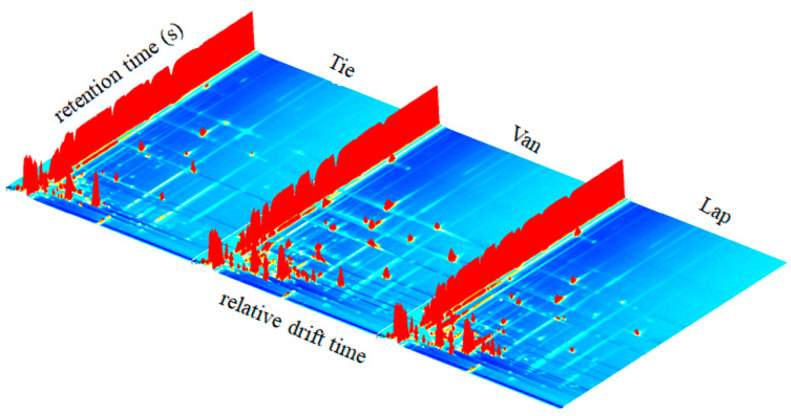
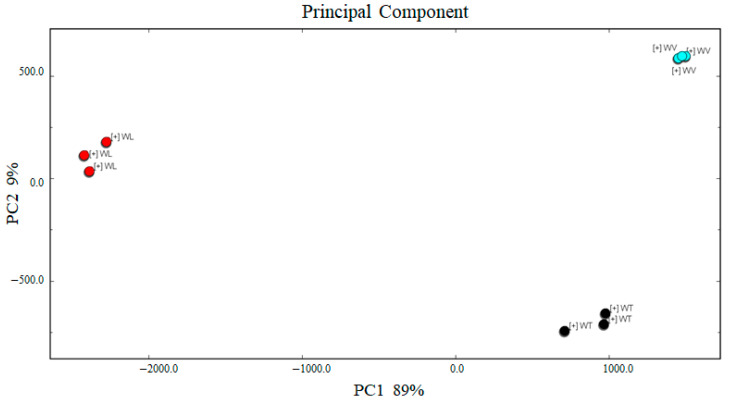
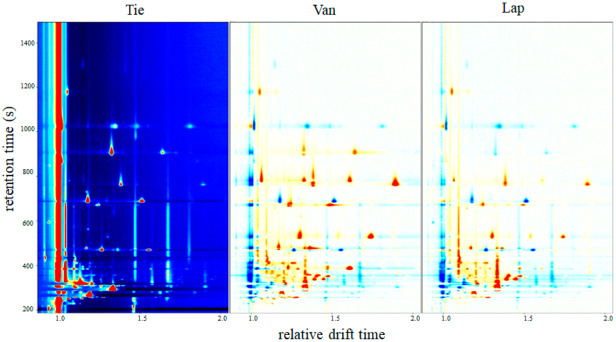
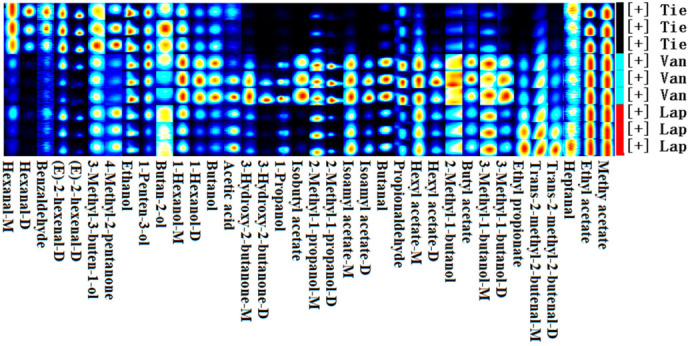
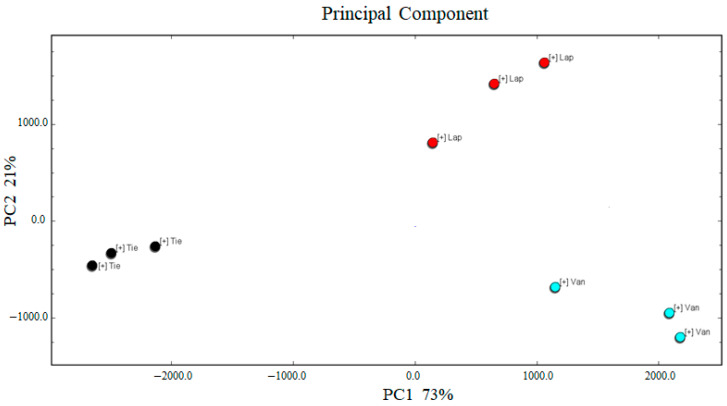
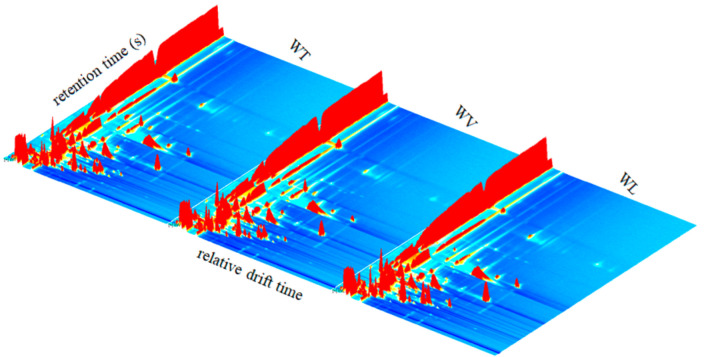
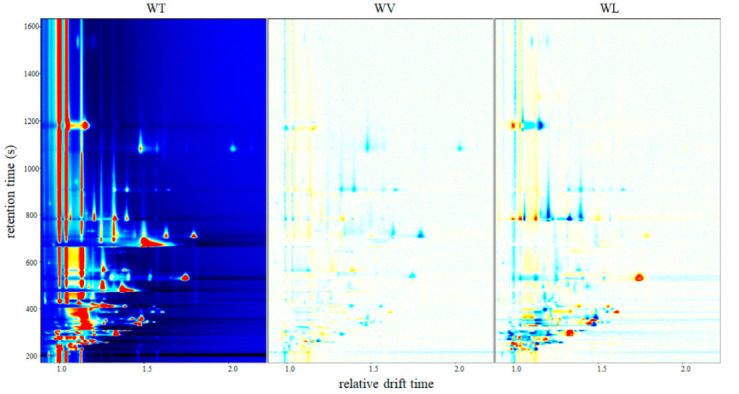
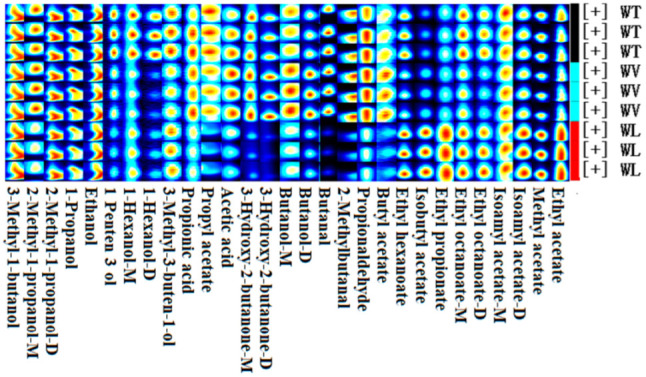
The aim of this research was to characterize differences and sources of volatile flavor compounds by using headspace-gas chromatography-ion mobility spectrometry (HS-GC-IMS) and principal component analysis (PCA). Three sweet cherry fruits from different cultivars (cv. Tie, Van, and Lap) and their wines that were produced by the same yeast were detected. The results showed that 27 flavor compounds were identified in cherry fruits, including 10 alcohols, 7 esters, 7 aldehydes, 2 ketones, and 1 organic acid. Twenty-three flavor compounds were identified in cherry wines, including nine esters, eight alcohols, three aldehydes, two organic acids, and one ketone. In cherry fruits, aldehydes, several alcohols, and one ketone were the most prevalent in cv. Tie, and the majority of esters and alcohols in cv. Van. After fermentation, ethanol, butanol, butanal, ethyl propionate, propionaldehyde, 3-hydroxy-2-butanone, and acetic acid increased, whereas 1-hexanol, 3-methyl-3-buten-1-ol, 1-penten-3-ol, ethyl acetate, methyl acetate, -2-hexenal and hexanal decreased. Few differences were detected in the type and content of volatile compounds in cherry wines from cv. Tieton (WT) and cv. Van (WV). Almost all aldehydes are derived from cherry fruits, which cannot be produced during wine-making, and other volatile compounds are almost all produced by . The volatile compounds of cherry wines were determined by row materials and fermentation cultures. Flavor fingerprints were established by HS-GC-IMS and PCA, which provided a theoretical foundation for the evaluation and improvement of flavor quality in cherry wine-making.
本研究旨在通过顶空-气相色谱-离子迁移谱(HS-GC-IMS)和主成分分析(PCA)来描述挥发性风味化合物的差异和来源。检测了来自三个不同品种(Tie、Van 和 Lap)的甜樱桃果实及其由相同酵母酿造的葡萄酒。结果表明,在樱桃果实中鉴定出 27 种风味化合物,包括 10 种醇类、7 种酯类、7 种醛类、2 种酮类和 1 种有机酸。在樱桃葡萄酒中鉴定出 23 种风味化合物,包括 9 种酯类、8 种醇类、3 种醛类、2 种有机酸和 1 种酮类。在樱桃果实中,醛类、几种醇类和 1 种酮类是 Tie 品种中最常见的,而酯类和醇类则是 Van 品种中最常见的。发酵后,乙醇、丁醇、丁醛、丙酸乙酯、丙醛、3-羟基-2-丁酮和乙酸增加,而 1-己醇、3-甲基-3-丁烯-1-醇、1-戊烯-3-醇、乙酸乙酯、乙酸甲酯、-2-己烯醛和己醛减少。WT 品种和 WV 品种的樱桃葡萄酒在挥发性化合物的类型和含量上几乎没有差异。几乎所有的醛类都是由樱桃果实产生的,在酿酒过程中不能产生,而其他挥发性化合物几乎都是由发酵菌产生的。樱桃葡萄酒的挥发性化合物由原料和发酵菌决定。HS-GC-IMS 和 PCA 建立了风味指纹图谱,为樱桃葡萄酒酿造过程中风味质量的评价和改进提供了理论基础。