Ramírez-Zamora Juan, Mussali-Galante Patricia, Rodríguez Alexis, Castrejón-Godínez María Luisa, Valencia-Cuevas Leticia, Tovar-Sánchez Efraín
Doctorado en Ciencias Naturales, Universidad Autónoma del Estado de Morelos, Av. Universidad 1001, Col. Chamilpa, Cuernavaca CP 62209, Mexico.
Laboratorio de Investigaciones Ambientales, Centro de Investigación en Biotecnología, Universidad Autónoma del Estado de Morelos, Av. Universidad 1001, Col. Chamilpa, Cuernavaca CP 62209, Mexico.
Plants (Basel). 2022 Dec 9;11(24):3441. doi: 10.3390/plants11243441.
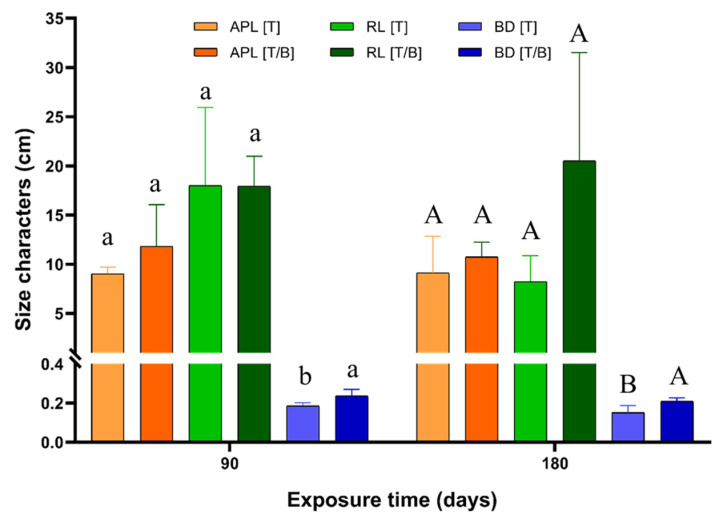
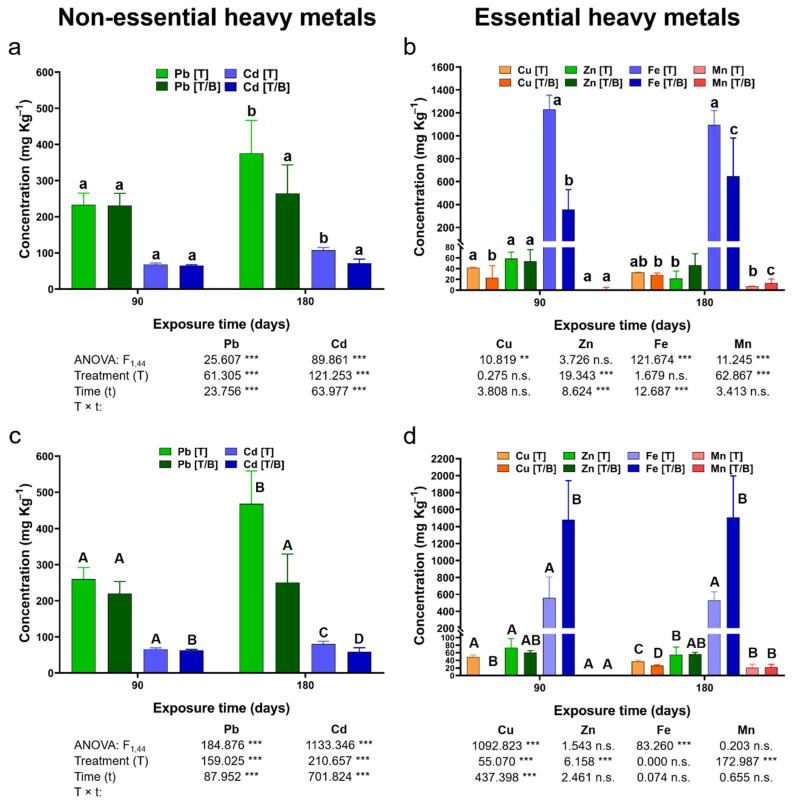
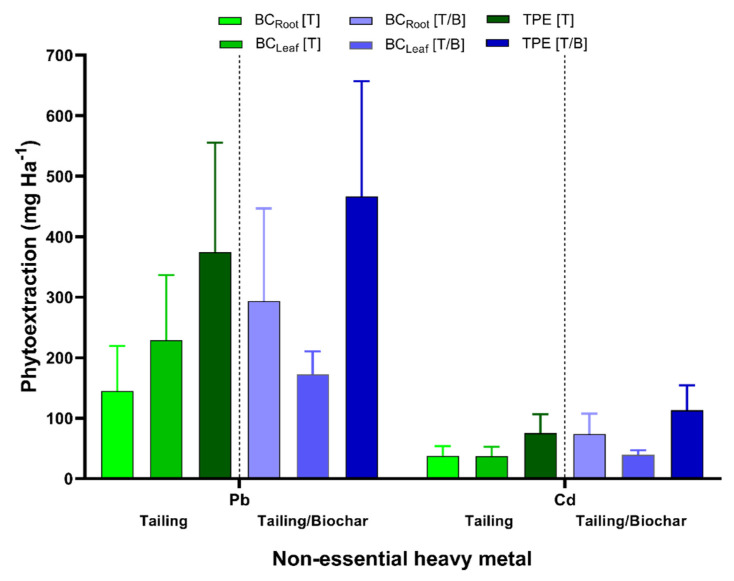
Phytoremediation is a cost-effective technique to remediate heavy metal (HM) polluted sites. However, the toxic effects of HM can limit plant establishment and development, reducing phytoremediation effectiveness. Therefore, the addition of organic amendments to mine wastes, such as biochar, improves the establishment of plants and reduces the bioavailability of toxic HM and its subsequent absorption by plants. can establish naturally in mine tailings and accumulate different HM; however, these individuals show morphological and genetic damage. In this study, the effect of biochar on HM bioaccumulation in roots and aerial tissues, HM translocation, morphological characters and plant growth were evaluated, after three and six months of exposure. Plants grown on mine tailings with biochar presented significantly higher values for most of the evaluated characters, in respect to plants that grew on mine tailing substrate. Biochar addition reduced the bioaccumulation and translocation of Cu, Pb, and Cd, while it favored the translocation of essential metals such as Fe and Mn. The addition of biochar from agro-industrial residues to mine tailings improves the establishment of plants with potential to phytoextract and phytostabilize metals from polluted soils. Using biochar and heavy metal accumulating plants constitutes an assisted phytostabilization strategy with great potential for HM polluted sites such as Cd and Pb.
植物修复是一种修复重金属污染场地的经济有效技术。然而,重金属的毒性作用会限制植物的定植和发育,降低植物修复效果。因此,向矿山废弃物中添加有机改良剂,如生物炭,可促进植物定植,并降低有毒重金属的生物有效性及其随后被植物吸收的程度。某些植物可在尾矿中自然生长并积累不同的重金属;然而,这些植株表现出形态和遗传损伤。在本研究中,评估了暴露3个月和6个月后生物炭对根系和地上组织中重金属生物积累、重金属转运、形态特征及植物生长的影响。与生长在尾矿基质上的植物相比,生长在添加生物炭尾矿上的植物在大多数评估特征上的值显著更高。添加生物炭减少了铜、铅和镉的生物积累和转运,同时有利于铁和锰等必需金属的转运。将农业工业残渣生物炭添加到尾矿中,可促进具有从污染土壤中植物提取和植物稳定化金属潜力的植物的定植。使用生物炭和重金属积累植物构成了一种辅助植物稳定化策略,对镉和铅等重金属污染场地具有巨大潜力。