Department of Environmental Health Sciences, University of California, Los Angeles 650 Charles Young Dr. S., 56-070 CHS Box 951772, Los Angeles, CA, 90095, United States.
Department of Research & Evaluation, Kaiser Permanente Southern California 100 S. Los Robles Ave., 5th Floor, Pasadena, CA 91101, United States.
Environ Int. 2023 Jan;171:107675. doi: 10.1016/j.envint.2022.107675. Epub 2022 Dec 2.
Recent evidence links ambient air pollution to COVID-19 incidence, severity, and death, but few studies have analyzed individual-level mortality data with high quality exposure models.
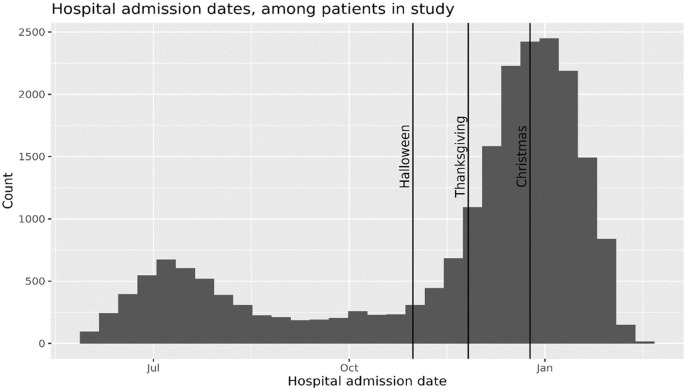
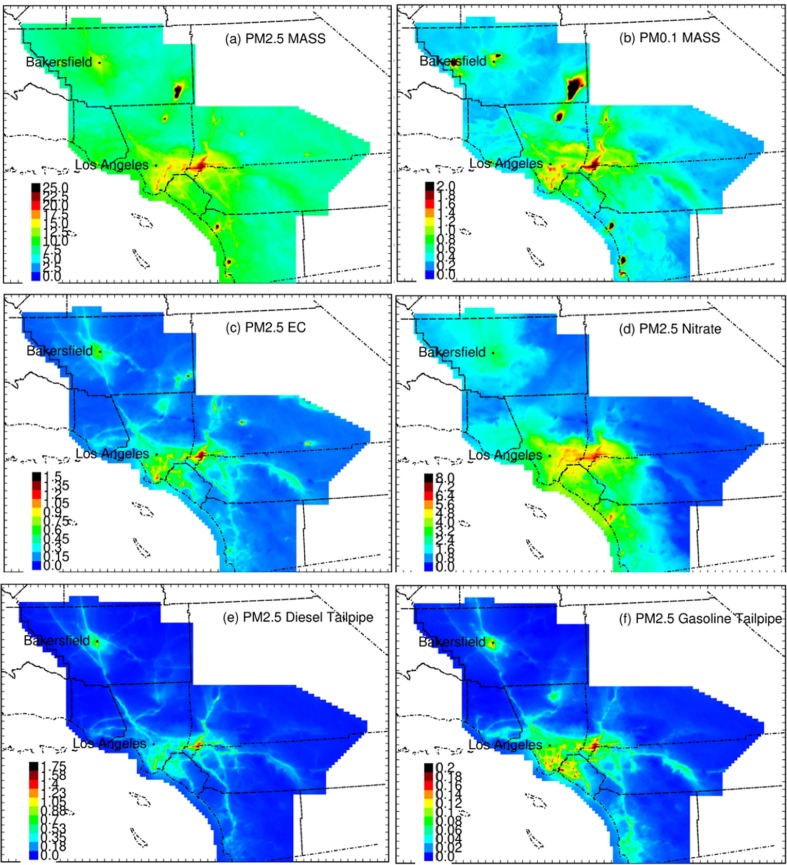
We sought to assess whether higher air pollution exposures led to greater risk of death during or after hospitalization in confirmed COVID-19 cases among patients who were members of the Kaiser Permanente Southern California (KPSC) healthcare system (N=21,415 between 06-01-2020 and 01-31-2022 of whom 99.85 % were unvaccinated during the study period). We used 1 km resolution chemical transport models to estimate ambient concentrations of several common air pollutants, including ozone, nitrogen dioxide, and fine particle matter (PM). We also derived estimates of pollutant exposures from ultra-fine particulate matter (PM), PM chemical species, and PM sources. We employed Cox proportional hazards models to assess associations between air pollution exposures and death from COVID-19 among hospitalized patients.
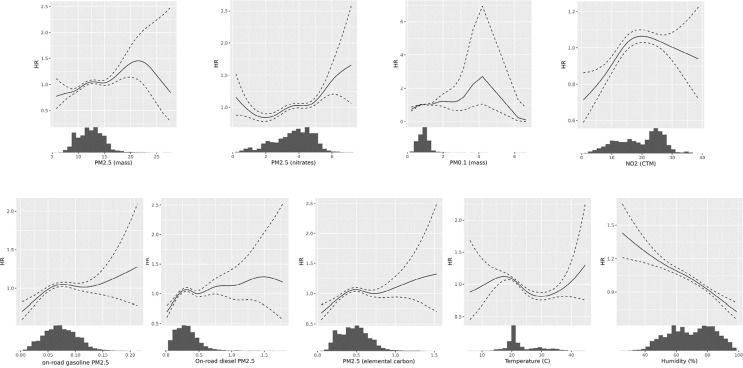
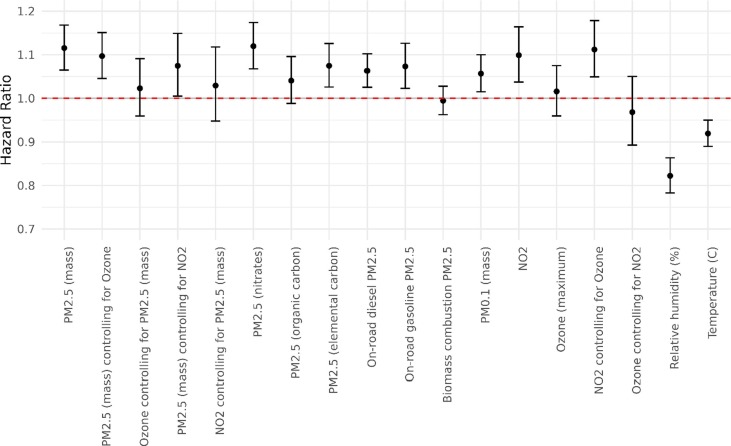
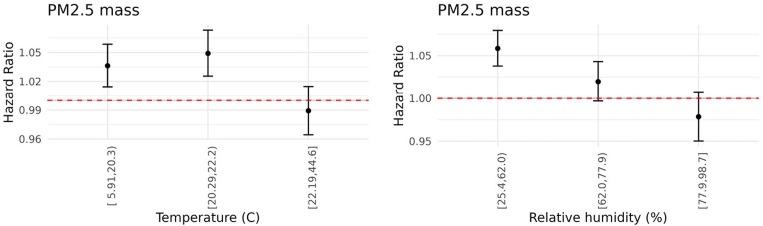
We found significant associations between COVID-19 death and several air pollution exposures, including: PM mass, PM mass, PM nitrates, PM elemental carbon, PM on-road diesel, and PM on-road gasoline. Based on the interquartile (IQR) exposure increment, effect sizes ranged from hazard ratios (HR) = 1.12 for PM mass and PM nitrate to HR ∼ 1.06-1.07 for other species or source markers. Humidity and temperature in the month of diagnosis were also significant negative predictors of COVID-19 death and negative modifiers of the air pollution effects.
Air pollution exposures and meteorology were associated the risk of COVID-19 death in a cohort of patients from Southern California. These findings have implications for prevention of death from COVID-19 and for future pandemics.
最近的证据表明,环境空气污染与 COVID-19 的发病率、严重程度和死亡率有关,但很少有研究使用高质量的暴露模型分析个体水平的死亡率数据。
我们试图评估在 Kaiser Permanente Southern California(KPSC)医疗保健系统的 COVID-19 确诊患者住院期间或出院后,较高的空气污染暴露是否会导致更高的死亡风险(研究期间有 21415 例患者,他们在研究期间 99.85%未接种疫苗)。我们使用 1 公里分辨率的化学输送模型来估计几种常见空气污染物(包括臭氧、二氧化氮和细颗粒物)的环境浓度。我们还从超细颗粒物(PM)、PM 化学物质和 PM 来源中得出了污染物暴露的估计值。我们使用 Cox 比例风险模型评估了空气污染暴露与住院患者 COVID-19 死亡之间的关系。
我们发现 COVID-19 死亡与几种空气污染暴露之间存在显著关联,包括:PM 质量、PM 硝酸盐、PM 元素碳、PM 道路柴油和 PM 道路汽油。基于四分位距(IQR)的暴露增量,效应大小范围从 PM 质量和 PM 硝酸盐的危险比(HR)为 1.12 到其他物质或源标志物的 HR 约为 1.06-1.07。诊断当月的湿度和温度也是 COVID-19 死亡的显著负预测因子,也是空气污染效应的负调节剂。
空气污染暴露和气象条件与南加州患者 COVID-19 死亡风险有关。这些发现对预防 COVID-19 死亡和未来的大流行具有重要意义。