Rehan Syeda Tayyaba, Khan Zayeema, Mansoor Hussain, Shuja Syed Hasan, Hasan Mohammad Mehedi
Dow University of Health Sciences, Karachi, Pakistan.
Department of Biochemistry and Molecular Biology, Faculty of Life Science, Mawlana Bhashani Science and Technology University, Tangail, 1902, Bangladesh.
Ann Med Surg (Lond). 2022 Nov 5;84:104820. doi: 10.1016/j.amsu.2022.104820. eCollection 2022 Dec.
Alopecia Areata (AA) is found to be the most prevalent autoimmune disorder amongst the general population. It was observed that AA patients are at a significantly higher risk of developing obstructive sleep apnea and non-apneic insomnia than patients without AA. On the contrary, patients with identified sleep disorders were found to be more prone to developing AA as compared to the patients without sleep disorders. This study, therefore, validated the hypothesis of a bidirectional association between AA and sleep disorders.
In this systematic review, our primary aim is to assess the prevalence of sleep disorders in Alopecia Areata patients while also assessing the inverse relationship between the two disorders.
A literature search of MEDLINE, Google Scholar and Cochrane CENTRAL was performed from their inception to April 2022. Articles were selected for inclusion if they met the following eligibility criteria: (a) Studies enrolling patients having alopecia areata to assess the sleep quality. (b) Studies assessing the risks of alopecia areata in individuals with sleep disorder (c) Studies evaluating the bidirectional association between alopecia areata and sleep quality. Case reports, commentaries, and editorials were excluded. The outcomes of recruited studies were qualitatively synthesised and study findings are summarized in the results section and tabulated in summary tables.
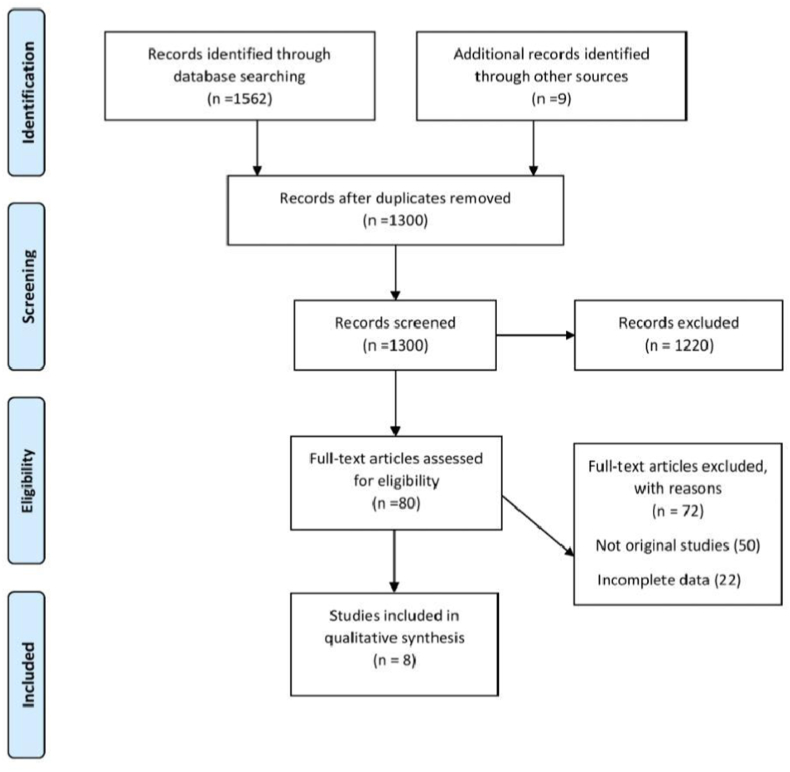
Our search on electronic databases yielded 1562 articles. After abstract screening and full text review, 5 cross sectional and 3 cohort studies are included in this systematic review. Cases with PSQI scores higher than 5 and 6 were found to be in greater numbers amongst the AA patient population when compared to the control population ( < 0.001). Moreover, studies showed that patients with sleep disorders were greatly predisposed to develop subsequent AA as compared to patients without sleep disorders (aHR 4.70; 95% CI 3.99-5.54) (P < 0.0001).
The findings from our results display a significant bi-directional cause-effect relation between AA and sleep disorders. However, more large-scale observational studies on this subject are required to further validate our findings.
斑秃(AA)是普通人群中最常见的自身免疫性疾病。据观察,与无斑秃的患者相比,斑秃患者患阻塞性睡眠呼吸暂停和非呼吸暂停性失眠的风险显著更高。相反,与无睡眠障碍的患者相比,已确诊睡眠障碍的患者更容易患斑秃。因此,本研究验证了斑秃与睡眠障碍之间双向关联的假设。
在本系统评价中,我们的主要目的是评估斑秃患者睡眠障碍的患病率,同时评估这两种疾病之间的反向关系。
对MEDLINE、谷歌学术和考克兰中心对照试验注册库进行文献检索,检索时间从建库至2022年4月。如果文章符合以下纳入标准,则选择纳入:(a)纳入斑秃患者以评估睡眠质量的研究。(b)评估睡眠障碍个体患斑秃风险的研究。(c)评估斑秃与睡眠质量之间双向关联的研究。病例报告、评论和社论被排除。对纳入研究的结果进行定性综合,并在结果部分总结研究结果,并汇总在汇总表中。
我们在电子数据库中的检索产生了1562篇文章。经过摘要筛选和全文审查,本系统评价纳入了5项横断面研究和3项队列研究。与对照组相比,斑秃患者中匹兹堡睡眠质量指数(PSQI)得分高于5分和6分的病例数量更多(P<0.001)。此外,研究表明,与无睡眠障碍的患者相比,有睡眠障碍的患者患后续斑秃的可能性更大(调整后风险比4.70;95%置信区间3.99 - 5.54)(P<0.0001)。
我们的研究结果显示斑秃与睡眠障碍之间存在显著的双向因果关系。然而,需要更多关于该主题的大规模观察性研究来进一步验证我们的发现。