Université Clermont Auvergne, CNRS, LaPSCo, F-63000, Clermont-Ferrand, France.
Aix-Marseille University, Aix-en-Provence, France.
PLoS One. 2023 Jan 4;18(1):e0279180. doi: 10.1371/journal.pone.0279180. eCollection 2023.
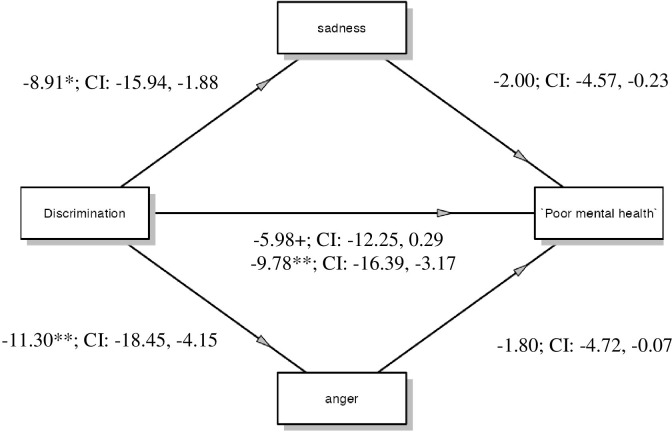
Despite the potential detrimental consequences for individuals' health and discrimination from covid-19 symptoms, the outcomes have received little attention. This study examines the relationships between having personally experienced discrimination based on the symptoms of covid-19 (during the first wave of the pandemic), mental health, and emotional responses (anger and sadness). It was predicted that covid-19 discrimination would be positively related to poor mental health and that this relationship would be mediated by the emotions of anger and sadness.
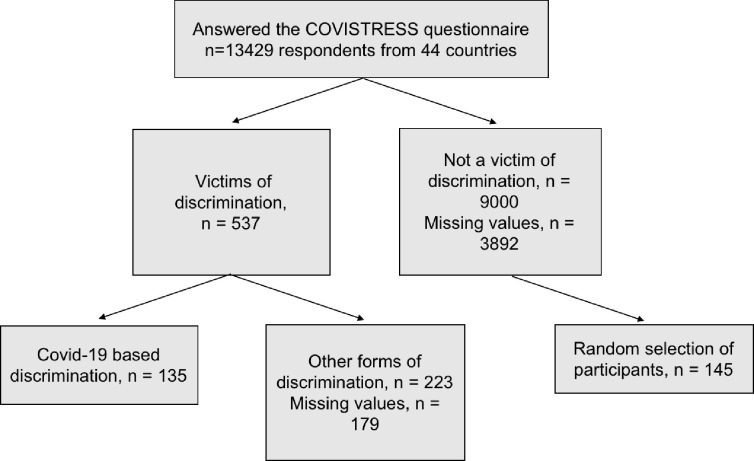
The study was conducted using an online questionnaire from January to June 2020 (the Covistress network; including 44 countries). Participants were extracted from the COVISTRESS database (Ntotal = 280) with about a half declaring having been discriminated due to covid-19 symptoms (N = 135). Discriminated participants were compared to non-discriminated participants using ANOVA. A mediation analysis was conducted to examine the indirect effect of emotional responses and the relationships between perceived discrimination and self-reported mental health.
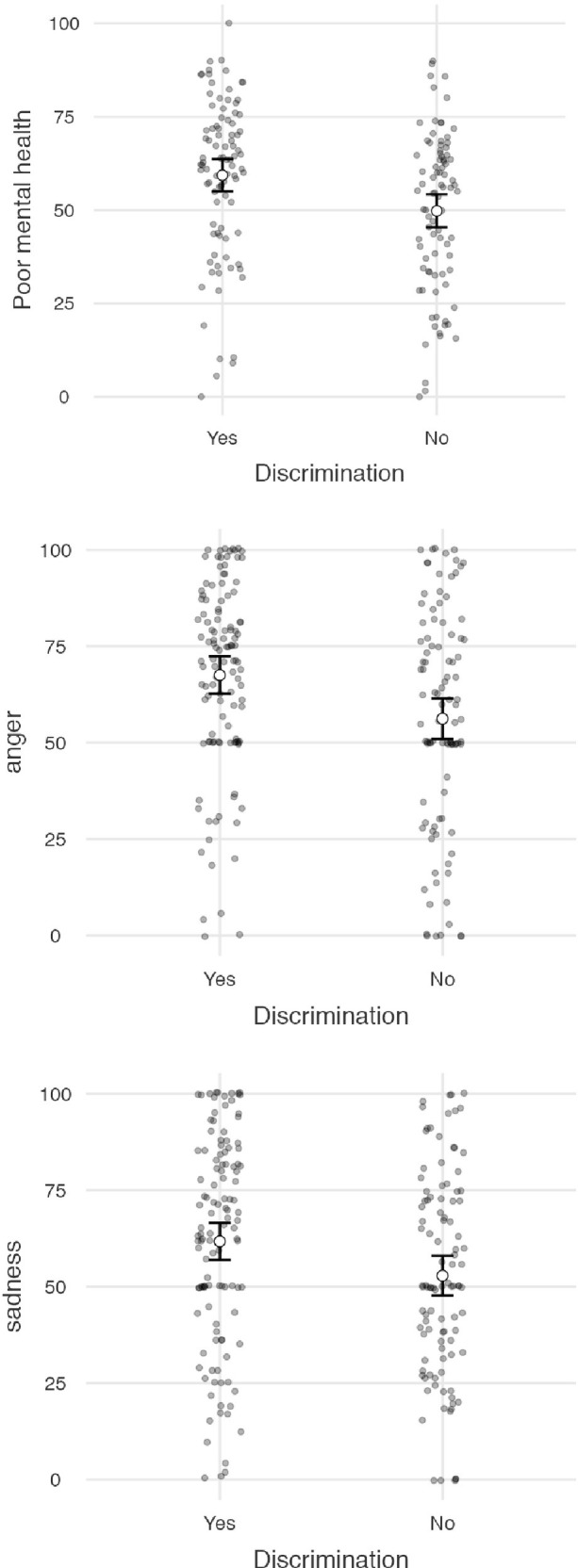
The results indicated that individuals who experienced discrimination based on the symptoms of covid-19 had poorer mental health and experienced more anger and sadness. The relationship between covid-19 personal discrimination and mental health disappeared when the emotions of anger and sadness were statistically controlled for. The indirect effects for both anger and sadness were statistically significant.
This study suggests that the covid-19 pandemic may have generated discriminatory behaviors toward those suspected of having symptoms and that this is related to poorer mental health via anger and sadness.
尽管新冠病毒症状可能对个人健康和歧视产生潜在的不利影响,但这些后果尚未得到足够关注。本研究探讨了基于新冠病毒症状(在疫情第一波期间)的个人经历歧视、心理健康和情绪反应(愤怒和悲伤)之间的关系。预测新冠病毒歧视与心理健康状况不佳呈正相关,而这种关系会被愤怒和悲伤情绪所中介。
该研究于 2020 年 1 月至 6 月期间通过在线问卷进行(Covistress 网络,包括 44 个国家)。参与者从 COVISTRESS 数据库中提取(Ntotal = 280),其中约有一半表示因新冠病毒症状而受到歧视(N = 135)。歧视组与非歧视组之间采用方差分析进行比较。采用中介分析检验情绪反应的间接效应,以及感知歧视与自我报告心理健康之间的关系。
结果表明,因新冠病毒症状而受到歧视的个体心理健康状况较差,愤怒和悲伤情绪体验更多。当愤怒和悲伤情绪被统计控制时,新冠病毒个人歧视与心理健康之间的关系消失。愤怒和悲伤的间接效应均具有统计学意义。
本研究表明,新冠大流行可能引发了对疑似有症状者的歧视行为,这种歧视与愤怒和悲伤等情绪有关,进而与心理健康状况不佳相关。