Department of Neurology, University Hospital Würzburg, Josef-Schneider-Straße 11, 97080, Würzburg, Germany.
Department of Neurology, Klinikum Main-Spessart Lohr, Lohr, Germany.
J Neuroinflammation. 2023 Jan 4;20(1):4. doi: 10.1186/s12974-022-02674-w.
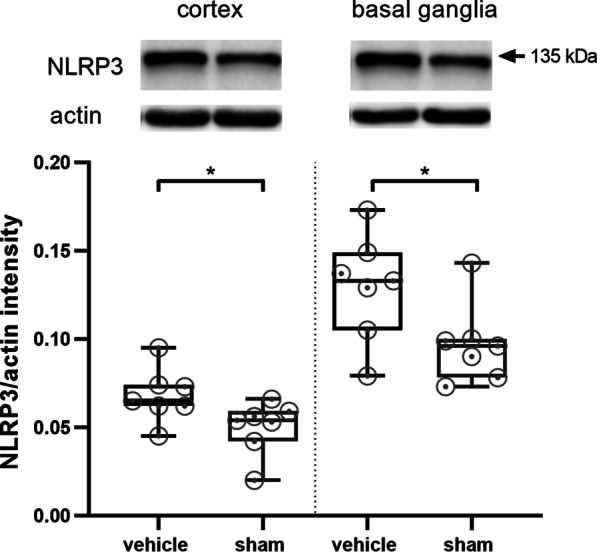
Ischemic stroke immediately evokes a strong neuro-inflammatory response within the vascular compartment, which contributes to primary infarct development under vessel occlusion as well as further infarct growth despite recanalization, referred to as ischemia/reperfusion injury. Later, in the subacute phase of stroke (beyond day 1 after recanalization), further inflammatory processes within the brain parenchyma follow. Whether this second wave of parenchymal inflammation contributes to an additional/secondary increase in infarct volumes and bears the potential to be pharmacologically targeted remains elusive. We addressed the role of the NLR-family pyrin domain-containing protein 3 (NLRP3) inflammasome in the subacute phase of ischemic stroke.
Focal cerebral ischemia was induced in C57Bl/6 mice by a 30-min transient middle cerebral artery occlusion (tMCAO). Animals were treated with the NLRP3 inhibitor MCC950 therapeutically 24 h after or prophylactically before tMCAO. Stroke outcome, including infarct size and functional deficits as well as the local inflammatory response, was assessed on day 7 after tMCAO.
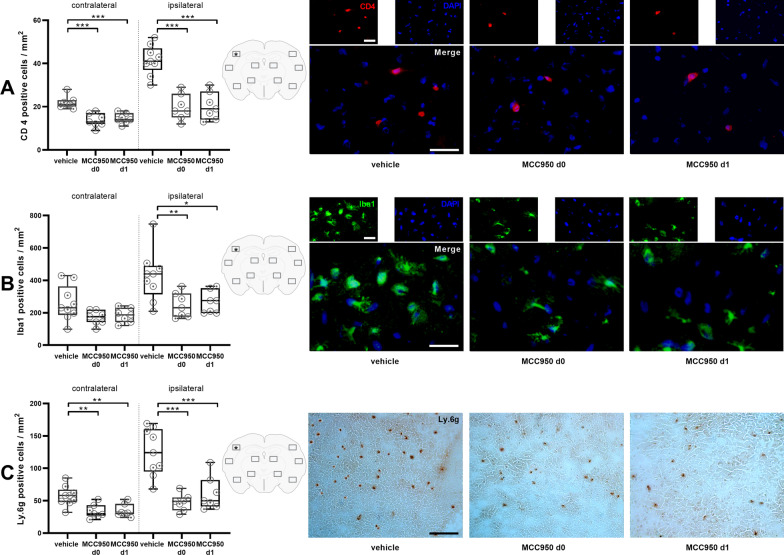
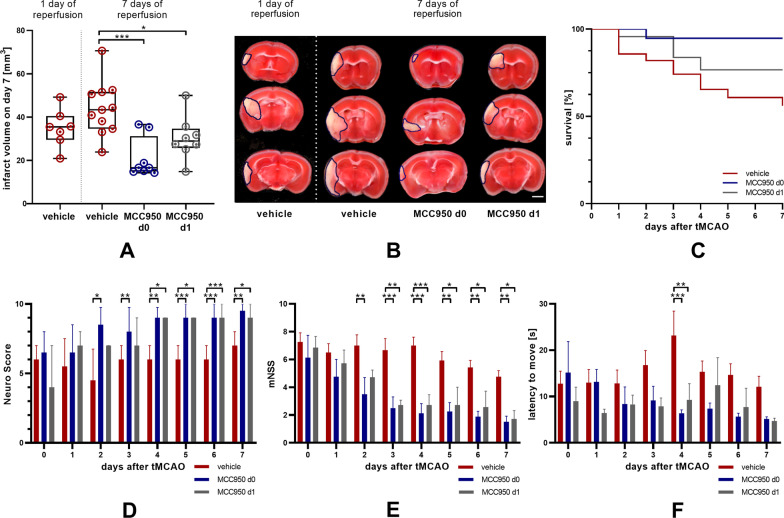
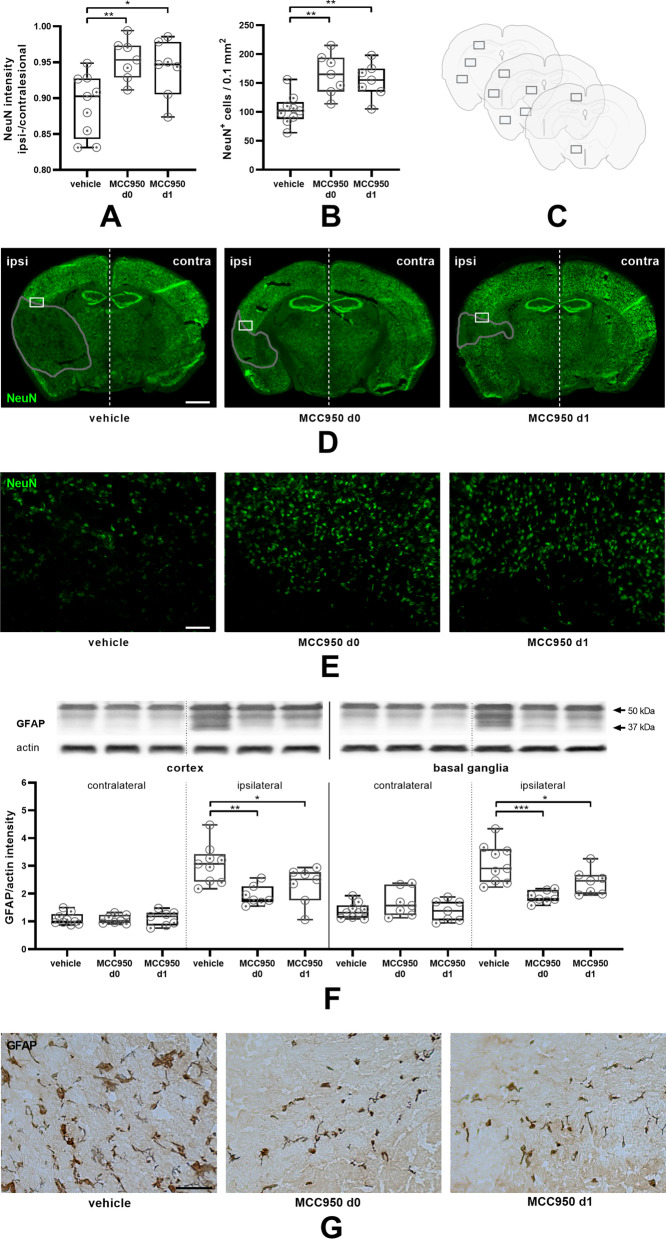
Infarct sizes on day 7 after tMCAO decreased about 35% after delayed and about 60% after prophylactic NLRP3 inhibition compared to vehicle. Functionally, pharmacological inhibition of NLRP3 mitigated the local inflammatory response in the ischemic brain as indicated by reduction of infiltrating immune cells and reactive astrogliosis.
Our results demonstrate that the NLRP3 inflammasome continues to drive neuroinflammation within the subacute stroke phase. NLRP3 inflammasome inhibition leads to a better long-term outcome-even when administered with a delay of 1 day after stroke induction, indicating ongoing inflammation-driven infarct progression. These findings may pave the way for eagerly awaited delayed treatment options in ischemic stroke.
缺血性中风会立即在血管腔内引发强烈的神经炎症反应,这不仅会导致血管阻塞时的原发性梗死发展,而且会导致再灌注后的进一步梗死扩大,即缺血/再灌注损伤。此后,在中风的亚急性期(再灌注后 1 天以上),脑实质内会出现进一步的炎症过程。这第二波实质炎症是否会导致梗死体积的额外/继发性增加,并具有潜在的药物靶向性,目前仍不清楚。我们研究了 NOD、LRP 家族包含 pyrin 结构域蛋白 3(NLRP3)炎性小体在缺血性中风亚急性期的作用。
通过 30 分钟短暂性大脑中动脉闭塞(tMCAO)诱导 C57Bl/6 小鼠局灶性脑缺血。动物在 tMCAO 后 24 小时或预防性给予 NLRP3 抑制剂 MCC950 进行治疗。tMCAO 后第 7 天评估中风结局,包括梗死面积和功能缺陷以及局部炎症反应。
与载体相比,tMCAO 后延迟和预防性 NLRP3 抑制分别使第 7 天的梗死面积减少约 35%和 60%。功能上,NLRP3 抑制减轻了缺血性脑内的局部炎症反应,表现为浸润的免疫细胞和反应性星形胶质细胞减少。
我们的结果表明,NLRP3 炎性小体在亚急性期中风持续驱动神经炎症。NLRP3 炎性小体抑制导致更好的长期结局,即使在中风诱导后 1 天延迟给药,表明持续的炎症驱动的梗死进展。这些发现可能为缺血性中风中期待已久的延迟治疗选择铺平道路。