Law Nok-Yeung, Li Jing Xian
School of Human Kinetics, University of Ottawa, Ottawa, Ontario, Canada.
Sports Med Health Sci. 2022 Jun 18;4(4):245-252. doi: 10.1016/j.smhs.2022.06.002. eCollection 2022 Dec.
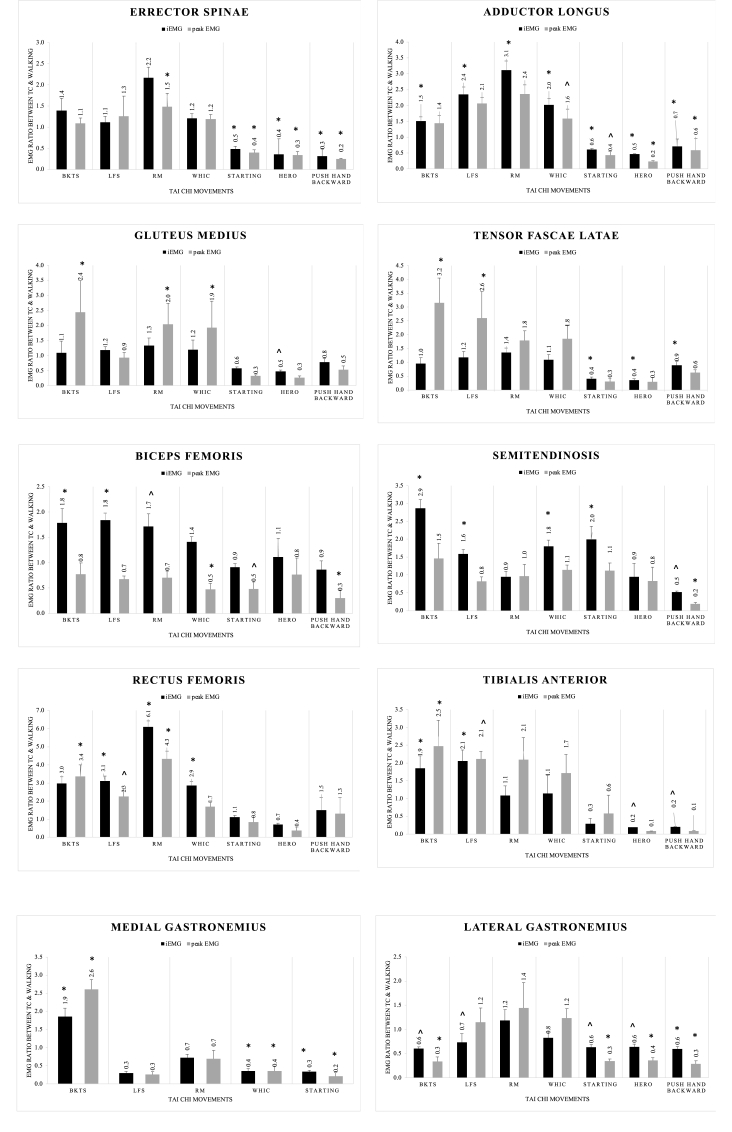
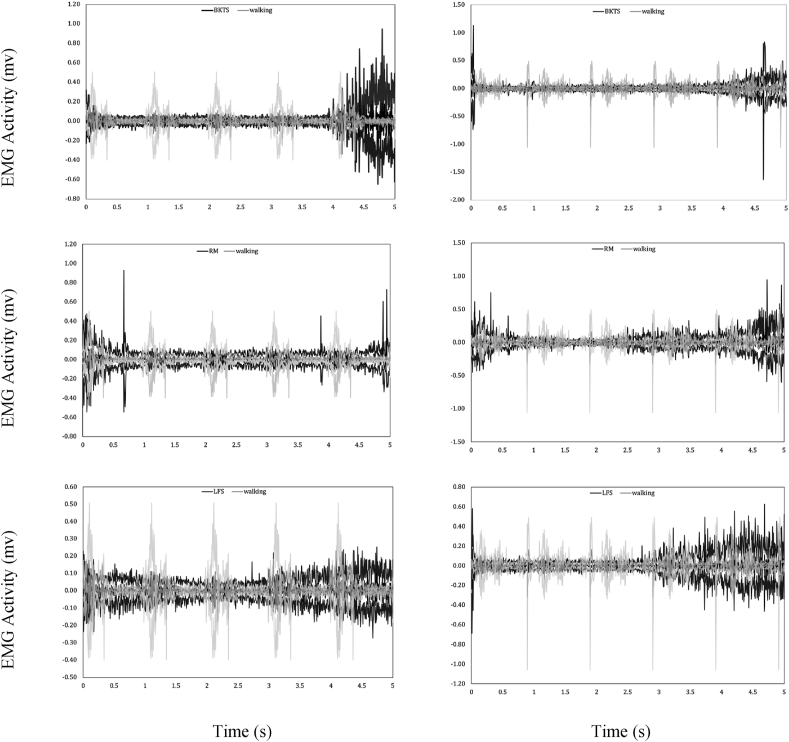
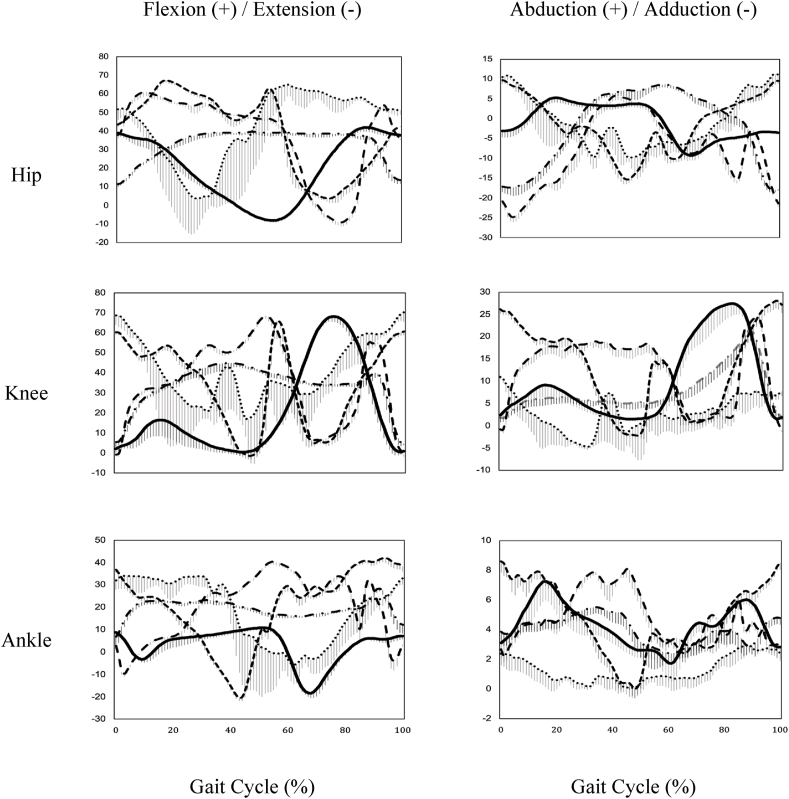
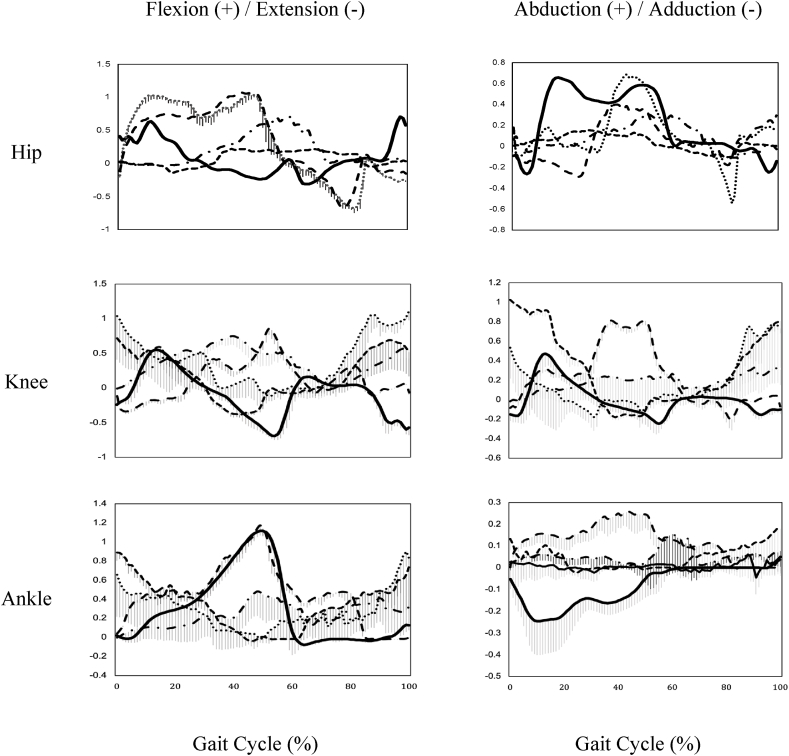
This study examined the maximum joint angles and moments, and electromyography (EMG) activity of the lower limbs in an experienced Tai Chi (TC) practitioner in performing four dynamic (Repulse Monkey, Wave-hand in Clouds, Brush Knee Twist Step, and Lateral Forward Step) and three static TC movements (Starting Form, Hero Touch Sky, and Push Hand Back) and compared them with the measures from walking. Integrated EMG (iEMG) and peak EMG of the rectus femoris, adductor longus, tibialis anterior, semitendinosus, erector spinae, gluteus medius, tensor fasciae latae, medial and lateral gastrocnemius muscles were analyzed. One-way analysis of variance showed that compared with walking, TC presented 1) significantly larger hip flexion (71.4° vs. 42.2°) and abduction angles (11.9° vs. 5.3°), smaller knee flexion (45.2° vs. 71.1°) and abduction angles (13.0° vs. 27.7°), larger ankle dorsiflexion (41.4° vs. 11.3°) and abduction angles (8.8° vs. 7.2°); 2) hip flexion moment and knee flexion and abduction moment were significantly larger. Ankle dorsiflexion moment were significantly smaller, whereas ankle abduction moment was significantly larger in two TC movements; and 3) the EMG activity of the muscles in TC varied from 10% to 610% of walking. The knee extensors, hip adductors and abductors had significantly higher peak EMG (430% ± 40%, 240% ± 30%, and 320% ± 90%) and iEMG values (610% ± 30%, 311% ± 30%, and 1.4% ± 20%), respectively. The findings suggested that these TC movements could be a good option for the improvement of muscle strength and range of motion of the lower limbs.
本研究检测了一位经验丰富的太极拳(TC)练习者在进行四种动态(如“倒撵猴”“云手”“搂膝拗步”和“侧行步”)和三种静态TC动作(如“起势”“金鸡独立”和“退步推掌”)时下肢的最大关节角度和力矩,以及肌电图(EMG)活动,并将其与行走时的测量结果进行比较。分析了股直肌、长收肌、胫骨前肌、半腱肌、竖脊肌、臀中肌、阔筋膜张肌、腓肠肌内侧头和外侧头的积分肌电图(iEMG)和肌电图峰值。单因素方差分析表明,与行走相比,TC表现为:1)髋关节屈曲(71.4°对42.2°)和外展角度(11.9°对5.3°)显著增大,膝关节屈曲(45.2°对71.1°)和外展角度(13.0°对27.7°)减小,踝关节背屈(41.4°对11.3°)和外展角度(8.8°对7.2°)增大;2)髋关节屈曲力矩以及膝关节屈曲和外展力矩显著增大。踝关节背屈力矩显著减小,而在两种TC动作中踝关节外展力矩显著增大;3)TC动作中肌肉的EMG活动为行走时的10%至610%。膝关节伸肌、髋关节内收肌和外展肌的肌电图峰值(分别为430%±40%、240%±30%和320%±90%)和iEMG值(分别为610%±30%、311%±30%和140%±20%)显著更高。研究结果表明,这些TC动作可能是改善下肢肌肉力量和活动范围的良好选择。