Wang Xinkai, Hu Yifan, Zhu Xiaoyan, Cai Liyuan, Farooq Muhammad Zahid, Yan Xianghua
State Key Laboratory of Agricultural Microbiology, Hubei Hongshan Laboratory, Frontiers Science Center for Animal Breeding and Sustainable Production, College of Animal Sciences and Technology, Huazhong Agricultural University, Wuhan, 430070, Hubei, China.
Department of Animal Sciences, University of Veterinary and Animal Sciences (Jhang Campus), Lahore, 54000, Pakistan.
J Anim Sci Biotechnol. 2023 Jan 6;14(1):4. doi: 10.1186/s40104-022-00807-y.
The interaction between nutrition and immunity plays a vital role in nutrient digestion, absorption, and metabolism during poultry production. Recent studies showed that the gut microbiota contributes to the development of intestinal mucosal immunity. However, the mechanisms by which gut microbes regulate this process remain unclear.
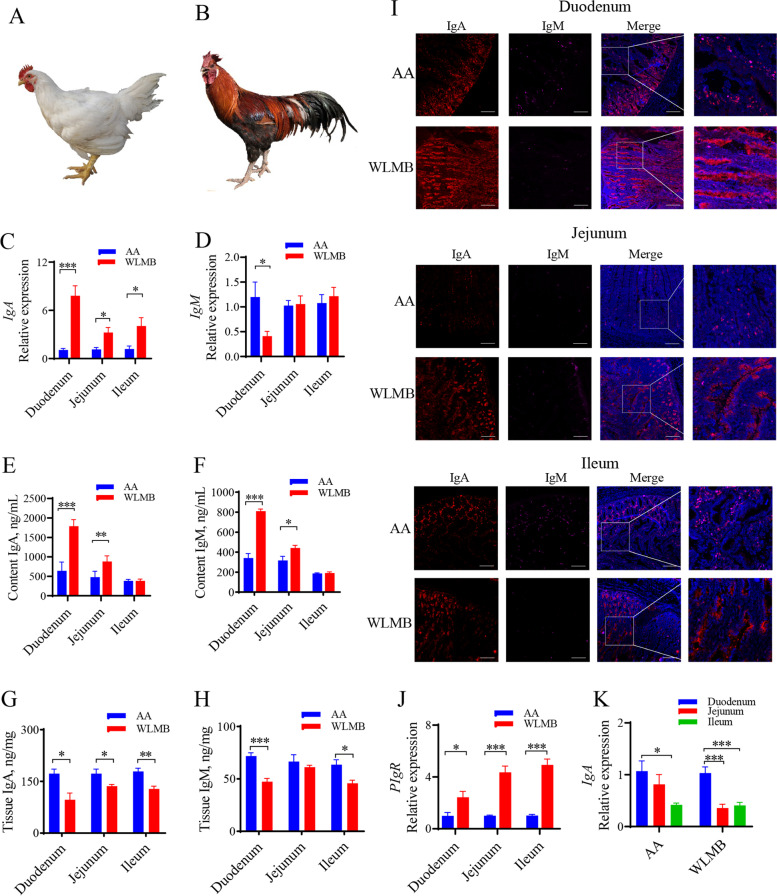
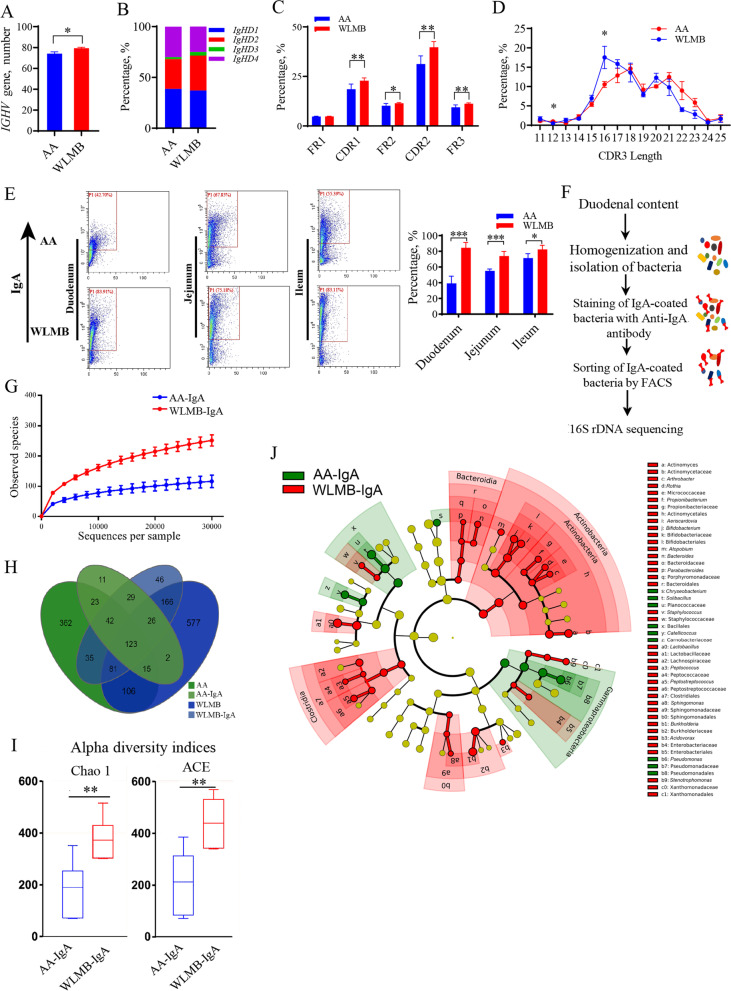
We compared the intestinal mucosal immunity and gut microbiota of Arbor Acre broilers (AA (lower mucosal immunity) and Chinese native Wuliang Mountain Black-bone chickens (WLMB) (higher mucosal immunity) using 16S rDNA sequencing, transcriptomic analysis, and immunoglobulin A (IgA) antibody repertoire sequencing. We then combined 16S rDNA sequencing with transcriptomics to identify the key microbes and found that they were positively correlated with IgA production. Next, we transplanted candidate microbes into 1-day-old broiler to explore their role in intestinal mucosal immunity. Finally, we verified the function of candidate microbial metabolites in regulating the immune function of macrophages and the intestinal-epithelial cells (IECs) using in vitro experiments.
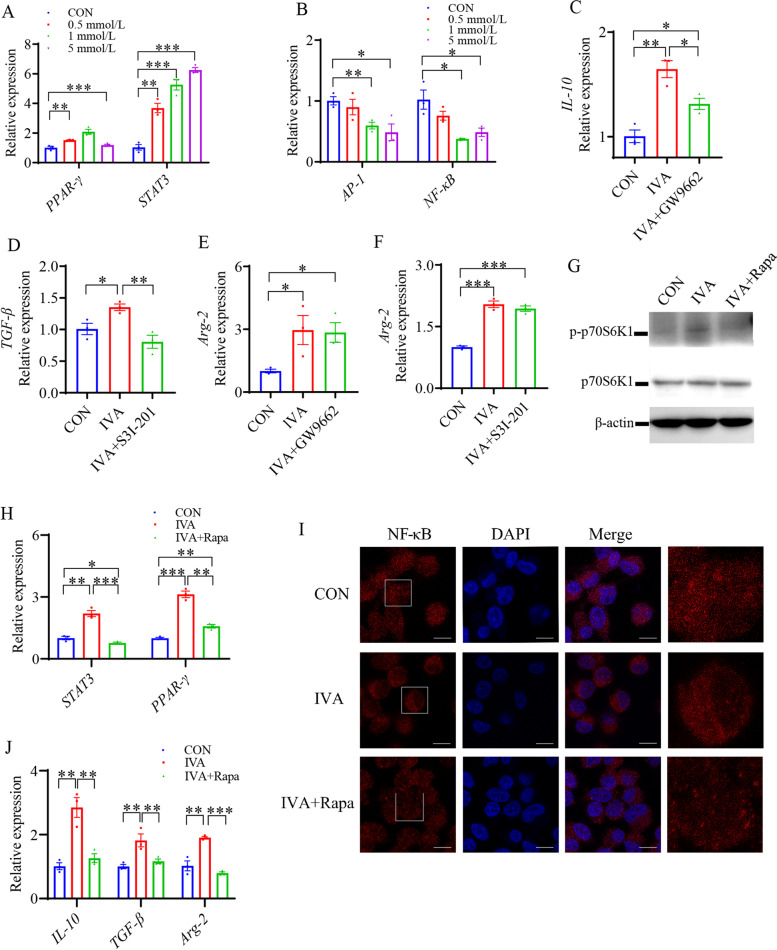
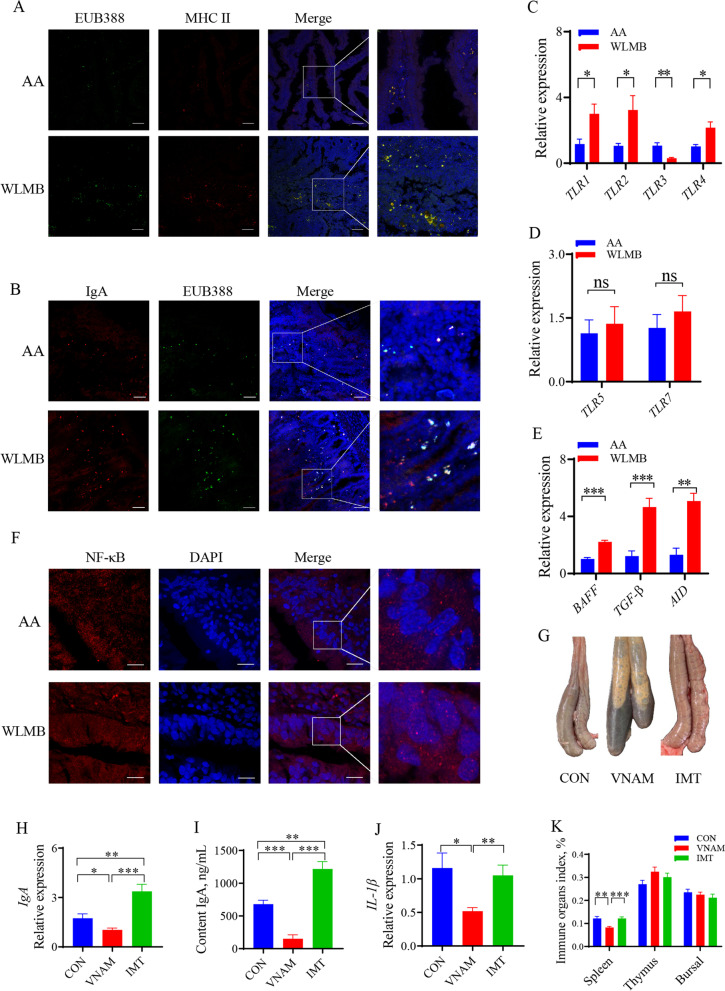
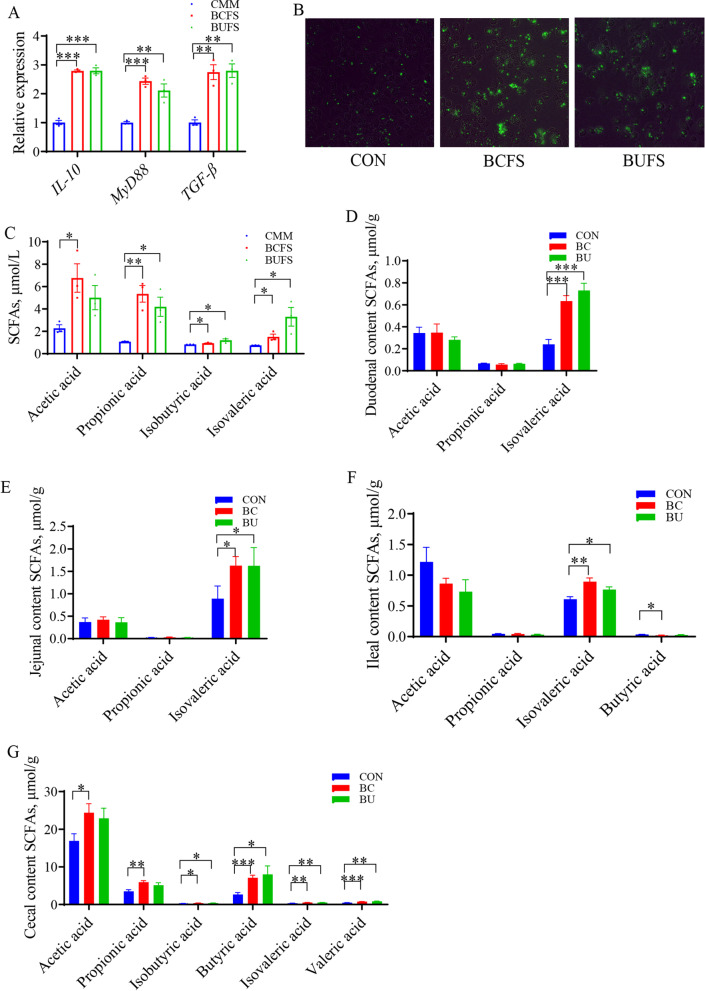
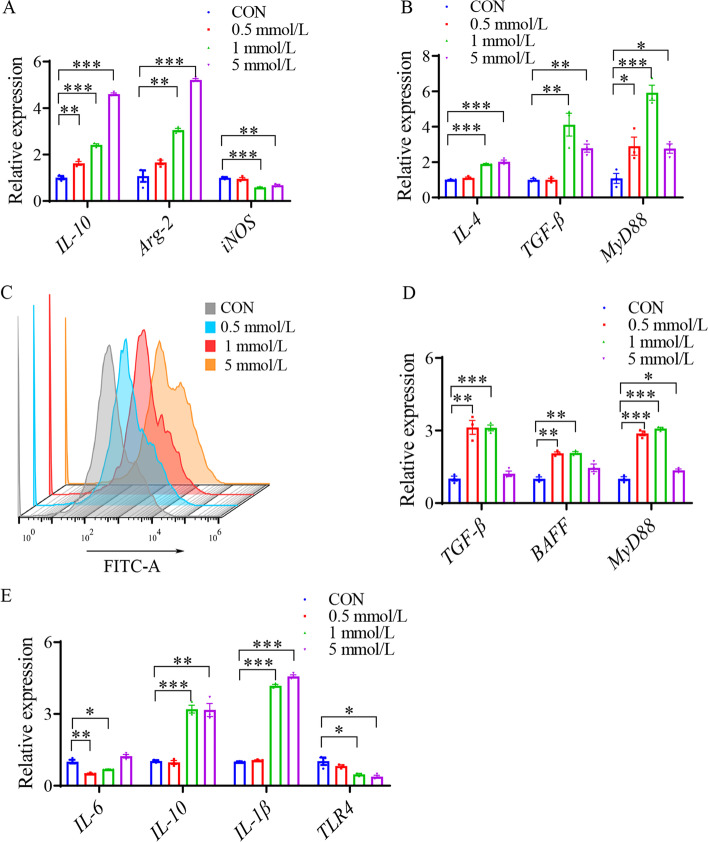
WLMB performs stronger mucosal immunity than AA, including higher IgA levels, more diverse IgA antibody repertoire, and higher bacterial affinity. Bacteroides was identified as the key microbes related to the intestinal IgA response. Bacteroides transplantation could increase IgA concentration in the duodenal contents by enhancing the expression of IgA, polymeric immunoglobin receptor (PIgR), B cell-activating factor of the TNF family (BAFF), and activation-induced cytidine deaminase (AID) in the duodenum. Additionally, Bacteroides-derived isovaleric acid promoted M2 macrophage polarization of macrophage via mTOR/PPAR-γ/STAT3 signaling pathways and regulated the immunologic function of IECs to produce cytokines, including interleukin (IL)-10, IL-4, BAFF, and transforming growth factor-beta (TGF-β), thus promoting IgA production in B cells by facilitating AID expression.
Our study revealed that Bacteroides modulate the intestinal IgA response and maintain gut health in broilers. Bacteroides may be a promising alternative as an immunomodulatory microbial agent for developing next-generation probiotics for broiler production.
营养与免疫之间的相互作用在禽类生产过程中的营养消化、吸收和代谢中起着至关重要的作用。最近的研究表明,肠道微生物群有助于肠道黏膜免疫的发展。然而,肠道微生物调节这一过程的机制仍不清楚。
我们使用16S rDNA测序、转录组分析和免疫球蛋白A(IgA)抗体库测序,比较了艾维茵肉鸡(AA,黏膜免疫力较低)和中国本土乌梁海黑骨鸡(WLMB,黏膜免疫力较高)的肠道黏膜免疫和肠道微生物群。然后,我们将16S rDNA测序与转录组学相结合,以鉴定关键微生物,并发现它们与IgA产生呈正相关。接下来,我们将候选微生物移植到1日龄肉鸡中,以探索它们在肠道黏膜免疫中的作用。最后,我们通过体外实验验证了候选微生物代谢产物在调节巨噬细胞和肠上皮细胞(IEC)免疫功能方面的作用。
WLMB的黏膜免疫比AA更强,包括更高的IgA水平、更多样化的IgA抗体库和更高的细菌亲和力。拟杆菌被确定为与肠道IgA反应相关的关键微生物。拟杆菌移植可通过增强十二指肠中IgA、多聚免疫球蛋白受体(PIgR)、肿瘤坏死因子家族B细胞激活因子(BAFF)和激活诱导的胞苷脱氨酶(AID)的表达,增加十二指肠内容物中的IgA浓度。此外,拟杆菌衍生的异戊酸通过mTOR/PPAR-γ/STAT3信号通路促进巨噬细胞的M2巨噬细胞极化,并调节IEC的免疫功能以产生细胞因子,包括白细胞介素(IL)-10、IL-4、BAFF和转化生长因子-β(TGF-β),从而通过促进AID表达来促进B细胞中IgA的产生。
我们的研究表明,拟杆菌调节肉鸡的肠道IgA反应并维持肠道健康。拟杆菌作为一种免疫调节微生物剂,可能是开发下一代肉鸡生产益生菌的有前途的替代品。