Faculty of Allied Health Sciences, Thammasat University, Pathum Thani 12120, Thailand.
Center for Spatial Information Science, University of Tokyo, Chiba 277-8568, Japan.
Int J Environ Res Public Health. 2022 Dec 29;20(1):626. doi: 10.3390/ijerph20010626.
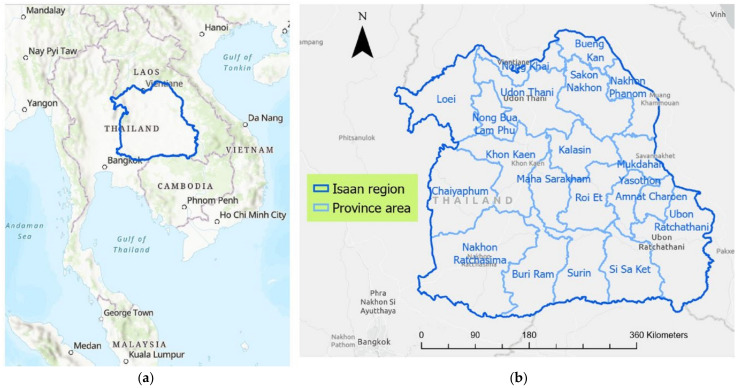
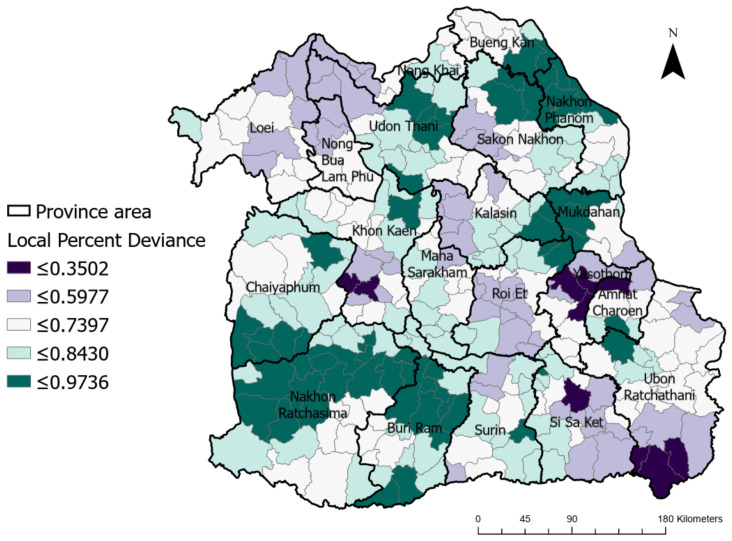
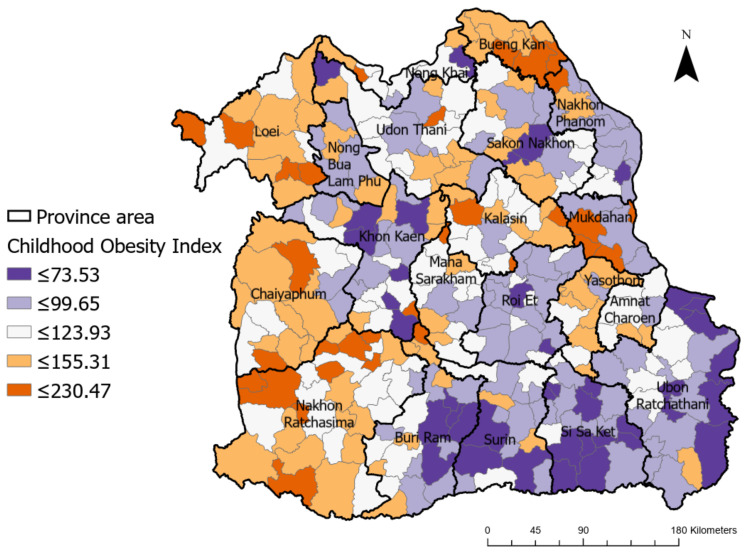
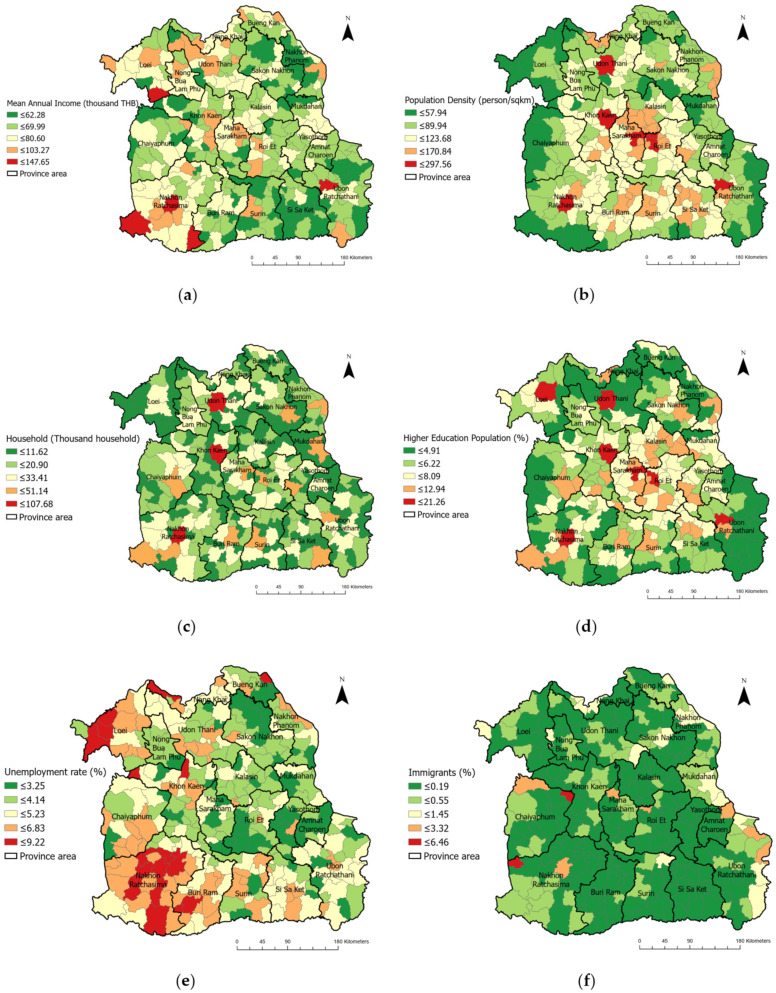
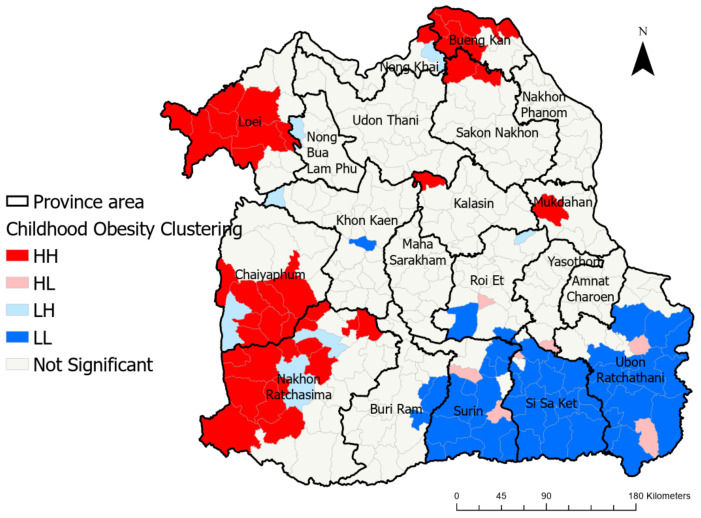
Globally, rapid economic growth has contributed to an overall increase in the incidence of childhood obesity. Although the prevalence of obesity has been well recognized, the disparities related to a region's socioeconomic environment in terms of the incidence of obesity are still less understood. Therefore, the purpose of this study was to examine the spatial pattern of childhood obesity and identify the potential associations between childhood obesity and socioeconomic environment in the northeastern region of Thailand, Isaan. Using nationally collected obesity data from children aged 0-5 years in 2019, we employed a geographic information system (GIS) to perform obesity cluster analysis at the smaller regional level, investigating a total of 322 districts in study area. Global and local statistical approaches were applied to calculate spatial associations between the socioeconomic status of neighborhoods and childhood obesity. The study revealed that 12.42% of the total area showed significant clusters at the district level, with high values observed in the western and northeastern areas. The results of the spatial statistical model revealed that childhood obesity was significantly positively associated with areas exhibiting high levels of socioeconomic environment factors. Identifying the associated factors and highlighting geographic regions with significant spatial clusters is a powerful approach towards understanding the role of location and expanding the knowledge on the factors contributing to childhood obesity. Our findings, as a first step, offer valuable references that could support policy-makers and local authorities in enhancing policy development with the aim of reducing childhood obesity and improving public health.
全球范围内,经济的快速增长导致儿童肥胖的发病率整体上升。尽管肥胖的普遍性已经得到充分认识,但肥胖发病率与地区社会经济环境之间的差异仍了解较少。因此,本研究的目的是探讨泰国东北部伊桑地区儿童肥胖的空间模式,并确定儿童肥胖与社会经济环境之间的潜在关联。我们使用了 2019 年来自全国的 0-5 岁儿童肥胖数据,利用地理信息系统(GIS)在较小的区域层面上进行肥胖聚类分析,共调查了研究区域内的 322 个区。采用全局和局部统计方法计算邻里社会经济地位与儿童肥胖之间的空间关联。研究结果表明,12.42%的总面积在区级水平上存在显著的聚类,西部地区和东北地区的数值较高。空间统计模型的结果表明,儿童肥胖与社会经济环境因素水平较高的地区呈显著正相关。确定相关因素并突出具有显著空间聚类的地理区域,是了解位置作用和扩展导致儿童肥胖因素知识的有力方法。我们的研究结果作为第一步,为决策者和地方当局提供了有价值的参考,以支持制定政策,从而减少儿童肥胖和改善公共卫生。