Portel Laurent, Fabry-Vendrand Caroline, Texier Nathalie, Schwartz Déborah, Capdepon Audrey, Thabut Gabriel, Debieuvre Didier
Service de Pneumologie, Centre Hospitalier Robert Boulin, Libourne, France.
Astra Zeneca, Courbevoie, France.
J Asthma Allergy. 2023 Jan 4;16:9-21. doi: 10.2147/JAA.S375325. eCollection 2023.
Data on severe non-eosinophilic asthma are scarce. Moreover, as compared with eosinophilic asthma, non-eosinophilic asthma less frequently benefits from the latest therapeutic advances. This study aimed to highlight differences between non-eosinophilic and eosinophilic asthma as they may help the development of new therapeutic agents.
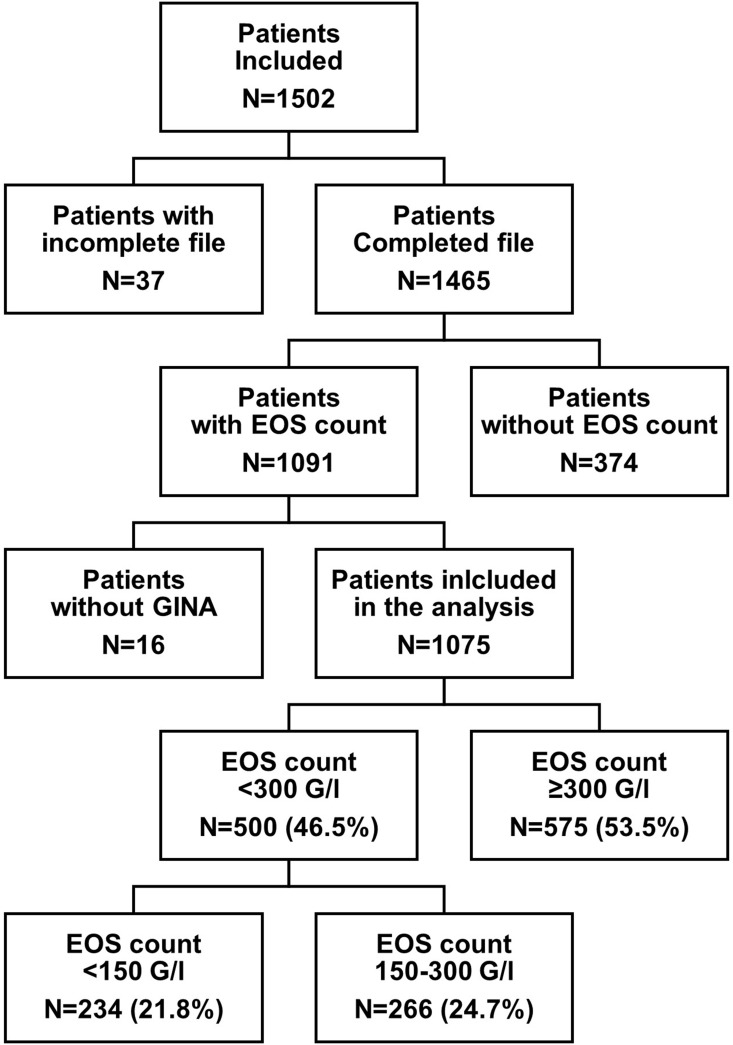
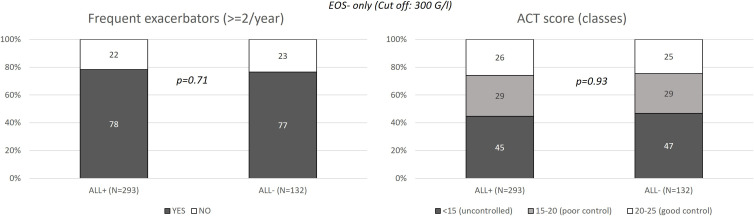
Data from 1075 adult patients with severe asthma (GINA treatment: 4/5) collected during the cross-sectional non-interventional FASE-CPHG study were analyzed. Two groups of patients (EOS-/EOS+) were constituted based on blood eosinophil counts (cutoff value: 300 G/l). Characteristics of EOS- (N = 500) and EOS+ (N = 575) patients were described; EOS- patients were also described according to their allergic profile based on skin allergy or allergen-specific immunoglobulin E (IgE) assays (cutoff value: 150 IU/mL).
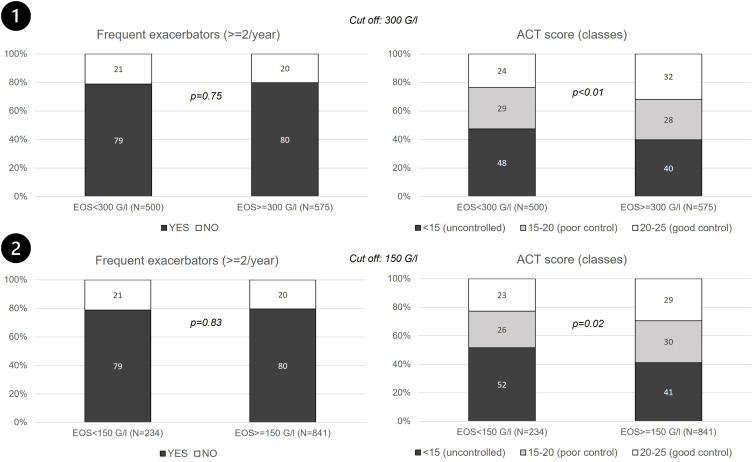
Percentages of patients with obesity (29%), allergen sensitization (57%), or ≥2 annual exacerbations in the last 12 months (68%) were similar in both groups. As compared with EOS+ patients, EOS- patients less frequently reported chronic rhinitis (41.1% vs 50.5%, p < 0.01) or nasal polyposis (13.6% vs 27.5%, p < 0.01), and more frequently reported GERD (45.2% vs 37.1%, p < 0.01), anxiety (45.5% vs 38.1%, p = 0.01), or depression (18.3% vs 13.3%, p = 0.02). EOS- patients had lower serum total IgE levels (median: 158 vs 319 IU/mL, p < 0.01) and were less frequently treated with long-term oral corticosteroid therapy (16.0% vs 23.7%; p < 0.01). Their asthma was more frequently uncontrolled (48% vs 40%, p < 0.01). Similar results were found with a cutoff value for blood eosinophil counts at 150 G/l. EOS- patients with allergic profile less frequently reported high serum IgE levels (35.6% vs 57.9%, p < 0.01). EOS- and EOS+ patients treated with long-term oral corticosteroids had similar profiles.
In our patients with severe asthma, EOS- asthma was approximately as frequent as EOS+ asthma; EOS- asthma was frequently poorly controlled or uncontrolled, confirming the need for a better management. Allergy did not appear to worsen clinical profile.
关于重度非嗜酸性粒细胞性哮喘的数据稀缺。此外,与嗜酸性粒细胞性哮喘相比,非嗜酸性粒细胞性哮喘较少受益于最新的治疗进展。本研究旨在突出非嗜酸性粒细胞性哮喘与嗜酸性粒细胞性哮喘之间的差异,因为这可能有助于新型治疗药物的研发。
分析了在横断面非干预性FASE-CPHG研究中收集的1075例重度哮喘成年患者(GINA治疗分级:4/5)的数据。根据血液嗜酸性粒细胞计数(临界值:300个/微升)将患者分为两组(EOS-/EOS+)。描述了EOS-组(N = 500)和EOS+组(N = 575)患者的特征;还根据皮肤过敏或过敏原特异性免疫球蛋白E(IgE)检测(临界值:150 IU/mL)对EOS-患者的过敏情况进行了描述。
两组患者中肥胖(29%)、过敏原致敏(57%)或过去12个月内每年发作≥2次(68%)的患者百分比相似。与EOS+患者相比,EOS-患者较少报告慢性鼻炎(41.1%对50.5%,p < 0.01)或鼻息肉(13.6%对27.5%,p < 0.01),而较多报告胃食管反流病(GERD,45.2%对37.1%,p < 0.01)、焦虑(45.5%对38.1%,p = 0.01)或抑郁(18.3%对13.3%,p = 0.02)。EOS-患者的血清总IgE水平较低(中位数:158对319 IU/mL,p < 0.01),接受长期口服糖皮质激素治疗的频率也较低(16.0%对23.7%;p < 0.01)。他们的哮喘更常控制不佳(48%对40%,p < 0.01)。当血液嗜酸性粒细胞计数临界值为150个/微升时,也得到了类似结果。具有过敏特征的EOS-患者较少报告高血清IgE水平(35.6%对57.9%,p < 0.01)。接受长期口服糖皮质激素治疗的EOS-和EOS+患者具有相似的特征。
在我们的重度哮喘患者中,EOS-哮喘与EOS+哮喘的发生率相近;EOS-哮喘常控制不佳或未得到控制,这证实了需要更好的管理。过敏似乎并未使临床情况恶化。