Ocon Anthony J, Ocon Kate E, Battaglia Jennifer, Low Soon Khai, Neupane Niraj, Saeed Hassan, Jamshed Saad, Mustafa S Shahzad
Division of Allergy, Immunology, Rheumatology, Rochester Regional Health, Rochester, NY, USA.
Division of Allergy, Immunology, Rheumatology, University of Rochester Medical Center, Rochester, NY, USA.
J Hematol. 2022 Dec;11(6):210-215. doi: 10.14740/jh1062. Epub 2022 Dec 1.
Immunocompromised individuals with hematological malignancy have increased risk for poor outcomes and death from severe acute respiratory syndrome coronavirus 2 (SARS-CoV-2). This special population may mount a suboptimal response to vaccination. We assessed the effectiveness of tixagevimab and cilgavimab (Evusheld), a monoclonal antibody combination against SARS-CoV-2, in conjunction with standard preventative measures, at preventing symptomatic incident infection.
Patients aged 18 years and older with hematological malignancy consented to receive Evusheld. Patients were followed longitudinally for development of symptomatic incident SARS-CoV-2 infections. Adverse events were monitored.
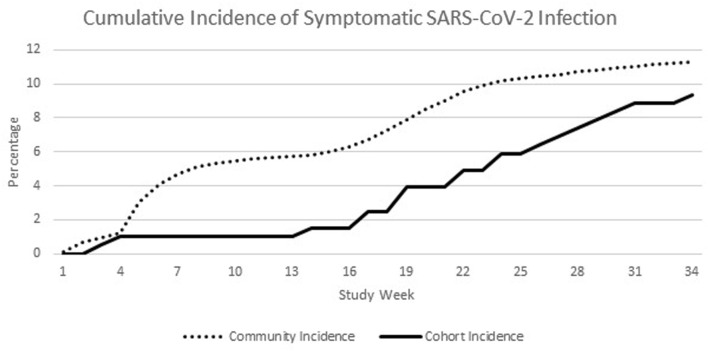
Two hundred and three patients (94 female) with hematological malignancies and mean age 72 ± 10 years were included. Of the patients, 99.5% had received at least one mRNA vaccination against SARS-CoV-2. Average time of follow-up was 151 ± 50 days. Nineteen patients (9.3%) developed incident symptomatic SARS-CoV-2 infection, with only one (0.5%) requiring hospitalization. During the same follow-up period, local incident rate of infection was 84,123 cases (11.3% of population). Of those, 3,386 cases (4%) of SARS-CoV-2 required hospital admission. The incidence rate ratio was 0.79. No serious adverse events occurred following administration of Evusheld.
Patients with hematological malignancy who received Evusheld infrequently developed symptomatic infections or require hospitalization. The high-risk cohort incidence was at least as comparable to the average risk general population. Evusheld appears effective and is well tolerated, and may be administered in conjunction with vaccination and standard prevention measures, at decreasing incident SARS-Co-V2 cases in this high-risk population.
血液系统恶性肿瘤的免疫功能低下个体因严重急性呼吸综合征冠状病毒2(SARS-CoV-2)导致不良结局和死亡的风险增加。这一特殊人群可能对疫苗接种产生次优反应。我们评估了替沙格韦单抗和西加韦单抗(恩适得)这一抗SARS-CoV-2单克隆抗体组合与标准预防措施联合使用预防有症状新发感染的有效性。
18岁及以上患有血液系统恶性肿瘤的患者同意接受恩适得。对患者进行纵向随访,观察有症状的新发SARS-CoV-2感染情况。监测不良事件。
纳入了203例血液系统恶性肿瘤患者(94例女性),平均年龄72±10岁。其中99.5%的患者已接种至少一剂抗SARS-CoV-2的mRNA疫苗。平均随访时间为151±50天。19例患者(9.3%)发生有症状的新发SARS-CoV-2感染,仅1例(0.5%)需要住院治疗。在同一随访期间,当地新发感染率为84123例(占人口的11.3%)。其中,3386例(4%)SARS-CoV-2感染患者需要住院治疗。发病率比为0.79。使用恩适得后未发生严重不良事件。
接受恩适得治疗的血液系统恶性肿瘤患者很少发生有症状感染或需要住院治疗。该高危队列的发病率至少与平均风险的普通人群相当。恩适得似乎有效且耐受性良好,可与疫苗接种和标准预防措施联合使用,以减少该高危人群中SARS-CoV-2的新发病例。