Cabrini Monash University Department of Surgery, Cabrini Hospital, Malvern, VIC, 3144, Australia.
Department of Epidemiology and Preventive Medicine, School of Public Health and Preventive Medicine, Monash University, Melbourne, VIC, 3004, Australia.
Int J Colorectal Dis. 2023 Jan 12;38(1):11. doi: 10.1007/s00384-022-04291-8.
In 2019, in Australia, there were 500,000 people aged 85 and over. Traditionally, clinicians have adopted the view that surgery is not desirable in this cohort due to increasing perioperative risk, perceived minimal clinical benefit, and shortened life expectancy. This cohort study is aimed at investigating postoperative outcomes from elective and non-elective colorectal cancer surgery in patients aged 80 and over.
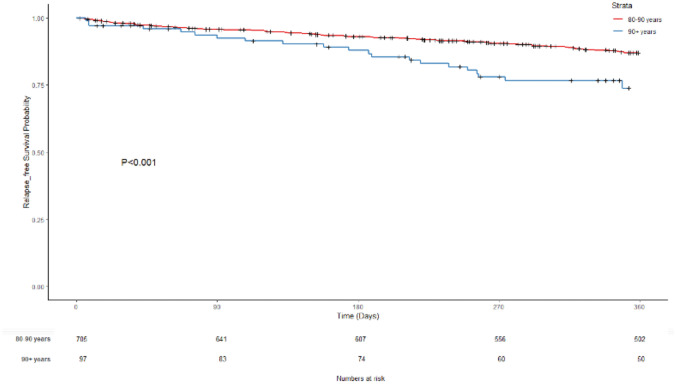
A retrospective analysis was conducted on patients from 2010 to 2020 on a prospectively maintained colorectal database. Patients aged over 80 who underwent surgical resection for colorectal cancer were reviewed. Oncological characteristics, short-term outcomes, overall survival, and relapse-free survival rates were analysed.
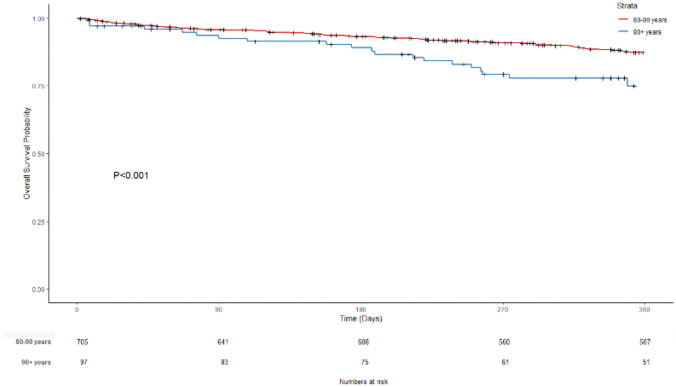
A total of 832 patients were identified from the database. Females comprised 55% of patients aged 80 and above. The median age was 84 for octogenarians and 92 for nonagenarians. Most patients were ASA 2 (212) or ASA 3 (501). ASA 3 and 4 and stage III pathology were associated with higher postoperative complications. Fifty percent of over 80 s and 37% of over 90 s were surgically discharged to their own home. Overall survival at 30, 180, and 360 days and 5 years was 98.1%, 93.1%, 87.2%, and 57.2% for the over 80 s and 98.1%, 88.9%, 74.9%, and 24.4% for the over 90 s.
Our results demonstrate that surgical treatment of older patients is safe with acceptable short-, medium-, and long-term survival. Nonetheless, efforts are needed to reduce the rates of complications in older patients, including utilisation of multi-disciplinary teams to assess the optimal treatment strategy and postoperative care.
2019 年,澳大利亚有 50 万人年龄在 85 岁及以上。传统上,由于围手术期风险增加、认为临床获益极小和预期寿命缩短,临床医生认为该年龄组不适合手术。本队列研究旨在调查 80 岁及以上患者接受择期和非择期结直肠癌手术的术后结果。
对 2010 年至 2020 年前瞻性维护的结直肠数据库中的患者进行回顾性分析。回顾性分析了接受结直肠癌手术切除的 80 岁以上患者。分析了肿瘤学特征、短期结果、总生存率和无复发生存率。
从数据库中总共确定了 832 名患者。女性占 80 岁以上患者的 55%。80 岁的中位年龄为 84 岁,90 岁的中位年龄为 92 岁。大多数患者为 ASA 2(212 例)或 ASA 3(501 例)。ASA 3 和 4 级和 III 期病理与较高的术后并发症相关。50%的 80 岁以上患者和 37%的 90 岁以上患者术后出院回家。80 岁以上患者的 30、180 和 360 天和 5 年总生存率分别为 98.1%、93.1%、87.2%和 57.2%,90 岁以上患者的 98.1%、88.9%、74.9%和 24.4%。
我们的结果表明,老年患者的手术治疗是安全的,具有可接受的短期、中期和长期生存率。然而,仍需要努力降低老年患者的并发症发生率,包括利用多学科团队评估最佳治疗策略和术后护理。