Department of Medical Laboratory Science College of Medicine and Health Science, Wolkite University, Wolkite, Ethiopia.
Department of Medical Laboratory Science, College of Medicine and Health Sciences, Bahir Dar University, Bahir Dar, Ethiopia.
PLoS One. 2023 Jan 12;18(1):e0277362. doi: 10.1371/journal.pone.0277362. eCollection 2023.
The development of drug resistance to chloroquine is posing a challenge in the prevention and control efforts of malaria globally. Chloroquine is the first-line treatment for uncomplicated P.vivax in Ethiopia. Regular monitoring of anti-malarial drugs is recommended to help early detection of drug-resistant strains of malaria parasites before widely distributed. The emergence of P.vivax resistance to chloroquine in the country endangers the efficacy of P.vivax treatment. This study aimed to assess the therapeutic efficacy of chloroquine among uncomplicated P.vivax infections at Shewa Robit Health Center, northeast Ethiopia.
One-arm in vivo prospective chloroquine efficacy study was conducted from November 2020 to March 2021. Ninety participants aged between 16 months to 60 years confirmed with P.vivax mono-infection microscopically were selected and treated with a 25 mg/kg standard dose of chloroquine over three days. Thick and thin blood smears were prepared and examined. Clinical examination was performed over 28 follow-up days. Hemoglobin concentration level was measured on days 0, 14, and 28.
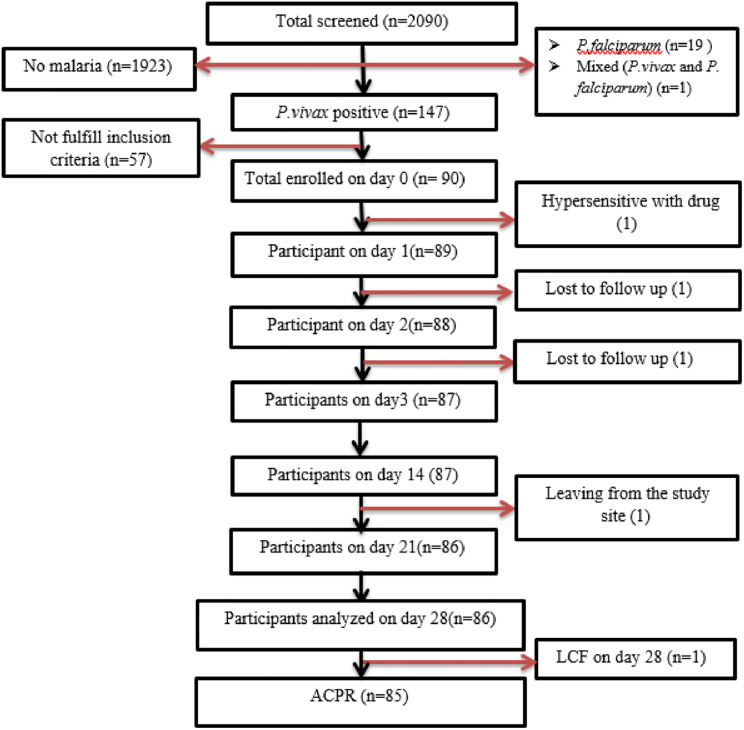
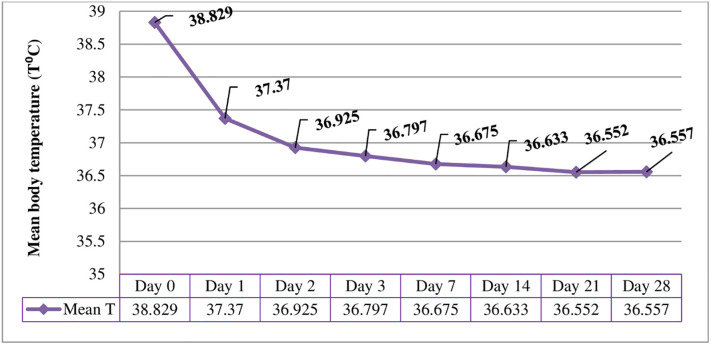
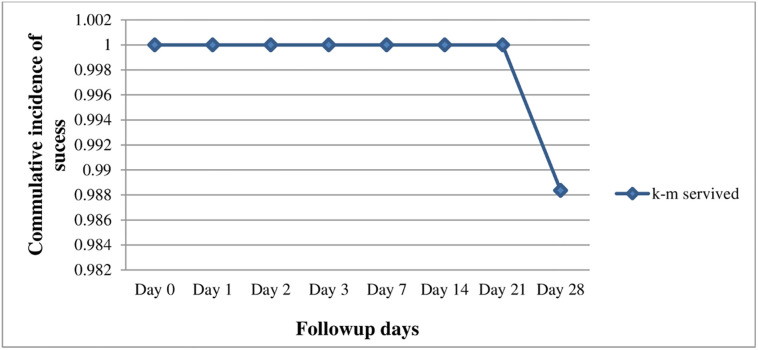
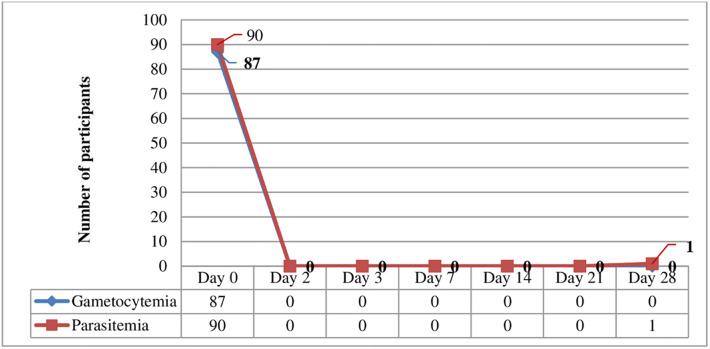
Of the 90 enrolled participants, 86 (96%) completed their 28 days follow-up period. The overall cure rate of the drug was 98.8% (95% CI: 95.3-100%). All asexual stages and gametocytes were cleared within 48 hours with rapid clearance of fever. Hemoglobin concentration had significantly recovered between days 0 and 14, 0 and 28, and 14 and 28 days (P = 0.032, P<0.001, and P = 0.005), respectively. Fast resolution of clinical signs and symptoms was also observed. Severe adverse events were not recorded.
The present study revealed that chloroquine remains an efficacious and safe drug in the study setting for treating uncomplicated P.vivax in the study area. Large-scale continuous surveillance is needed to monitor the development of resistance in due time.
氯喹耐药性的发展在全球疟疾的预防和控制工作中构成了挑战。氯喹是埃塞俄比亚治疗无并发症间日疟的一线药物。建议定期监测抗疟药物,以帮助在广泛分布之前尽早发现抗疟寄生虫的耐药株。该国间日疟对氯喹的耐药性的出现危及了间日疟的治疗效果。本研究旨在评估谢瓦罗比特健康中心(Shewa Robit Health Center)治疗无并发症间日疟感染的氯喹的治疗效果,该中心位于埃塞俄比亚东北部。
2020 年 11 月至 2021 年 3 月进行了一项氯喹疗效的单臂体内前瞻性研究。选择了 90 名年龄在 16 个月至 60 岁之间的显微镜证实为间日疟原虫单感染的参与者,并给予标准剂量的 25mg/kg 氯喹,分三天服用。制备并检查厚和薄血涂片。在 28 天的随访期间进行临床检查。在第 0、14 和 28 天测量血红蛋白浓度水平。
90 名入组的参与者中,86 名(96%)完成了 28 天的随访期。该药物的总体治愈率为 98.8%(95%CI:95.3-100%)。所有无性阶段和配子体在 48 小时内被清除,且发热迅速消退。血红蛋白浓度在第 0 天与第 14 天、第 0 天与第 28 天、第 14 天与第 28 天之间有显著恢复(P=0.032,P<0.001,P=0.005)。也观察到临床症状和体征的快速缓解。未记录到严重不良事件。
本研究表明,氯喹在研究地区治疗无并发症间日疟原虫感染的情况下仍然是一种有效且安全的药物。需要进行大规模的连续监测,以便及时监测耐药性的发展。