Centre for Innate Immunity and Infectious Diseases, Hudson Institute of Medical Research, Clayton, VIC, Australia.
Department of Molecular and Translational Science, Monash University, Clayton, VIC, Australia.
J Pathol. 2023 Apr;259(4):402-414. doi: 10.1002/path.6053. Epub 2023 Feb 17.
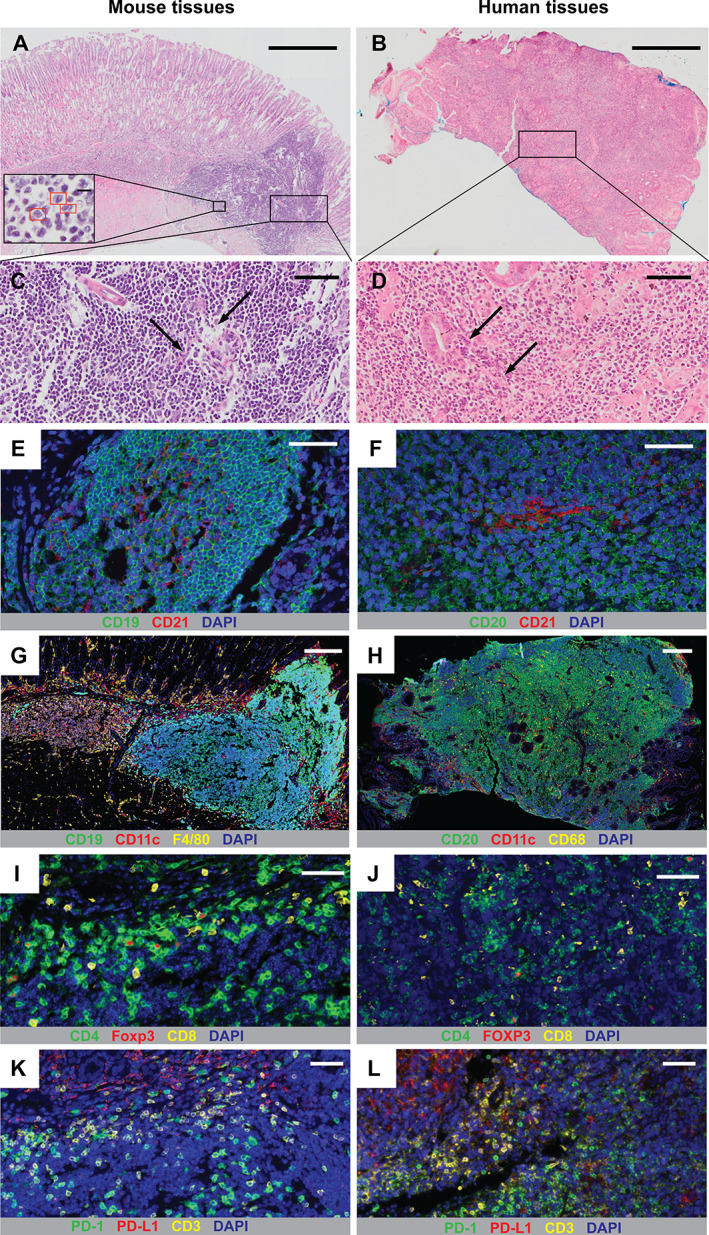
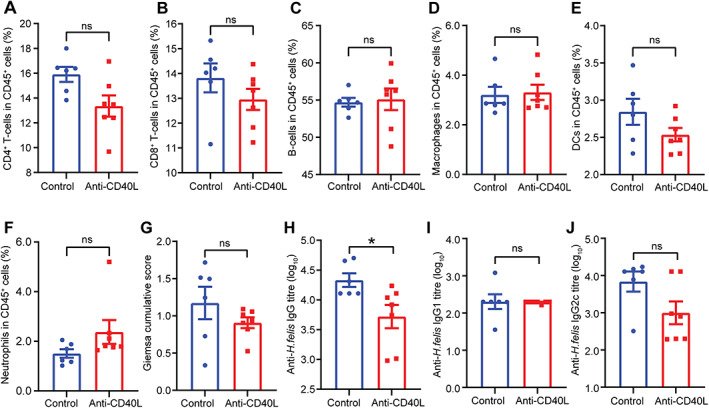
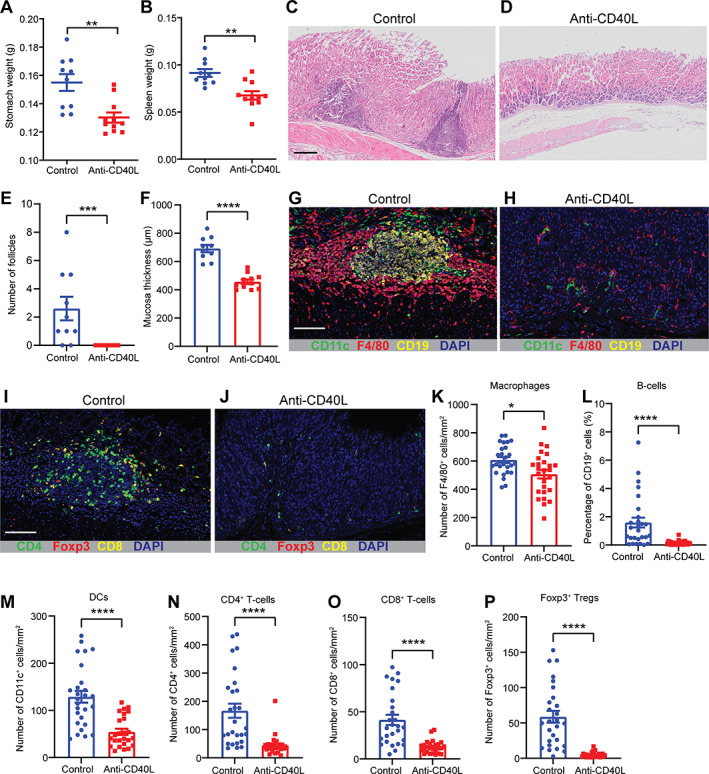
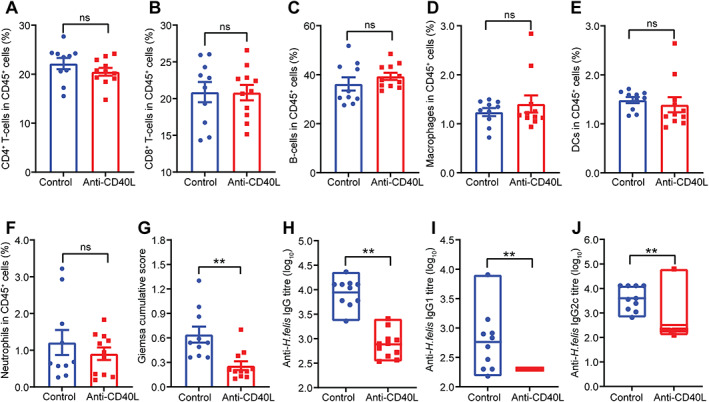
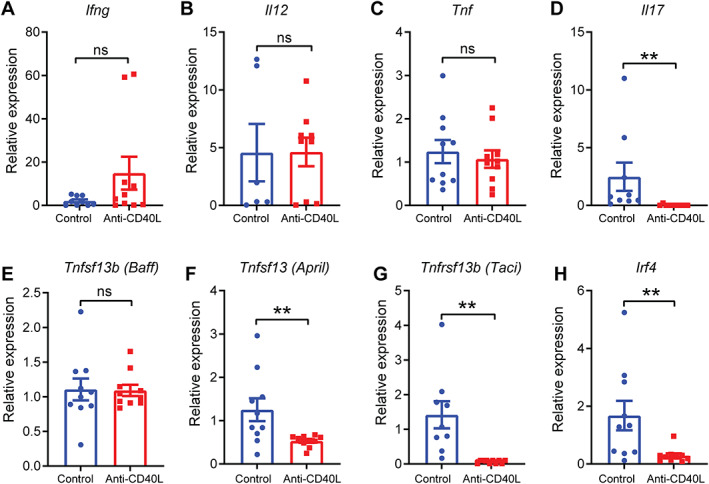
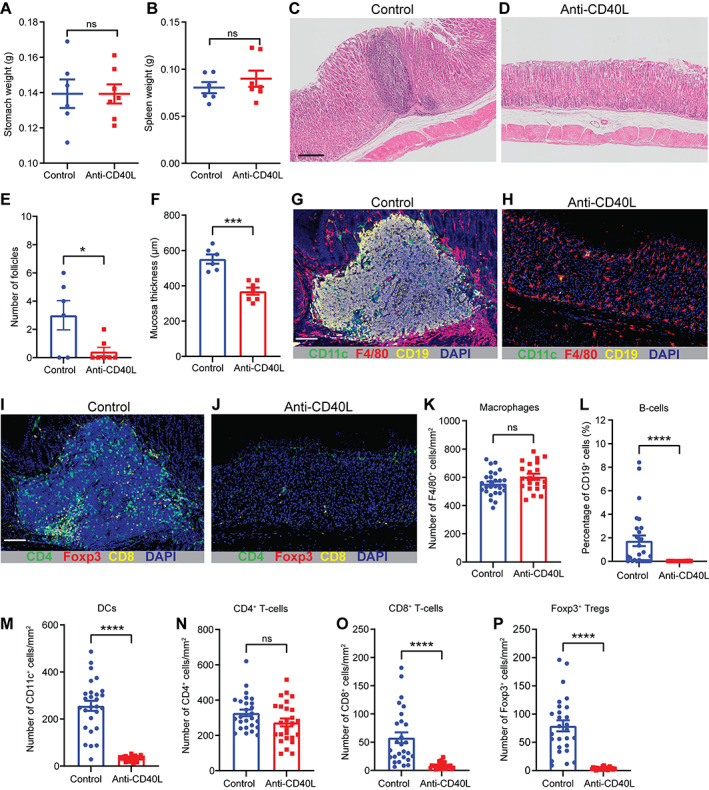
Mucosa-associated lymphoid tissue (MALT) lymphoma is a B-cell tumour that develops over many decades in the stomachs of individuals with chronic Helicobacter pylori infection. We developed a new mouse model of human gastric MALT lymphoma in which mice with a myeloid-specific deletion of the innate immune molecule, Nlrc5, develop precursor B-cell lesions to MALT lymphoma at only 3 months post-Helicobacter infection versus 9-24 months in existing models. The gastric B-cell lesions in the Nlrc5 knockout mice had the histopathological features of the human disease, notably lymphoepithelial-like lesions, centrocyte-like cells, and were infiltrated by dendritic cells (DCs), macrophages, and T-cells (CD4 , CD8 and Foxp3 ). Mouse and human gastric tissues contained immune cells expressing immune checkpoint receptor programmed death 1 (PD-1) and its ligand PD-L1, indicating an immunosuppressive tissue microenvironment. We next determined whether CD40L, overexpressed in a range of B-cell malignancies, may be a potential drug target for the treatment of gastric MALT lymphoma. Importantly, we showed that the administration of anti-CD40L antibody either coincident with or after establishment of Helicobacter infection prevented gastric B-cell lesions in mice, when compared with the control antibody treatment. Mice administered the CD40L antibody also had significantly reduced numbers of gastric DCs, CD8 and Foxp3 T-cells, as well as decreased gastric expression of B-cell lymphoma genes. These findings validate the potential of CD40L as a therapeutic target in the treatment of human gastric B-cell MALT lymphoma. © 2023 The Authors. The Journal of Pathology published by John Wiley & Sons Ltd on behalf of The Pathological Society of Great Britain and Ireland.
黏膜相关淋巴组织(MALT)淋巴瘤是一种 B 细胞肿瘤,在慢性幽门螺杆菌感染个体的胃中经过几十年的发展而形成。我们建立了一种新的人类胃 MALT 淋巴瘤小鼠模型,在该模型中,髓系特异性缺失先天免疫分子 Nlrc5 的小鼠在幽门螺杆菌感染后仅 3 个月就发展为前 B 细胞病变至 MALT 淋巴瘤,而在现有模型中则需要 9-24 个月。Nlrc5 基因敲除小鼠的胃 B 细胞病变具有人类疾病的组织病理学特征,特别是淋巴上皮样病变、中心细胞样细胞,并被树突状细胞(DC)、巨噬细胞和 T 细胞(CD4+、CD8+和 Foxp3+)浸润。小鼠和人类胃组织中含有表达免疫检查点受体程序性死亡受体 1(PD-1)及其配体 PD-L1 的免疫细胞,表明存在免疫抑制的组织微环境。我们接下来确定了在多种 B 细胞恶性肿瘤中过度表达的 CD40L 是否可能成为治疗胃 MALT 淋巴瘤的潜在药物靶点。重要的是,我们表明,与对照抗体治疗相比,在幽门螺杆菌感染建立的同时或之后给予抗 CD40L 抗体可以预防小鼠的胃 B 细胞病变。给予 CD40L 抗体的小鼠的胃 DC、CD8 和 Foxp3 T 细胞数量也显著减少,胃 B 细胞淋巴瘤基因的表达也降低。这些发现验证了 CD40L 作为治疗人类胃 B 细胞 MALT 淋巴瘤的治疗靶点的潜力。© 2023 作者。《病理学杂志》由 John Wiley & Sons Ltd 代表英国和爱尔兰病理学学会出版。