Stanley Center for Psychiatric Research, Broad Institute of MIT and Harvard, Cambridge, Massachusetts, USA.
McCance Center for Brain Health, Massachusetts General Hospital, Boston, Massachusetts, USA.
J Virol. 2023 Feb 28;97(2):e0167222. doi: 10.1128/jvi.01672-22. Epub 2023 Jan 18.
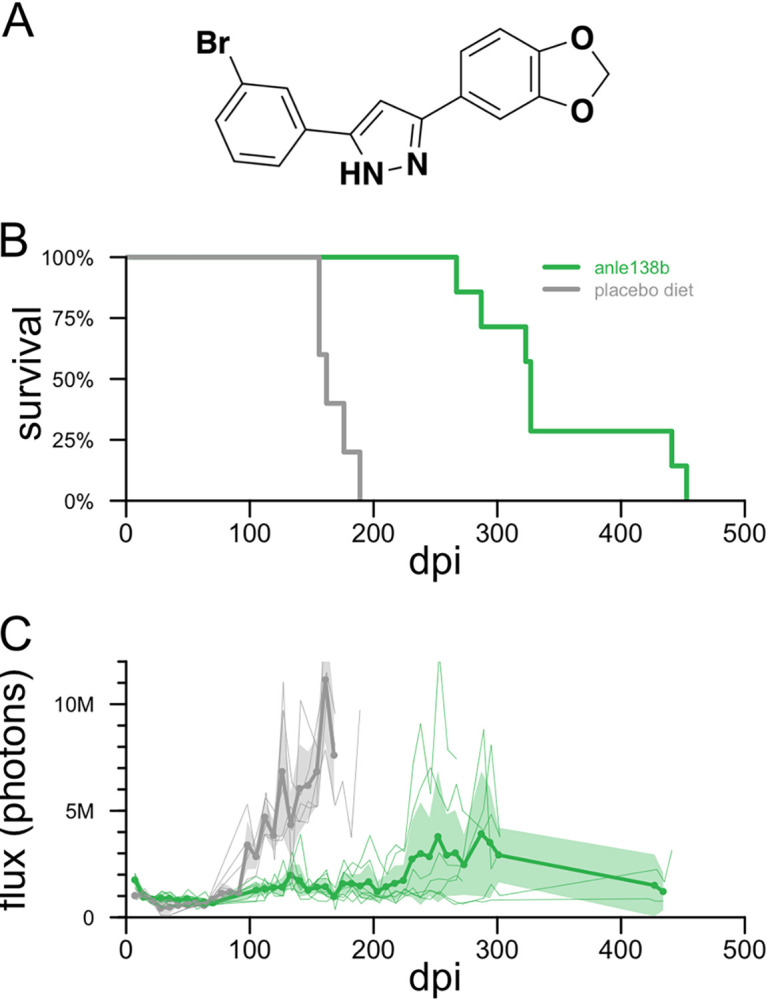
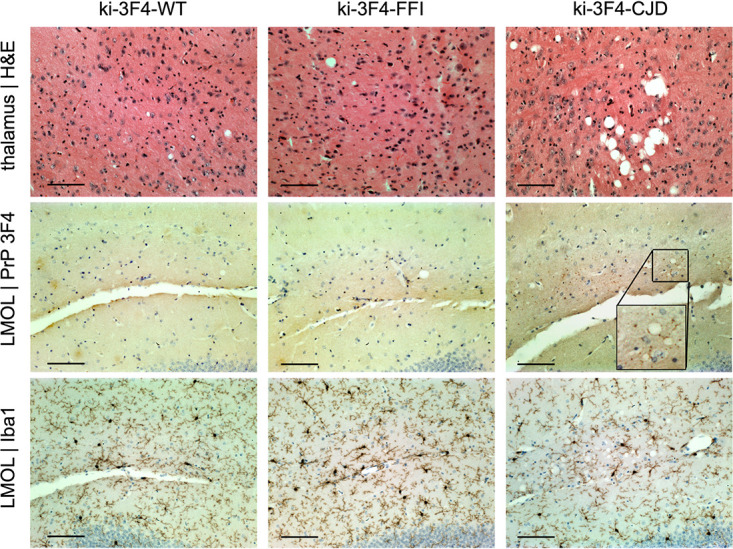
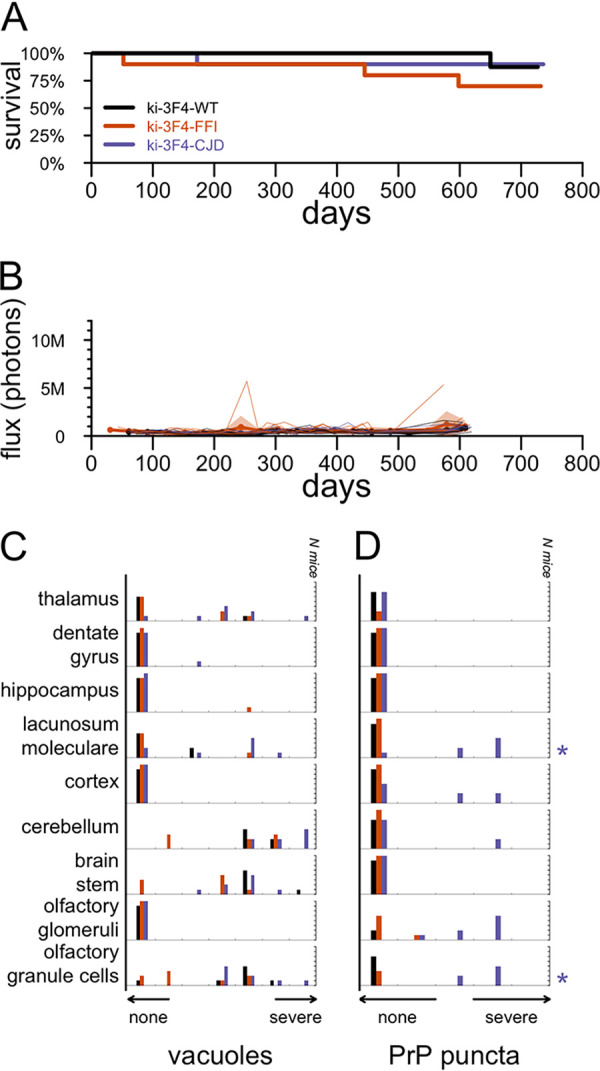
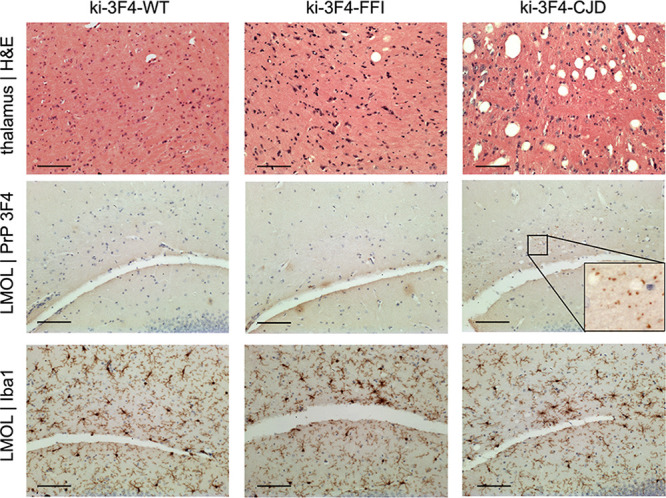
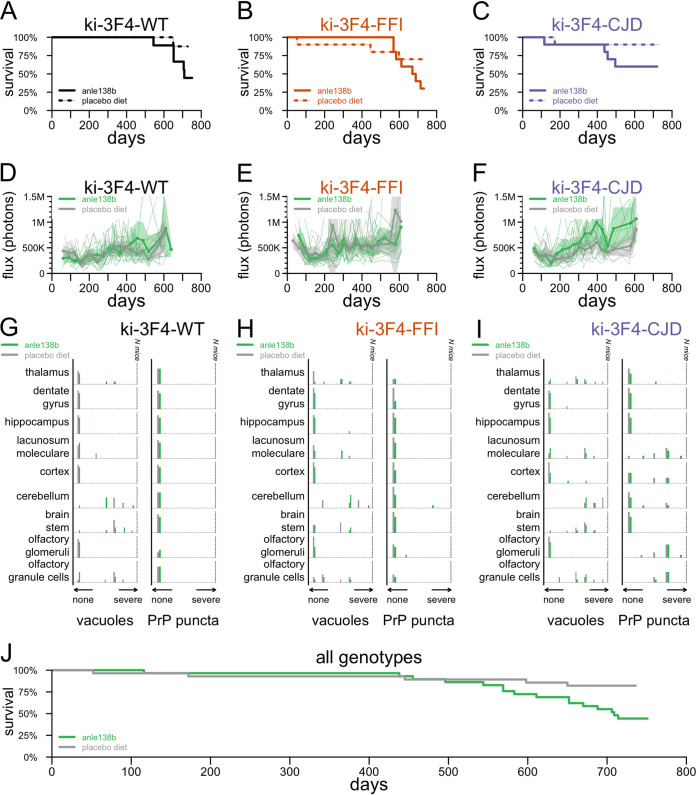
Phenotypic screening has yielded small-molecule inhibitors of prion replication that are effective against certain prion strains but not others. Here, we sought to test the small molecule anle138b in multiple mouse models of prion disease. In mice inoculated with the RML strain of prions, anle138b doubled survival and durably suppressed astrogliosis measured by live-animal bioluminescence imaging. In knock-in mouse models of the D178N and E200K mutations that cause genetic prion disease, however, we were unable to identify a clear, quantifiable disease endpoint against which to measure therapeutic efficacy. Among untreated animals, the mutations did not impact overall survival, and bioluminescence remained low out to >20 months of age. Vacuolization and PrP deposition were observed in some brain regions in a subset of mutant animals but appeared to be unable to carry the weight of a primary endpoint in a therapeutic study. We conclude that not all animal models of prion disease are suited to well-powered therapeutic efficacy studies, and care should be taken in choosing the models that will support drug development programs. There is an urgent need to develop drugs for prion disease, a currently untreatable neurodegenerative disease. In this effort, there is a debate over which animal models can best support a drug development program. While the study of prion disease benefits from excellent animal models because prions naturally afflict many different mammals, different models have different capabilities and limitations. Here, we conducted a therapeutic efficacy study of the drug candidate anle138b in mouse models with two of the most common mutations that cause genetic prion disease. In a more typical model where prions are injected directly into the brain, we found anle138b to be effective. In the genetic models, however, the animals never reached a clear, measurable point of disease onset. We conclude that not all prion disease animal models are ideally suited to drug efficacy studies, and well-defined, quantitative disease metrics should be a priority.
表型筛选已经产生了小分子抑制剂,可以有效抑制某些朊病毒株,但对其他株无效。在这里,我们试图在多种朊病毒病的小鼠模型中测试小分子 anle138b。在接种 RML 株朊病毒的小鼠中,anle138b 将存活时间延长一倍,并通过活体生物发光成像持久抑制星形胶质细胞增生。然而,在导致遗传性朊病毒病的 D178N 和 E200K 突变的基因敲入小鼠模型中,我们无法确定一个明确的、可量化的治疗效果终点来进行测量。在未经治疗的动物中,突变并未影响总存活时间,并且生物发光在>20 个月的年龄时仍然很低。在一些突变动物的部分脑区观察到空泡化和 PrP 沉积,但似乎无法在治疗研究中作为主要终点。我们得出结论,并非所有朊病毒病的动物模型都适合进行有效的治疗效果研究,在选择支持药物开发计划的模型时应谨慎。 目前,朊病毒病是一种无法治疗的神经退行性疾病,迫切需要开发治疗这种疾病的药物。在这方面,存在一个争论,即哪种动物模型可以最好地支持药物开发计划。虽然研究朊病毒病得益于优秀的动物模型,因为朊病毒自然会影响许多不同的哺乳动物,但不同的模型具有不同的能力和限制。在这里,我们在两种最常见的导致遗传性朊病毒病的突变的小鼠模型中进行了候选药物 anle138b 的治疗效果研究。在更典型的模型中,将朊病毒直接注射到大脑中,我们发现 anle138b 是有效的。然而,在遗传模型中,动物从未达到明确的、可测量的疾病发作点。我们得出结论,并非所有朊病毒病动物模型都非常适合药物疗效研究,并且应该优先考虑定义明确的、定量的疾病指标。