Department of Gastroenterology & Hepatology, Weill Cornell Medical College, 1305 York Avenue, 4thFloor, New York, NY, 10021, USA.
Obes Surg. 2023 Mar;33(3):714-719. doi: 10.1007/s11695-022-06409-x. Epub 2023 Jan 18.
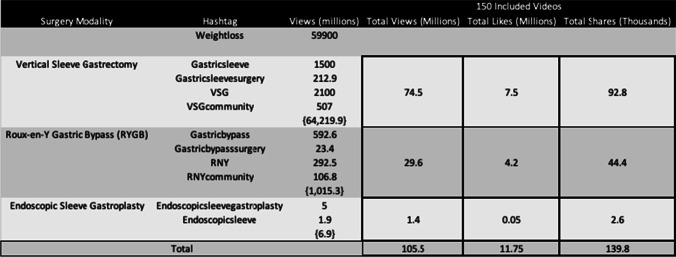
The use of social media as a medical information tool parallels rising obesity rates. TikTok, the popular video-sharing platform, contains nearly 99,000 videos hashtagged "weightloss." Prior studies have analyzed the quality of medical information on TikTok in other areas of medicine. However, the quality of videos regarding weight loss procedures has not yet been determined.
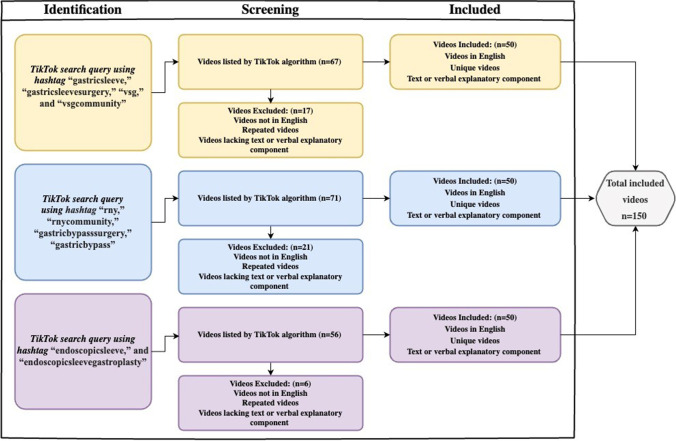
Hashtags encompassing three weight loss modalities were searched using TikTok's algorithm. The first 50 videos meeting inclusion criteria for each modality were considered. Two independent reviewers categorized videos and assessed their content quality using DISCERN. Quality scores and popularity were compared between videos sources, modalities, and content categories.
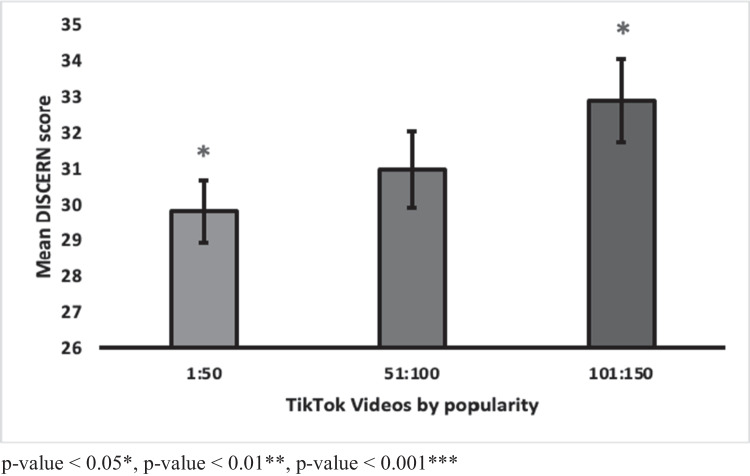
Of 150 videos included, 20.7% were created by physicians versus 79.3% by non-physicians (p < 0.001). The average DISCERN score for physician-created content was significantly higher than that of non-physicians (p < 0.001), despite significantly less popularity (p < 0.002). The 50 most popular videos had significantly lower DISCERN scores than the 50 least popular (p < 0.02). The average DISCERN score for endoscopic sleeve gastroplasty (ESG) videos were significantly higher than videos related to Roux-en-Y gastric bypass (RYGB) and vertical sleeve gastrectomy (VSG) (p < 0.001). VSG-related videos were significantly more popular than RYGB- and ESG-related videos (p < 0.001 and p < 0.001). Finally, educational videos had significantly higher DISCERN scores than weight loss transformation and personal experience videos (p < 0.001).
Videos on TikTok related to weight loss procedures are poor, and greater popularity trends with lower quality. Assessment of content can encourage viewers to seek better information and allow providers to improve patient information tools.
社交媒体作为一种医学信息工具的使用与肥胖率的上升呈平行关系。TikTok 是一个流行的视频分享平台,其中包含近 99000 个标记为“weightloss”的视频。先前的研究已经分析了 TikTok 上其他医学领域的医学信息质量。然而,关于减肥手术的视频质量尚未确定。
使用 TikTok 的算法搜索涵盖三种减肥方式的标签。考虑到每种方式符合纳入标准的前 50 个视频。两位独立的评审员对视频进行分类,并使用 DISCERN 评估其内容质量。比较了视频来源、方式和内容类别之间的质量评分和受欢迎程度。
在纳入的 150 个视频中,20.7%是由医生制作的,而 79.3%是由非医生制作的(p<0.001)。尽管受欢迎程度显著较低(p<0.002),但由医生制作的内容的平均 DISCERN 评分明显高于非医生(p<0.001)。最受欢迎的 50 个视频的 DISCERN 评分明显低于最不受欢迎的 50 个视频(p<0.02)。内镜袖状胃成形术(ESG)视频的平均 DISCERN 评分明显高于 Roux-en-Y 胃旁路术(RYGB)和垂直袖状胃切除术(VSG)相关视频(p<0.001)。VSG 相关视频的受欢迎程度明显高于 RYGB 和 ESG 相关视频(p<0.001 和 p<0.001)。最后,教育视频的 DISCERN 评分明显高于减肥转型和个人经验视频(p<0.001)。
TikTok 上与减肥手术相关的视频质量较差,且受欢迎程度越高,质量越低。对内容的评估可以鼓励观众寻求更好的信息,并允许提供者改进患者信息工具。