Department of Biomedical Imaging and Radiological Sciences, National Yang Ming Chiao Tung University, Taipei, Taiwan.
Genomics Research Center, Academia Sinica, Taipei, Taiwan.
Mol Oncol. 2023 Mar;17(3):422-444. doi: 10.1002/1878-0261.13378. Epub 2023 Feb 14.
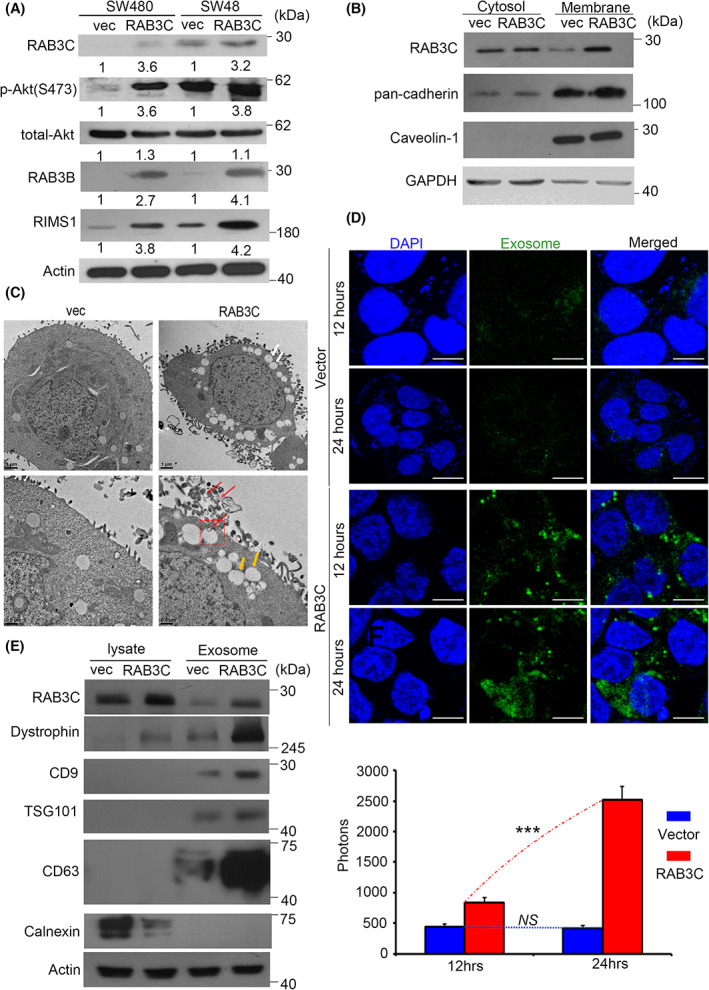
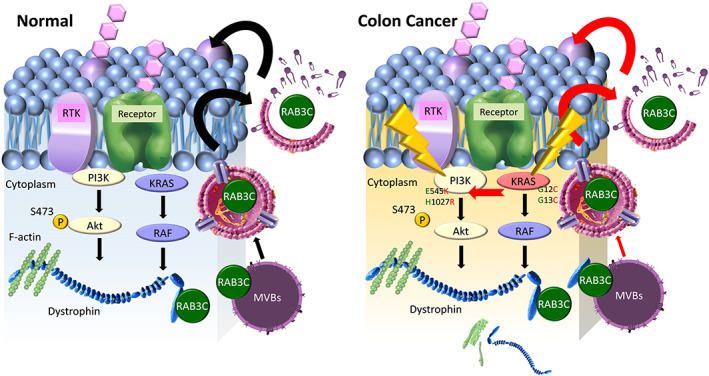
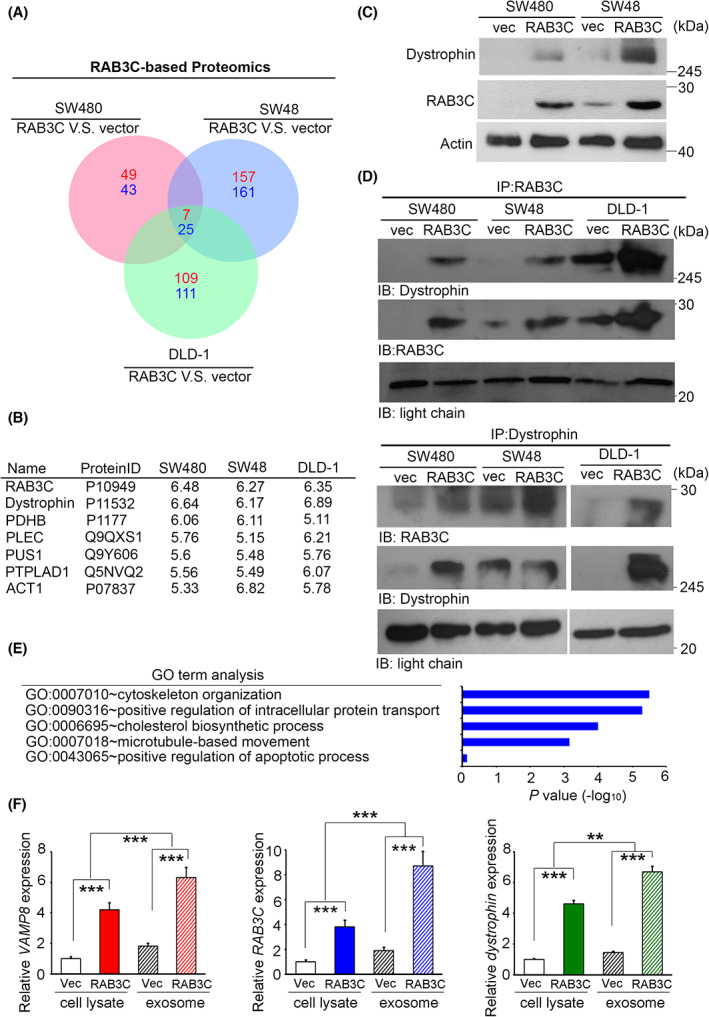
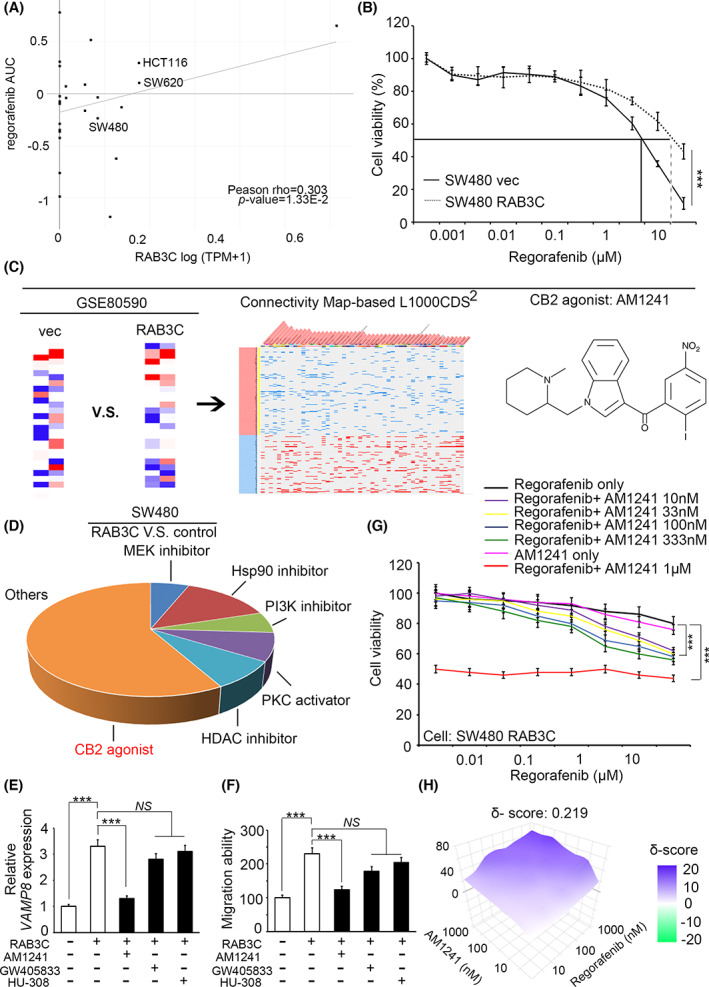
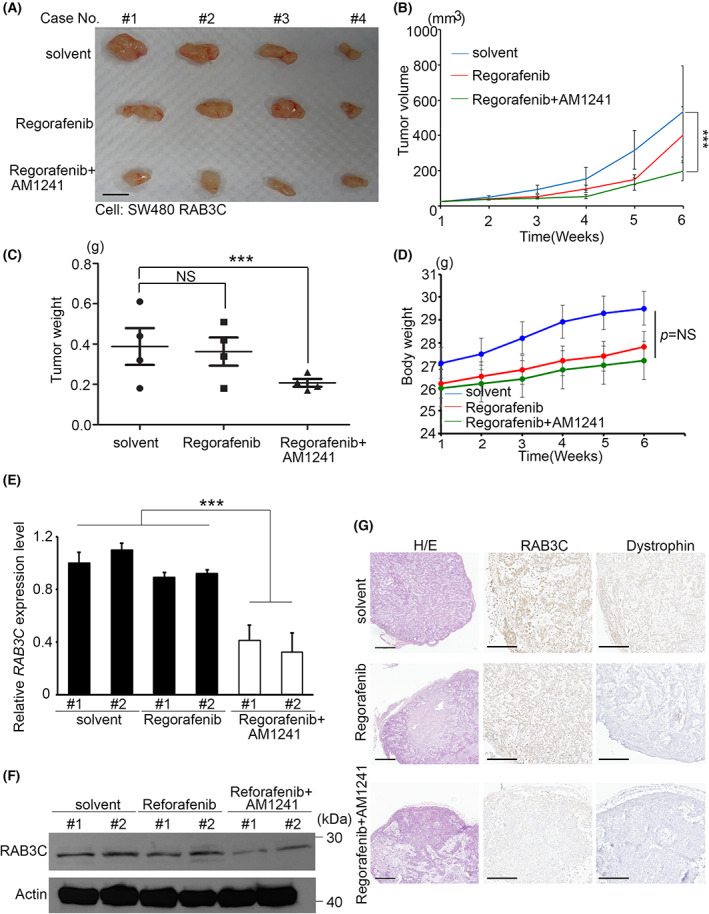
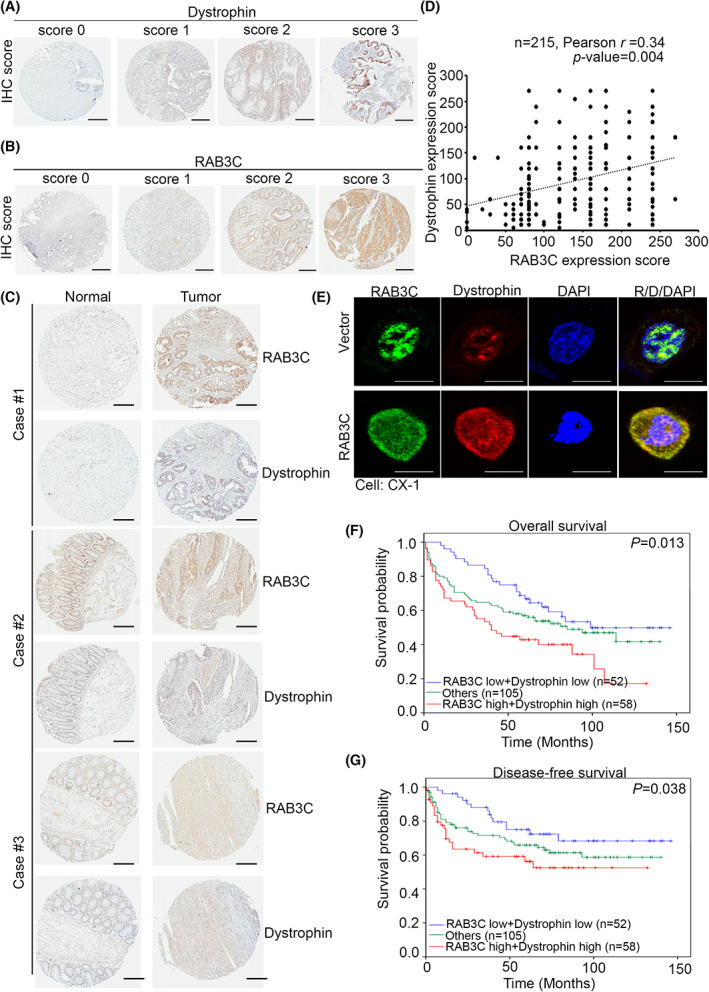
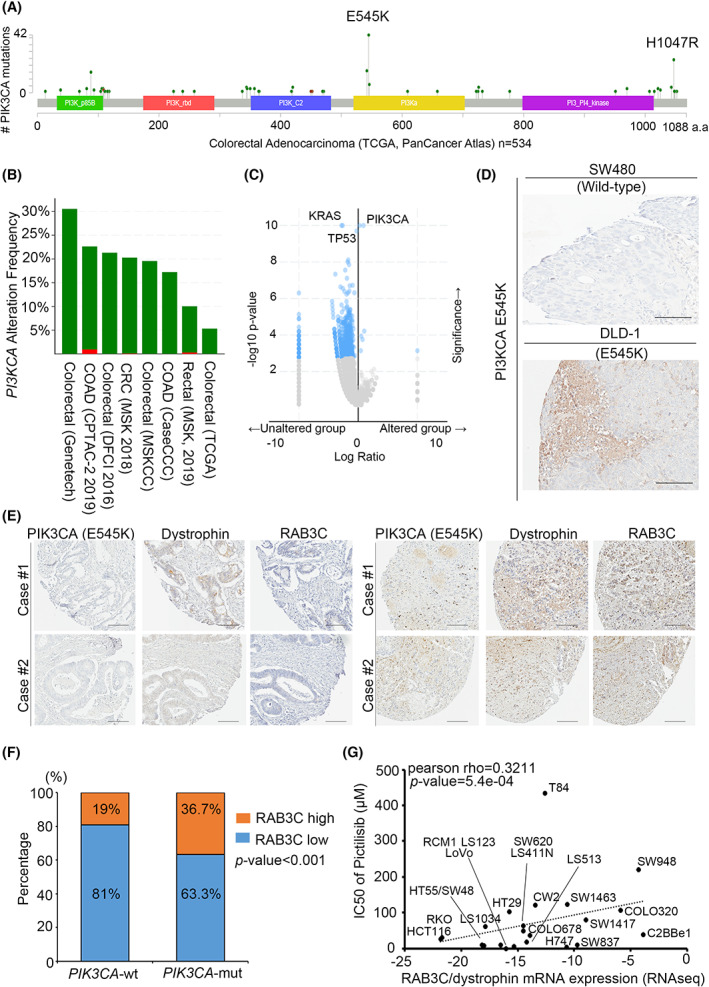
Rab GTPase 3C (RAB3C) is a peripheral membrane protein that is involved in membrane trafficking (vesicle formation) and cell movement. Recently, researchers have noted the exocytosis of RAB proteins, and their dysregulation is correlated with drug resistance and the altered tumor microenvironment in tumorigenesis. However, the molecular mechanisms of exocytotic RABs in the carcinogenicity of colorectal cancer (CRC) remain unknown. Researchers have used various in silico datasets to evaluate the expression profiles of RAB family members. We confirmed that RAB3C plays a key role in CRC progression. Its overexpression promotes exocytosis and is related to the resistance to several chemotherapeutic drugs. We established a proteomic dataset based on RAB3C, and found that dystrophin is one of the proteins that is upregulated with the overexpression of RAB3C. According to our results, RAB3C-induced dystrophin expression promotes vesicle formation and packaging. A connectivity map predicted that the cannabinoid receptor 2 (CB2) agonists reverse RAB3C-associated drug resistance, and that these agonists have synergistic effects when combined with standard chemotherapy regimens. Moreover, we found high dystrophin expression levels in CRC patients with poor survival outcomes. A combination of the dystrophin and RAB3C expression profiles can serve as an independent prognostic factor in CRC and is associated with several clinicopathological parameters. In addition, the RAB3C-dystrophin axis is positively correlated with the phosphatidylinositol 4,5-bisphosphate 3-kinase catalytic subunit alpha isoform (PIK3CA) genetic alterations in CRC patients. These findings can be used to provide novel combined therapeutic options for the treatment of CRC.
Rab GTPase 3C(RAB3C)是一种位于细胞膜的外周蛋白,参与了膜转运(囊泡形成)和细胞运动。最近,研究人员注意到了 RAB 蛋白的胞吐作用,其失调与肿瘤发生过程中的药物耐药性和肿瘤微环境改变有关。然而,RAB 蛋白的胞吐作用在结直肠癌(CRC)致癌性中的分子机制尚不清楚。研究人员已经使用了各种计算数据集来评估 RAB 家族成员的表达谱。我们证实 RAB3C 在 CRC 进展中发挥关键作用。其过表达促进了胞吐作用,与对几种化疗药物的耐药性有关。我们建立了一个基于 RAB3C 的蛋白质组数据集,发现肌营养不良蛋白是 RAB3C 过表达上调的蛋白之一。根据我们的结果,RAB3C 诱导的肌营养不良蛋白表达促进了囊泡的形成和包装。连接组学预测大麻素受体 2(CB2)激动剂可逆转 RAB3C 相关的耐药性,并且这些激动剂与标准化疗方案联合具有协同作用。此外,我们发现 CRC 患者中肌营养不良蛋白表达水平高与生存预后不良有关。肌营养不良蛋白和 RAB3C 表达谱的组合可作为 CRC 的独立预后因素,与多个临床病理参数相关。此外,RAB3C-肌营养不良蛋白轴与 CRC 患者的磷脂酰肌醇 4,5-二磷酸 3-激酶催化亚单位α异构体(PIK3CA)基因突变呈正相关。这些发现可用于为 CRC 治疗提供新的联合治疗选择。