Gastroenterology Department, CHU Nantes (Nantes Teaching Hospital), Nantes Université, Nantes, France.
Department of Clinical Neurophysiology, Reference Centre for Neuromuscular Diseases AOC, Filnemus, Euro-NMD, CHU Nantes, Nantes Université, Place Alexis-Ricordeau, Nantes, France.
Trials. 2023 Jan 20;24(1):50. doi: 10.1186/s13063-023-07071-z.
Chemotherapy-induced peripheral neuropathy (CIPN) is one of the most common adverse effects of antineoplastic agents, ranging in prevalence from 19% to over 85%. Clinically, CIPN is a predominantly sensory neuropathy that may be accompanied by motor and autonomic changes of varying intensity and duration. The high prevalence of CIPN among cancer patients makes it a major problem for both patients and survivors, as well as for their health care providers, especially because there is currently no single effective method of preventing CIPN; moreover, the options for treating this syndrome are very limited. Phycocyanin, a biliprotein pigment and an important constituent of the blue-green algae Spirulina platensis, has been reported to possess significant antioxidant and radical-scavenging properties, offering protection against oxidative stress, which is one of the hypothetic mechanisms, between others, of CIPN occurrence.
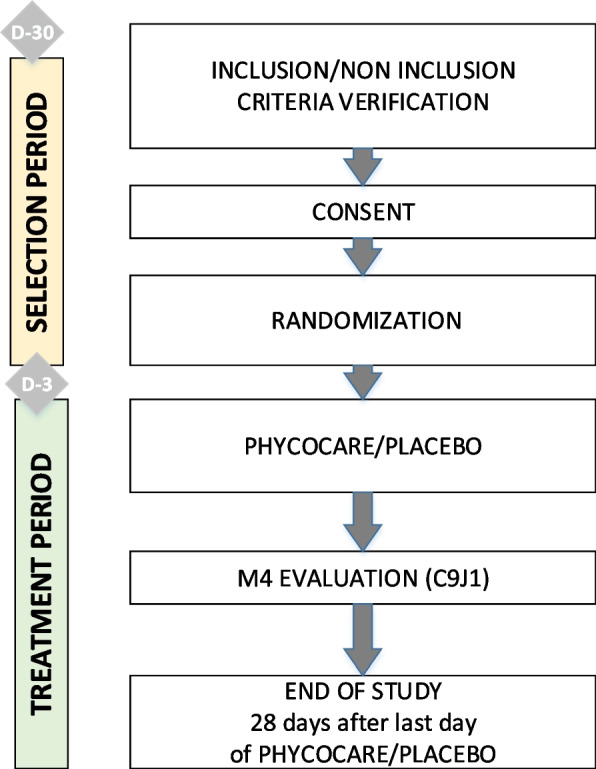
Our hypothesis is that phycocyanin may give protection against oxaliplatin-induced neuropathy in the treatment of gastrointestinal cancers. Our trial will be a randomized double-blind placebo-controlled study with 110 randomized patients suffering from metastatic gastrointestinal adenocarcinoma including esogastric, colorectal, and pancreatic cancers. Patients are being followed up in the gastroenterology or oncology departments of seven French hospitals.
Due to the neuropathy, patients need to avoid injury by paying careful attention to home safety; patients' physicians often prescribe over-the-counter pain medications. If validated, our hypothesis should help to limit neurotoxicity without the need to discontinue chemotherapy.
ClinicalTrials.gov NCT05025826. First published on August 27, 2021.
化疗引起的周围神经病(CIPN)是抗肿瘤药物最常见的不良反应之一,其患病率从 19%到 85%以上不等。临床上,CIPN 主要是一种感觉神经病变,可能伴有不同强度和持续时间的运动和自主神经改变。CIPN 在癌症患者中的高患病率使其成为患者和幸存者以及他们的医疗保健提供者的一个主要问题,尤其是因为目前没有预防 CIPN 的单一有效方法;此外,治疗这种综合征的选择非常有限。藻蓝蛋白是一种藻胆蛋白色素,是蓝绿藻螺旋藻的重要成分,据报道具有显著的抗氧化和自由基清除特性,可提供抗氧化应激保护,这是 CIPN 发生的假设机制之一。
我们的假设是藻蓝蛋白可能对奥沙利铂治疗胃肠道癌引起的神经病变有保护作用。我们的试验将是一项随机、双盲、安慰剂对照研究,纳入 110 名患有转移性胃肠道腺癌的患者,包括胃食管、结直肠和胰腺癌症。患者在法国七家医院的胃肠病学或肿瘤学部门接受随访。
由于神经病变,患者需要格外小心家庭安全,以避免受伤;患者的医生经常开非处方止痛药。如果我们的假设得到验证,应该有助于在不停止化疗的情况下限制神经毒性。
ClinicalTrials.gov NCT05025826. 于 2021 年 8 月 27 日首次发表。