Lee Seok-Hwan, Chon Yongho, Kim Yun-Young
Seoul50plus Foundation, Seoul 04147, Republic of Korea.
Department of Social Welfare, Incheon National University, Incheon 22012, Republic of Korea.
Healthcare (Basel). 2023 Jan 10;11(2):206. doi: 10.3390/healthcare11020206.
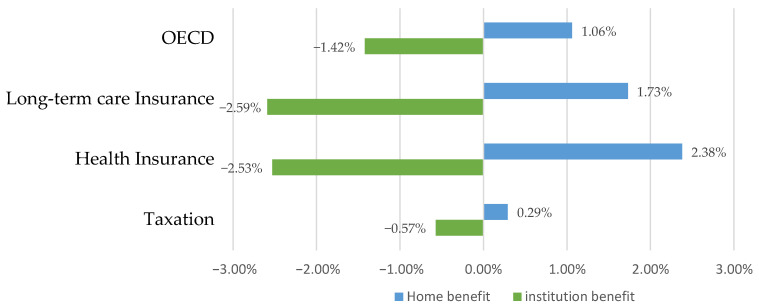
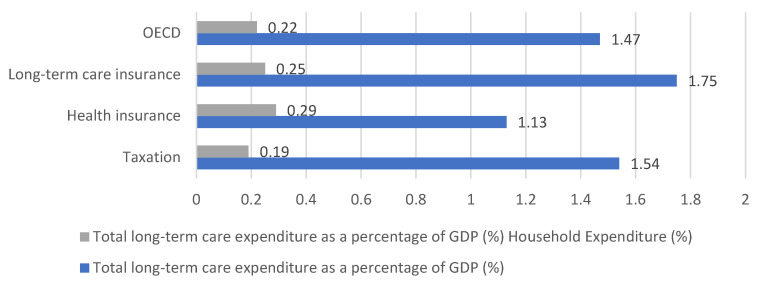
This study aims to examine the characteristics of long-term care (LTC) financing in Organization for Economic Cooperation Development (OECD) countries. To this end, the 26 OECD countries that have introduced LTC systems were classified into three types of models: tax-based, health insurance, and LTC insurance (LTCI) systems. Thereafter, these systems were analyzed using Gilbert and Terrell's policy analysis framework. The results indicated differences in the characteristics of each type of financing in terms of allocation, benefit provision, service delivery, and finance. It is likely that while the LTC insurance model was mainly based on universalism and showed the highest level of coverage, the tax-based and health insurance models adopted selectivism with lower level of benefits per capita. In terms of service delivery, local authorities tended to have the responsibility to decide LTC service users and provide services in many countries, regardless of the type of model. In terms of finance, LTC insurance-based countries had the highest LTC expenditure as a percentage of GDP, followed by countries with tax-based and health insurance systems.
本研究旨在考察经济合作与发展组织(经合组织)国家长期护理(LTC)融资的特点。为此,将已引入长期护理体系的26个经合组织国家分为三种模式类型:基于税收的模式、医疗保险模式和长期护理保险(LTCI)模式。此后,运用吉尔伯特和特雷尔的政策分析框架对这些模式进行了分析。结果表明,在分配、福利提供、服务提供和资金方面,每种融资类型的特点存在差异。长期护理保险模式可能主要基于普遍主义,覆盖率最高,而基于税收的模式和医疗保险模式则采用选择主义,人均福利水平较低。在服务提供方面,无论模式类型如何,许多国家的地方当局往往负责确定长期护理服务使用者并提供服务。在资金方面,以长期护理保险为基础的国家,长期护理支出占国内生产总值的比例最高,其次是基于税收的国家和医疗保险体系国家。