Department of Neuroscience, Università Cattolica del Sacro Cuore, 00168 Rome, Italy.
Fondazione Policlinico Universitario A. Gemelli IRCCS, 00168 Rome, Italy.
Int J Mol Sci. 2023 Jan 4;24(2):917. doi: 10.3390/ijms24020917.
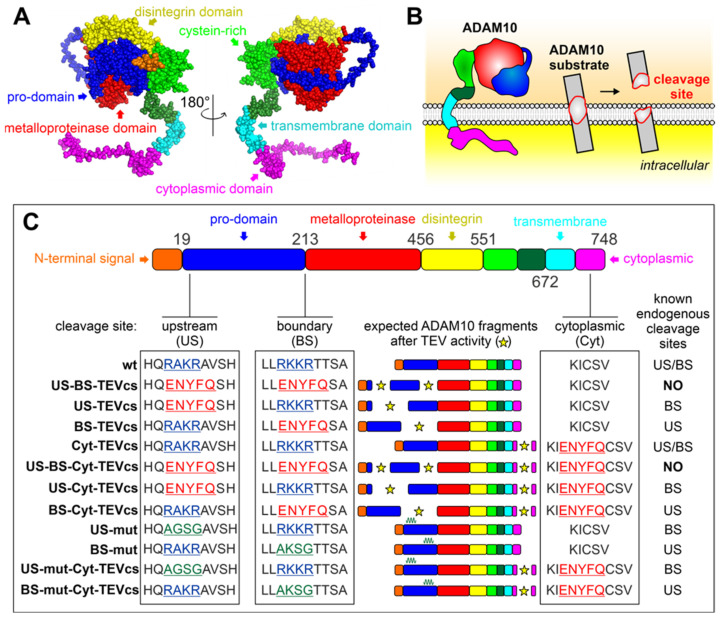
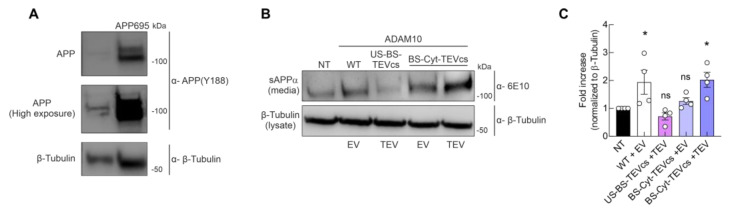
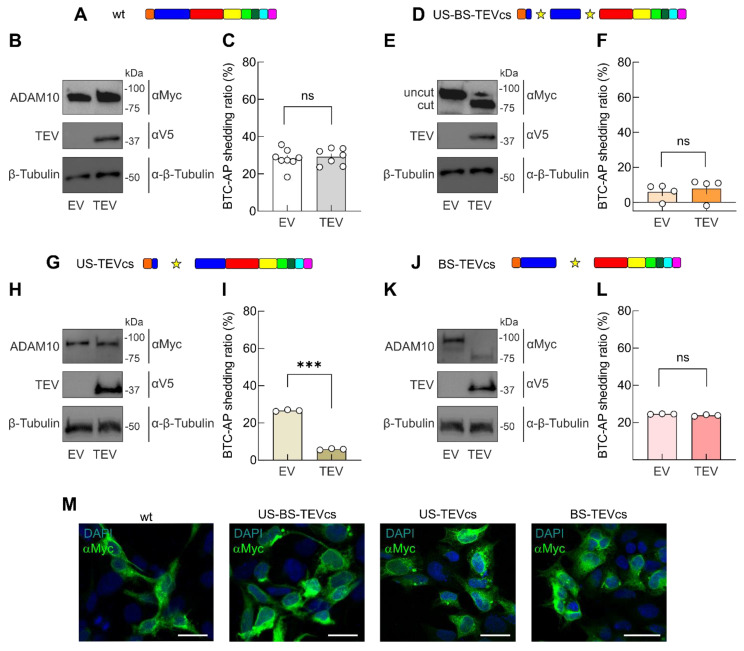
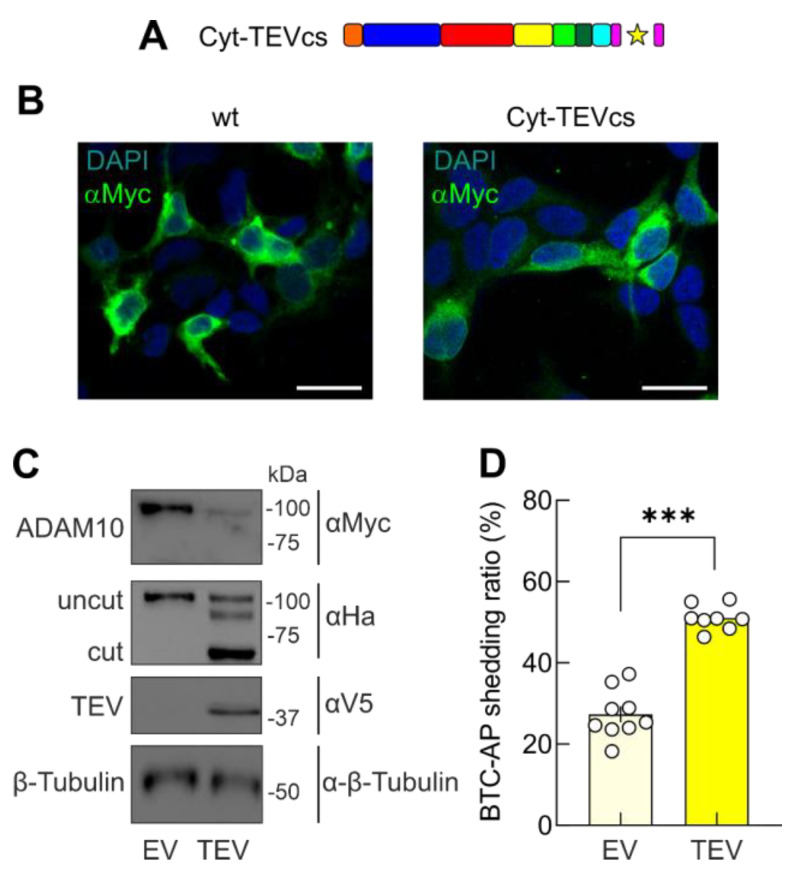
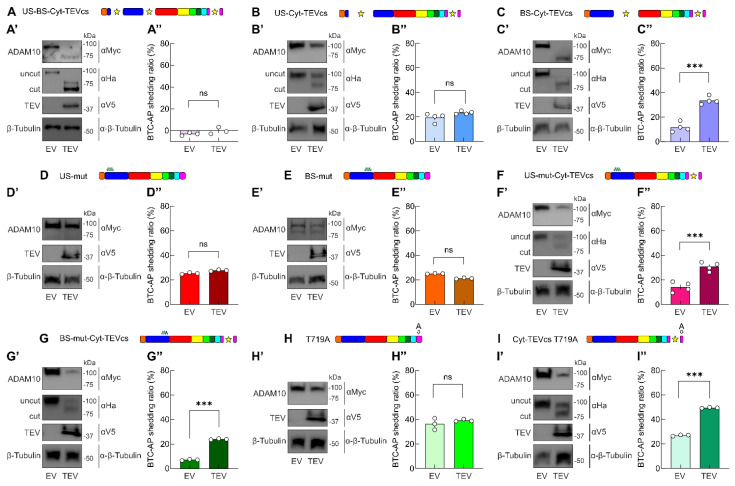
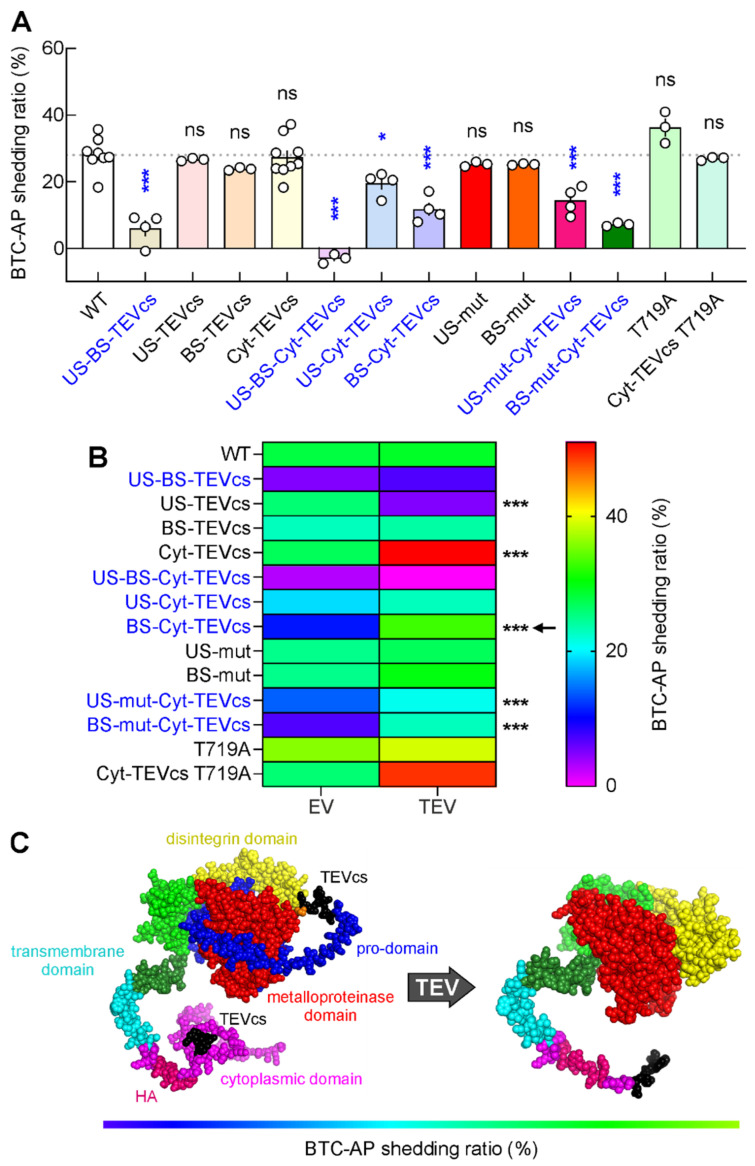
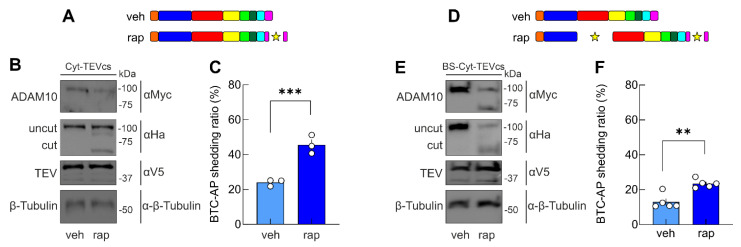
A Disintegrin and Metalloprotease 10, also known as ADAM10, is a cell surface protease ubiquitously expressed in mammalian cells where it cuts several membrane proteins implicated in multiple physiological processes. The dysregulation of ADAM10 expression and function has been implicated in pathological conditions, including Alzheimer's disease (AD). Although it has been suggested that ADAM10 is expressed as a zymogen and the removal of the prodomain results in its activation, other potential mechanisms for the ADAM10 proteolytic function and activation remain unclear. Another suggested mechanism is post-translational modification of the cytoplasmic domain, which regulates ADAM10-dependent protein ectodomain shedding. Therefore, the precise and temporal activation of ADAM10 is highly desirable to reveal the fine details of ADAM10-mediated cleavage mechanisms and protease-dependent therapeutic applications. Here, we present a strategy to control prodomain and cytosolic tail cleavage to regulate ADAM10 shedding activity without the intervention of small endogenous molecule signaling pathways. We generated a series of engineered ADAM10 analogs containing Tobacco Etch Virus protease (TEV) cleavage site (TEVcs), rendering ADAM10 cleavable by TEV. This strategy revealed that, in the absence of other stimuli, the TEV-mediated removal of the prodomain could not activate ADAM10. However, the TEV-mediated cleavage of the cytosolic domain significantly increased ADAM10 activity. Then, we generated ADAM10 with a minimal constitutively catalytic activity that increased significantly in the presence of TEV or after activating a chemically activatable TEV. Our results revealed a bioengineering strategy for controlling the ADAM10 activity in living cells, paving the way to obtain spatiotemporal control of ADAM10. Finally, we proved that our approach of controlling ADAM10 promoted α-secretase activity and the non-amyloidogenic cleavage of amyloid-β precursor protein (APP), thereby increasing the production of the neuroprotective soluble ectodomain (sAPPα). Our bioengineering strategy has the potential to be exploited as a next-generation gene therapy for AD.
一种解整合素金属蛋白酶 10,也称为 ADAM10,是一种广泛表达于哺乳动物细胞表面的蛋白酶,它可以切割多种参与多种生理过程的膜蛋白。ADAM10 的表达和功能失调与包括阿尔茨海默病(AD)在内的病理状况有关。尽管已经提出 ADAM10 作为酶原表达,并且去除前导序列导致其激活,但 ADAM10 蛋白水解功能和激活的其他潜在机制仍不清楚。另一种建议的机制是细胞质结构域的翻译后修饰,它调节 ADAM10 依赖性蛋白的胞外结构域脱落。因此,ADAM10 的精确和时间激活对于揭示 ADAM10 介导的切割机制和蛋白酶依赖性治疗应用的细微差别非常重要。在这里,我们提出了一种控制前导序列和细胞质尾巴切割的策略,以调节 ADAM10 的脱落活性,而无需干预小的内源性分子信号通路。我们生成了一系列包含烟草蚀纹病毒蛋白酶(TEV)切割位点(TEVcs)的工程 ADAM10 类似物,使 ADAM10 可被 TEV 切割。该策略表明,在没有其他刺激的情况下,TEV 介导的前导序列去除不能激活 ADAM10。然而,TEV 介导的细胞质结构域切割显著增加了 ADAM10 的活性。然后,我们生成了具有最小组成型催化活性的 ADAM10,在存在 TEV 或在化学可激活的 TEV 激活后,其活性显著增加。我们的结果揭示了一种控制活细胞中 ADAM10 活性的生物工程策略,为获得 ADAM10 的时空控制铺平了道路。最后,我们证明了我们控制 ADAM10 的方法促进了 α-分泌酶活性和淀粉样前体蛋白(APP)的非淀粉样蛋白切割,从而增加了神经保护可溶性胞外结构域(sAPPα)的产生。我们的生物工程策略有可能被开发为 AD 的下一代基因治疗方法。