• 文献检索
  • 文档翻译
  • 深度研究
  • 学术资讯
  • Suppr Zotero 插件Zotero 插件
  • 邀请有礼
  • 套餐&价格
  • 历史记录
应用&插件
Suppr Zotero 插件Zotero 插件浏览器插件Mac 客户端Windows 客户端微信小程序
定价
高级版会员购买积分包购买API积分包
服务
文献检索文档翻译深度研究API 文档MCP 服务
关于我们
关于 Suppr公司介绍联系我们用户协议隐私条款
关注我们

Suppr 超能文献

核心技术专利:CN118964589B侵权必究
粤ICP备2023148730 号-1Suppr @ 2026

文献检索

告别复杂PubMed语法,用中文像聊天一样搜索,搜遍4000万医学文献。AI智能推荐,让科研检索更轻松。

立即免费搜索

文件翻译

保留排版,准确专业,支持PDF/Word/PPT等文件格式,支持 12+语言互译。

免费翻译文档

深度研究

AI帮你快速写综述,25分钟生成高质量综述,智能提取关键信息,辅助科研写作。

立即免费体验

切削液对镍基高温合金加工表面完整性及耐蚀性能的影响

Effect of Cutting Fluid on Machined Surface Integrity and Corrosion Property of Nickel Based Superalloy.

作者信息

Chen Shiqi, Yan Pei, Zhu Junyi, Wang Yubin, Zhao Wenxiang, Jiao Li, Wang Xibin

机构信息

Key Laboratory of Fundamental Science for Advanced Machining, Beijing Institute of Technology, Beijing 100081, China.

出版信息

Materials (Basel). 2023 Jan 15;16(2):843. doi: 10.3390/ma16020843.

DOI:10.3390/ma16020843
PMID:36676579
原文链接:https://pmc.ncbi.nlm.nih.gov/articles/PMC9862883/
Abstract

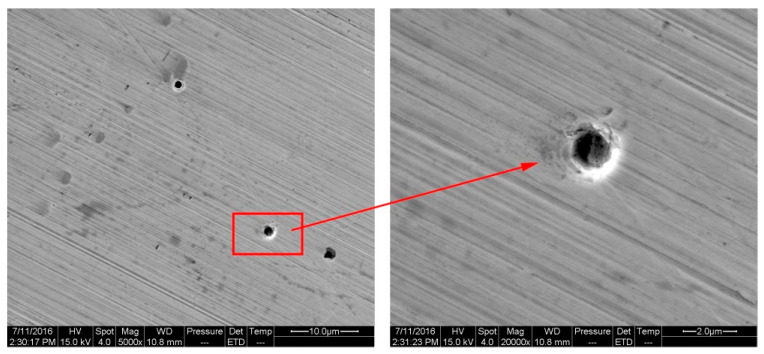
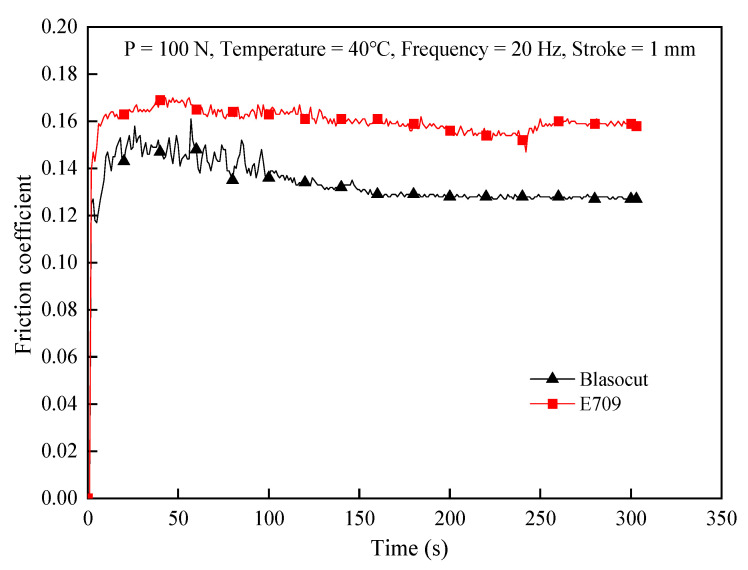
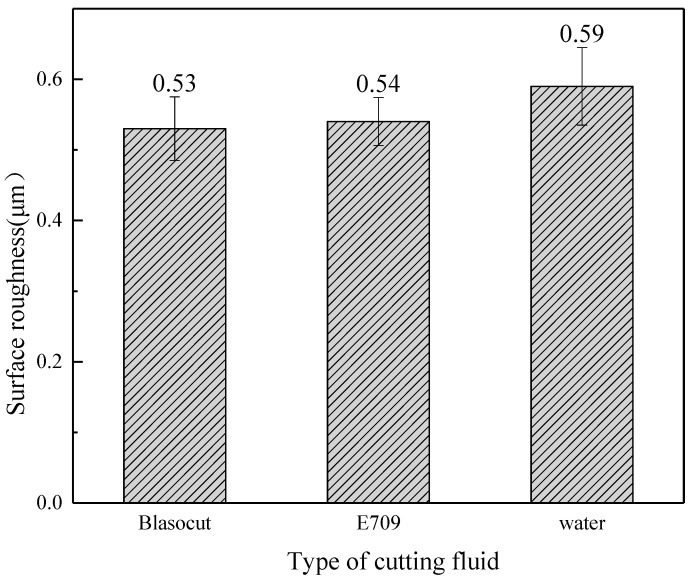
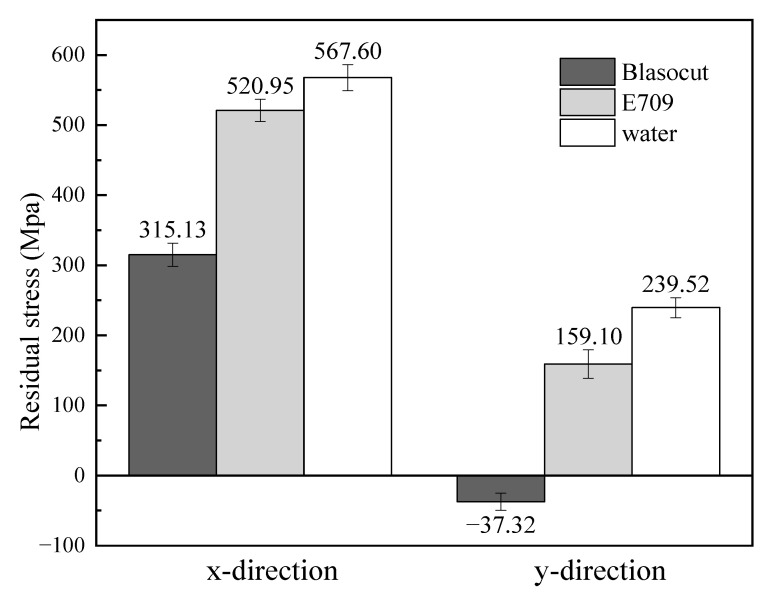
Superalloy parts place high demands on machined surface integrity and serviceability. In the machining process of superalloys, the cutting fluid is usually used to improve the machining performance. Cutting fluids with cooling and lubrication functions have a relatively large effect on the surface microstructure and residual stress as well. The corrosion damage caused by cutting fluid to the machined surface, during machining and residual, are also worth considering. In this paper, the machining performance of typical binary Ni Cr solid solution, age-hardened, nickel-based superalloy NiCr20TiAl T6, under two commonly used cutting fluids, Blasocut and E709, was analyzed, including cutting performance, surface quality, machining surface corrosion characteristics, and so on. The results showed that the surface residual stress could be improved by adding both cutting fluids compared with the deionized water. Blasocut had better lubrication properties, which could reduce friction and heat production. Pitting holes were found on the polished surface after 45 days with E709 cutting fluid, which was more corrosive than Blasocut. According to this research, a reasonable cutting fluid can be selected to reduce the surface corrosion and improve the service life and performance of parts.

摘要

高温合金零件对加工表面完整性和使用性能有很高要求。在高温合金的加工过程中,通常使用切削液来提高加工性能。具有冷却和润滑功能的切削液对表面微观结构和残余应力也有较大影响。切削液在加工过程中和加工后对加工表面造成的腐蚀损伤也值得考虑。本文分析了典型的二元镍铬固溶时效硬化镍基高温合金NiCr20TiAl T6在两种常用切削液Blasocut和E709下的加工性能,包括切削性能、表面质量、加工表面腐蚀特性等。结果表明,与去离子水相比,添加这两种切削液均可改善表面残余应力。Blasocut具有更好的润滑性能,可减少摩擦和热量产生。使用E709切削液45天后,在抛光表面发现了点蚀孔,其腐蚀性比Blasocut更强。根据本研究,可以选择合理的切削液来减少表面腐蚀,提高零件的使用寿命和性能。
https://cdn.ncbi.nlm.nih.gov/pmc/blobs/4284/9862883/1f25379b4fe4/materials-16-00843-g018.jpg
https://cdn.ncbi.nlm.nih.gov/pmc/blobs/4284/9862883/0c9307ae3eb6/materials-16-00843-g001.jpg
https://cdn.ncbi.nlm.nih.gov/pmc/blobs/4284/9862883/83284adf6afd/materials-16-00843-g002.jpg
https://cdn.ncbi.nlm.nih.gov/pmc/blobs/4284/9862883/0d3722bb75a8/materials-16-00843-g003.jpg
https://cdn.ncbi.nlm.nih.gov/pmc/blobs/4284/9862883/79ca8be572f8/materials-16-00843-g004.jpg
https://cdn.ncbi.nlm.nih.gov/pmc/blobs/4284/9862883/fb947fa8d33d/materials-16-00843-g005.jpg
https://cdn.ncbi.nlm.nih.gov/pmc/blobs/4284/9862883/097f6cc4b857/materials-16-00843-g006.jpg
https://cdn.ncbi.nlm.nih.gov/pmc/blobs/4284/9862883/80ce13877f25/materials-16-00843-g007.jpg
https://cdn.ncbi.nlm.nih.gov/pmc/blobs/4284/9862883/574d2881f3b8/materials-16-00843-g008.jpg
https://cdn.ncbi.nlm.nih.gov/pmc/blobs/4284/9862883/6a638d60519a/materials-16-00843-g009.jpg
https://cdn.ncbi.nlm.nih.gov/pmc/blobs/4284/9862883/222c63a26075/materials-16-00843-g010.jpg
https://cdn.ncbi.nlm.nih.gov/pmc/blobs/4284/9862883/d61b13cd7e5f/materials-16-00843-g011.jpg
https://cdn.ncbi.nlm.nih.gov/pmc/blobs/4284/9862883/5c6db54ccadd/materials-16-00843-g012.jpg
https://cdn.ncbi.nlm.nih.gov/pmc/blobs/4284/9862883/31cb02955767/materials-16-00843-g013.jpg
https://cdn.ncbi.nlm.nih.gov/pmc/blobs/4284/9862883/150147371717/materials-16-00843-g014.jpg
https://cdn.ncbi.nlm.nih.gov/pmc/blobs/4284/9862883/e0dd55dd5665/materials-16-00843-g015.jpg
https://cdn.ncbi.nlm.nih.gov/pmc/blobs/4284/9862883/16483046d27f/materials-16-00843-g016.jpg
https://cdn.ncbi.nlm.nih.gov/pmc/blobs/4284/9862883/e05fd1c9e8cd/materials-16-00843-g017.jpg
https://cdn.ncbi.nlm.nih.gov/pmc/blobs/4284/9862883/1f25379b4fe4/materials-16-00843-g018.jpg
https://cdn.ncbi.nlm.nih.gov/pmc/blobs/4284/9862883/0c9307ae3eb6/materials-16-00843-g001.jpg
https://cdn.ncbi.nlm.nih.gov/pmc/blobs/4284/9862883/83284adf6afd/materials-16-00843-g002.jpg
https://cdn.ncbi.nlm.nih.gov/pmc/blobs/4284/9862883/0d3722bb75a8/materials-16-00843-g003.jpg
https://cdn.ncbi.nlm.nih.gov/pmc/blobs/4284/9862883/79ca8be572f8/materials-16-00843-g004.jpg
https://cdn.ncbi.nlm.nih.gov/pmc/blobs/4284/9862883/fb947fa8d33d/materials-16-00843-g005.jpg
https://cdn.ncbi.nlm.nih.gov/pmc/blobs/4284/9862883/097f6cc4b857/materials-16-00843-g006.jpg
https://cdn.ncbi.nlm.nih.gov/pmc/blobs/4284/9862883/80ce13877f25/materials-16-00843-g007.jpg
https://cdn.ncbi.nlm.nih.gov/pmc/blobs/4284/9862883/574d2881f3b8/materials-16-00843-g008.jpg
https://cdn.ncbi.nlm.nih.gov/pmc/blobs/4284/9862883/6a638d60519a/materials-16-00843-g009.jpg
https://cdn.ncbi.nlm.nih.gov/pmc/blobs/4284/9862883/222c63a26075/materials-16-00843-g010.jpg
https://cdn.ncbi.nlm.nih.gov/pmc/blobs/4284/9862883/d61b13cd7e5f/materials-16-00843-g011.jpg
https://cdn.ncbi.nlm.nih.gov/pmc/blobs/4284/9862883/5c6db54ccadd/materials-16-00843-g012.jpg
https://cdn.ncbi.nlm.nih.gov/pmc/blobs/4284/9862883/31cb02955767/materials-16-00843-g013.jpg
https://cdn.ncbi.nlm.nih.gov/pmc/blobs/4284/9862883/150147371717/materials-16-00843-g014.jpg
https://cdn.ncbi.nlm.nih.gov/pmc/blobs/4284/9862883/e0dd55dd5665/materials-16-00843-g015.jpg
https://cdn.ncbi.nlm.nih.gov/pmc/blobs/4284/9862883/16483046d27f/materials-16-00843-g016.jpg
https://cdn.ncbi.nlm.nih.gov/pmc/blobs/4284/9862883/e05fd1c9e8cd/materials-16-00843-g017.jpg
https://cdn.ncbi.nlm.nih.gov/pmc/blobs/4284/9862883/1f25379b4fe4/materials-16-00843-g018.jpg

相似文献

1
Effect of Cutting Fluid on Machined Surface Integrity and Corrosion Property of Nickel Based Superalloy.切削液对镍基高温合金加工表面完整性及耐蚀性能的影响
Materials (Basel). 2023 Jan 15;16(2):843. doi: 10.3390/ma16020843.
2
The Effect of Cutting Fluid on Machined Surface Integrity of Ultra-High-Strength Steel 45CrNiMoVA.切削液对超高强度钢45CrNiMoVA加工表面完整性的影响
Materials (Basel). 2023 Apr 24;16(9):3331. doi: 10.3390/ma16093331.
3
Machinability of Rene 65 Superalloy.Rene 65高温合金的可加工性
Materials (Basel). 2019 Jun 25;12(12):2034. doi: 10.3390/ma12122034.
4
Research on Cutting Layer Characteristics of Superalloy under High-Pressure Cooling.高温合金在高压冷却条件下的切削层特性研究
Materials (Basel). 2023 May 24;16(11):3931. doi: 10.3390/ma16113931.
5
Experimental Study on Ultrasonic Assisted Turning of GH4068 Superalloy.GH4068高温合金超声辅助车削的实验研究
Materials (Basel). 2023 May 5;16(9):3554. doi: 10.3390/ma16093554.
6
Machinability Investigations of Inconel-800 Super Alloy under Sustainable Cooling Conditions.可持续冷却条件下Inconel - 800超级合金的可加工性研究
Materials (Basel). 2018 Oct 25;11(11):2088. doi: 10.3390/ma11112088.
7
Performance Evaluation of Vegetable Oil-Based Nano-Cutting Fluids in Environmentally Friendly Machining of Inconel-800 Alloy.植物油基纳米切削液在Inconel - 800合金环保加工中的性能评估
Materials (Basel). 2019 Aug 30;12(17):2792. doi: 10.3390/ma12172792.
8
Machinability Investigation of Nitronic 60 Steel Turning Using SiAlON Ceramic Tools under Different Cooling/Lubrication Conditions.不同冷却/润滑条件下使用赛隆陶瓷刀具车削尼特拉镍60钢的可加工性研究
Materials (Basel). 2022 Mar 23;15(7):2368. doi: 10.3390/ma15072368.
9
Passivation Effect of the Chlorinated Paraffin Added in the Cutting Fluid on the Surface Corrosion Resistance of the Stainless Steel.添加到切削液中的氯化石蜡对不锈钢表面耐腐蚀性能的钝化作用。
Molecules. 2023 Apr 22;28(9):3648. doi: 10.3390/molecules28093648.
10
Theoretical and experimental investigations on rotary ultrasonic surface micro-machining of brittle materials.旋转超声表面微加工脆性材料的理论与实验研究。
Ultrason Sonochem. 2022 Sep;89:106162. doi: 10.1016/j.ultsonch.2022.106162. Epub 2022 Sep 12.

引用本文的文献

1
Advanced Machining Technology for Modern Engineering Materials.现代工程材料的先进加工技术
Materials (Basel). 2024 Apr 28;17(9):2064. doi: 10.3390/ma17092064.

本文引用的文献

1
Statistical Analysis of Surface Roughness, Burr Formation and Tool Wear in High Speed Micro Milling of Inconel 600 Alloy under Cryogenic, Wet and Dry Conditions.Inconel 600合金在低温、湿式和干式条件下高速微铣削时表面粗糙度、毛刺形成及刀具磨损的统计分析
Micromachines (Basel). 2022 Dec 21;14(1):13. doi: 10.3390/mi14010013.
2
Machining Stresses and Initial Geometry on Bulk Residual Stresses Characterization by On-Machine Layer Removal.通过在线逐层去除对加工应力和初始几何形状进行体残余应力表征
Materials (Basel). 2020 Mar 22;13(6):1445. doi: 10.3390/ma13061445.