Department of Engineering, University of Nicosia, 2417 Nicosia, Cyprus.
Sensors (Basel). 2023 Jan 9;23(2):737. doi: 10.3390/s23020737.
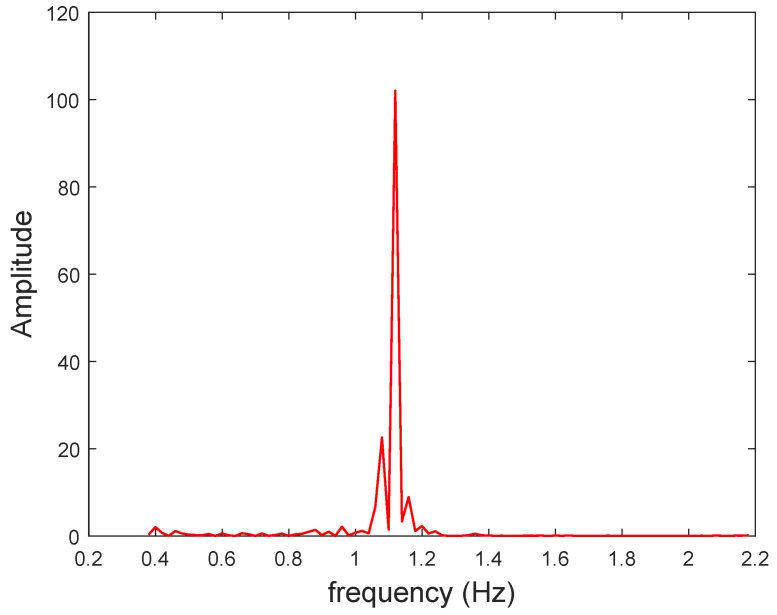
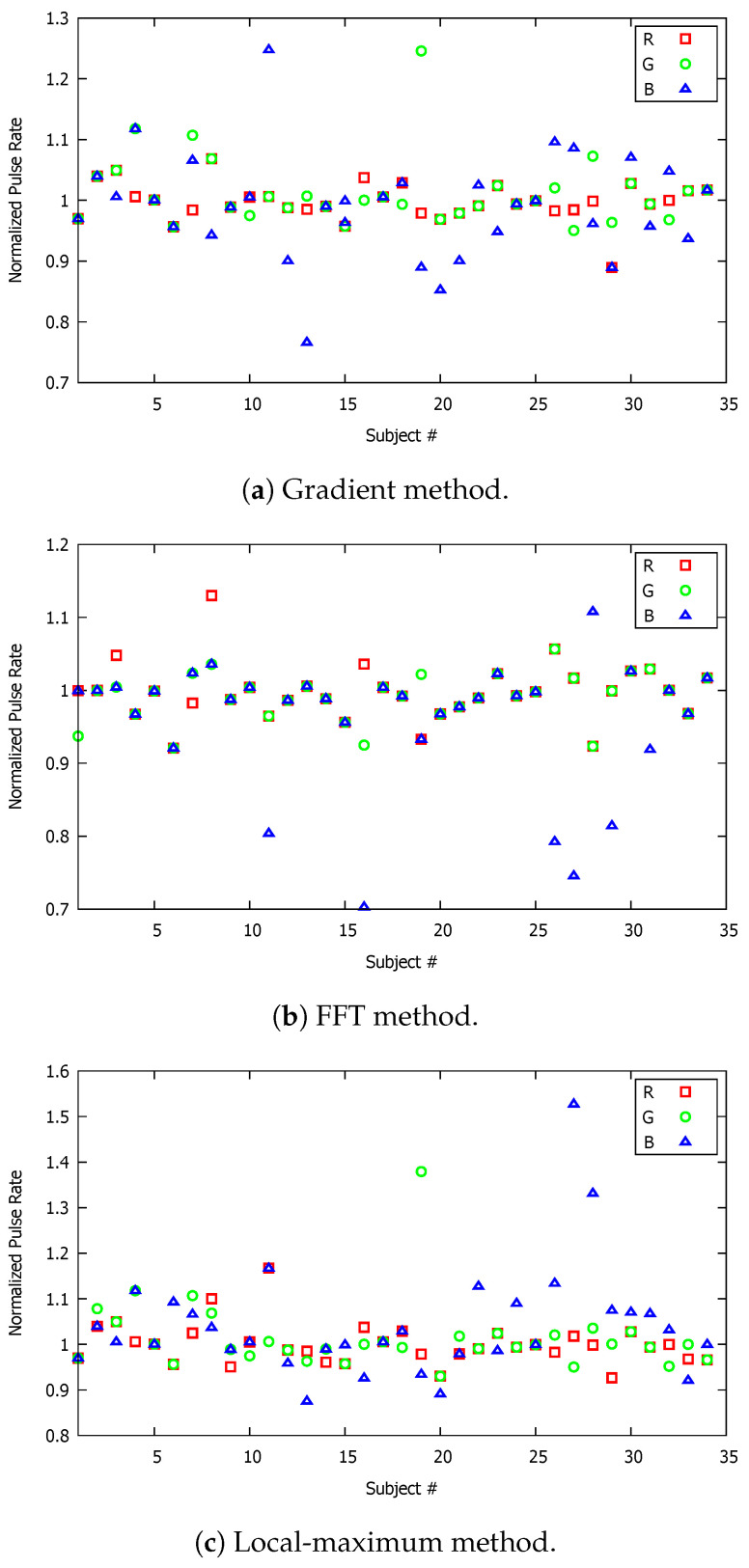
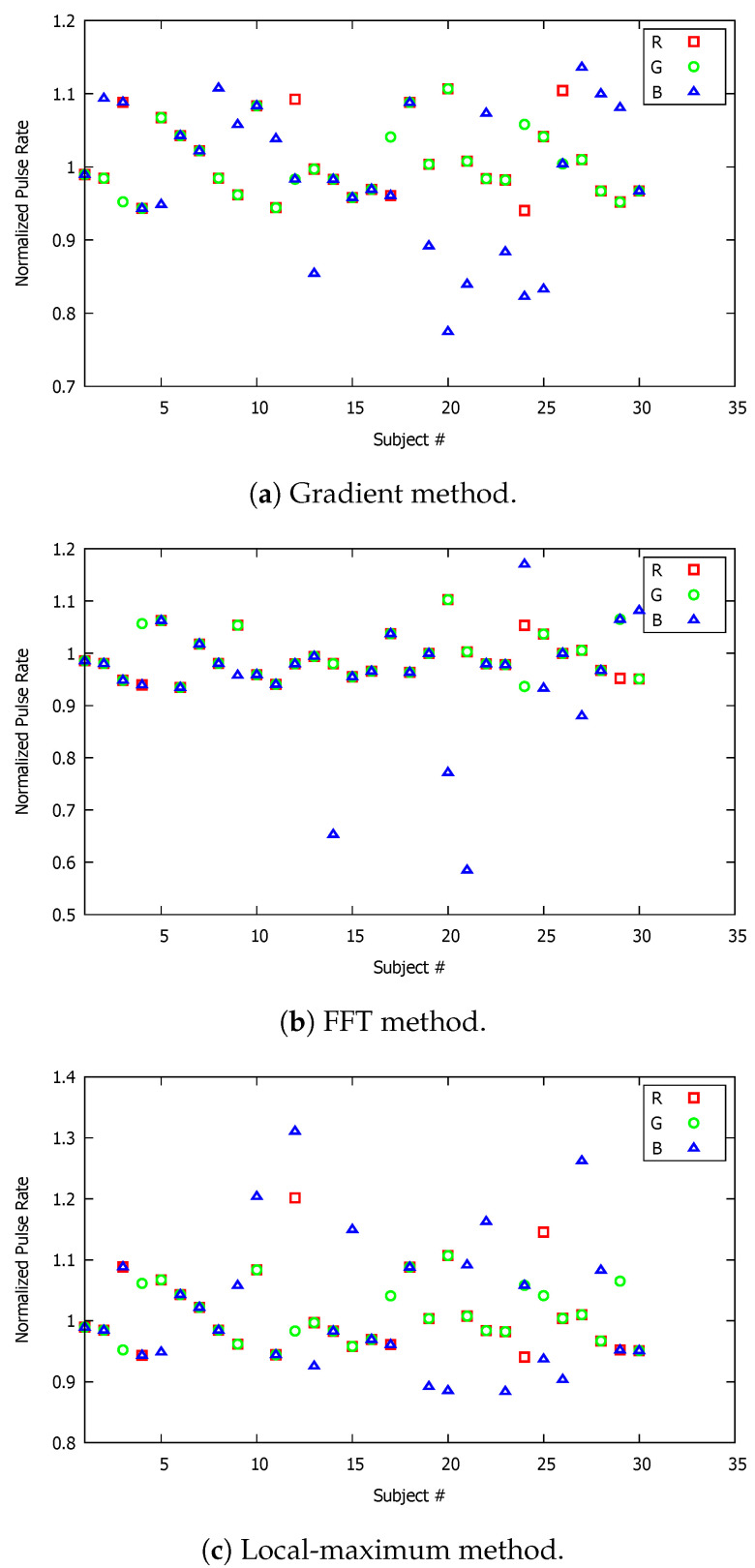
Mathematical and signal-processing methods were used to obtain reliable measurements of the heartbeat pulse rate and information on oxygen concentration in the blood using short video recordings of the index finger attached to a smartphone built-in camera. Various types of smartphones were used with different operating systems (e.g., iOS, Android) and capabilities. A range of processing algorithms were applied to the red-green-blue (RGB) component signals, including mean intensity calculation, moving average smoothing, and quadratic filtering based on the Savitzky-Golay filter. Two approaches-gradient and local maximum methods-were used to determine the pulse rate, which provided similar results. A fast Fourier transform was applied to the signal to correlate the signal's frequency components with the pulse rate. We resolved the signal into its DC and AC components to calculate the ratio-of-ratios of the AC and DC components of the red and green signals, a method which is often used to estimate the oxygen concentration in blood. A series of measurements were performed on healthy human subjects, producing reliable data that compared favorably to benchmark data obtained by commercial and medically approved oximeters. Furthermore, the effect of the video recording duration on the accuracy of the results was investigated.
采用数学和信号处理方法,通过将智能手机内置摄像头拍摄的短时间的食指视频记录,获得可靠的心跳脉搏率测量值和血液中氧气浓度信息。使用了不同操作系统(例如 iOS、Android)和功能的各种类型的智能手机。对红-绿-蓝(RGB)分量信号应用了一系列处理算法,包括平均强度计算、移动平均平滑和基于 Savitzky-Golay 滤波器的二次滤波。使用了两种方法——梯度法和局部最大值法——来确定脉搏率,这两种方法提供了相似的结果。对信号应用快速傅里叶变换,将信号的频率分量与脉搏率相关联。我们将信号分解为直流和交流分量,以计算红、绿信号的交流和直流分量的比值,这是一种常用于估计血液中氧气浓度的方法。在健康的人体上进行了一系列测量,得到了可靠的数据,与商业和医学认可的血氧计获得的基准数据相比表现良好。此外,还研究了视频录制持续时间对结果准确性的影响。