Zheng Huo-Liang, Li Bo, Song Shao-Kuan, Chen Peng-Bo, Jiang Lei-Sheng, Jiang Sheng-Dan
Department of Clinic of Spine Center, Xinhua Hospital, Shanghai Jiaotong University School of Medicine, Shanghai, China.
Department of Clinical Medicine, Shanghai Jiaotong University School of Medicine, Shanghai, China.
Front Surg. 2023 Jan 6;9:1047504. doi: 10.3389/fsurg.2022.1047504. eCollection 2022.
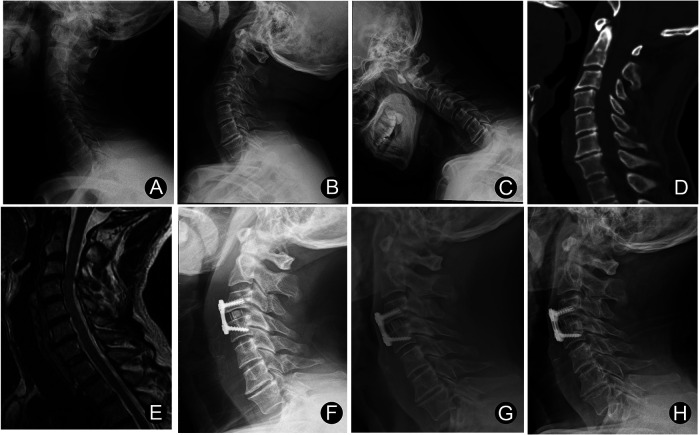
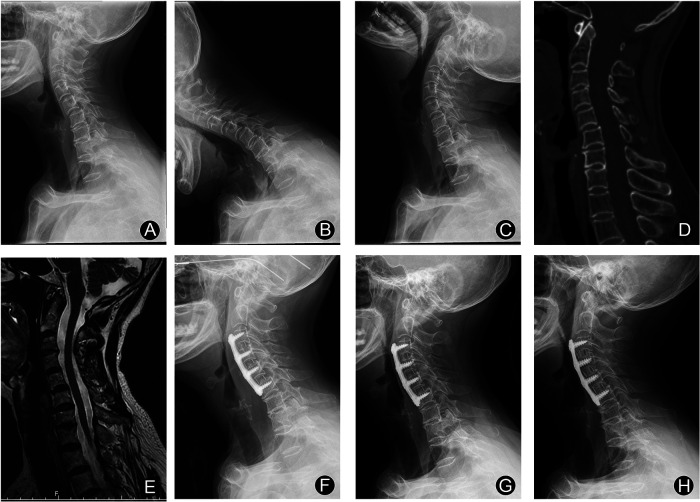
The current study attempts to investigate the role of anterior cervical discectomy and fusion (ACDF) in alleviating symptoms in patients with cervical vertigo associated with cervical instability.
The patients of cervical instability with vertigo and dizziness who underwent ACDF between January 2011 and December 2019 were followed-up for more than two years. Demographic data (age, sex, follow up period and levels of instable cervical segments) were assessed; Symptoms of vertigo and dizziness before and after surgery were assessed by the 15-item version of the Vertigo Symptom Scale (VSS) and the 25-item Dizziness Handicap Inventory (DHI). The severity and frequency of other symptoms like neck and occipital pain, gastrointestinal discomfort, nausea, vomiting, tinnitus, palpitations, headache, diplopia and blurring of vision before and after surgery were also assessed.
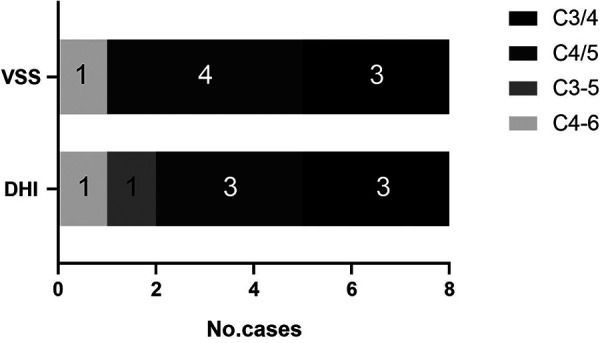
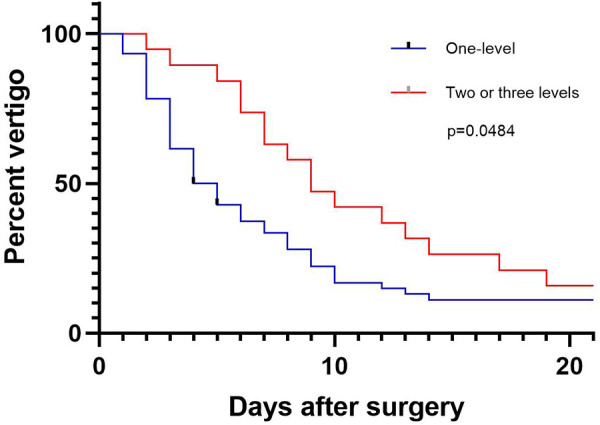
A total of 92 patients underwent ACDF for cervical instability with vertigo and dizziness between January 2011 and December 2019, of which 79 patients were included in the final analysis. The number of instable levels had no correlation with VSS and DHI scores before surgery ( > 0.05), while patients with C3/4 instability suffering a severer vertigo than other levels. Both DHI and VSS scores were significantly reduced after ACDF and this was sustained within two years after surgery ( < 0.001). Although there was no statistical difference in the ratio of patients with vertigo relief, patients with one-level cervical instability demonstrated a more rapid recovery than patients with multi-level cervical instability ( = 0.048). Also, there was improvement in other symptoms such as neck and occipital pain, gastrointestinal discomfort, nausea, vomiting, tinnitus, palpitations, headache and blurring of vision after surgery.
Vertigo caused by C3/4 instability was severer than other levels such as C4/5 and C5/6. During 2 years' follow-up the significant relief of vertigo and dizziness was observed after anterior cervical surgery. Other accompanying symptoms except hypomnesia were also extenuated in follow-up period.
本研究旨在探讨颈椎前路椎间盘切除融合术(ACDF)在缓解与颈椎不稳相关的颈性眩晕患者症状中的作用。
对2011年1月至2019年12月期间接受ACDF手术的伴有眩晕和头晕的颈椎不稳患者进行了两年多的随访。评估人口统计学数据(年龄、性别、随访时间和颈椎不稳节段水平);术前和术后的眩晕和头晕症状通过15项眩晕症状量表(VSS)和25项头晕残障量表(DHI)进行评估。还评估了手术前后颈部和枕部疼痛、胃肠道不适、恶心、呕吐、耳鸣、心悸、头痛、复视和视力模糊等其他症状的严重程度和频率。
2011年1月至2019年12月期间,共有92例因颈椎不稳伴眩晕和头晕接受ACDF手术的患者,其中79例纳入最终分析。不稳节段数量与术前VSS和DHI评分无相关性(>0.05),而C3/4不稳的患者眩晕比其他节段更严重。ACDF术后DHI和VSS评分均显著降低,且在术后两年内持续下降(<0.001)。虽然眩晕缓解患者的比例无统计学差异,但单节段颈椎不稳的患者比多节段颈椎不稳的患者恢复更快(=0.048)。此外,术后颈部和枕部疼痛、胃肠道不适、恶心、呕吐、耳鸣、心悸、头痛和视力模糊等其他症状也有所改善。
C3/4不稳引起的眩晕比C4/5和C5/6等其他节段更严重。在两年的随访中,颈椎前路手术后观察到眩晕和头晕明显缓解。随访期间,除记忆力减退外的其他伴随症状也有所减轻。