Zhang Yan, Pang Zhenjing, Lv Yang, Tang Haikang
Research Center of the Integration of Urban and Rural Education Development, Chengdu University, Chengdu 610106, China.
School of Public Policy and Management, Tsinghua University, Beijing 100084, China.
Heliyon. 2023 Jan 9;9(1):e12880. doi: 10.1016/j.heliyon.2023.e12880. eCollection 2023 Jan.
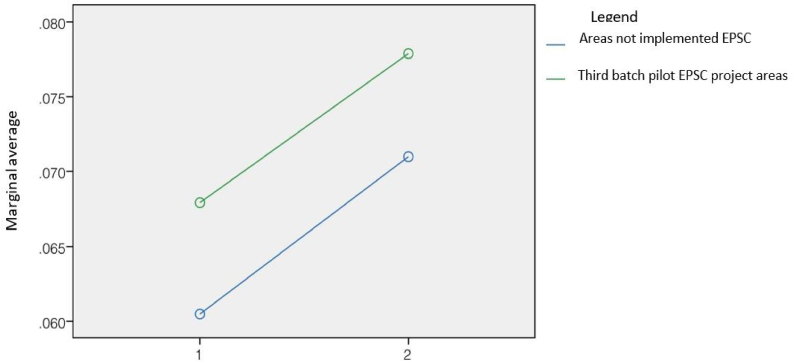
The quality of a country's education system is both an indicator of its present level of development and a predictor of future economic advancement. This study intended to explore the impact of the "expanding power and strengthening counties" reform on the supply of basic public education resources. A combination of qualitative and quantitative methods was used to analyze the panel data of 114 counties in Sichuan Province from 2005 to 2017, including 78 counties with expanded powers. The study found that the "expanded power strong counties (EPSC)" had a significant positive impact on the supply level of funding resources measured by per capita public education expenditure. The time effect of the EPSC on the supply of teacher resources for county public education was manifested as a sharp increase in the supply level in the three years before the reform. The supply level tended to be stable after four years of reform. The economic resources supply level was relatively stable in the first three years and rose sharply after four years. There was a downward trend after the reform for 8 years. The structural effect has shown a more significant incentive effect on the supply of public education resources to strong and weak counties. But compared with the weak counties with lower economic development levels, the strong counties with higher economic development levels have a more noticeable effect of their decentralization reform on improving the supply level of public education resources.
一个国家教育体系的质量既是其当前发展水平的指标,也是未来经济进步的预测指标。本研究旨在探讨“扩权强县”改革对基础教育资源供给的影响。采用定性和定量相结合的方法,对四川省114个县2005年至2017年的面板数据进行分析,其中包括78个扩权县。研究发现,“扩权强县”对以人均公共教育支出衡量的资金资源供给水平有显著的正向影响。“扩权强县”对县域公共教育教师资源供给的时间效应表现为改革前三年供给水平急剧上升。改革四年后供给水平趋于稳定。经济资源供给水平在前三年相对稳定,四年后急剧上升。改革八年后呈下降趋势。结构效应在对强弱县公共教育资源供给上表现出更显著的激励作用。但与经济发展水平较低的弱县相比,经济发展水平较高的强县其分权改革对提高公共教育资源供给水平的作用更为明显。