The Jackson Laboratory for Genomic Medicine, Farmington, CT, USA.
Department of Neurosurgery, Houston Methodist Neurological Institute and Institute for Academic Medicine, Houston, TX, USA.
Cancer Res Commun. 2022 Jun;2(6):402-416. doi: 10.1158/2767-9764.crc-22-0124. Epub 2022 Jun 6.
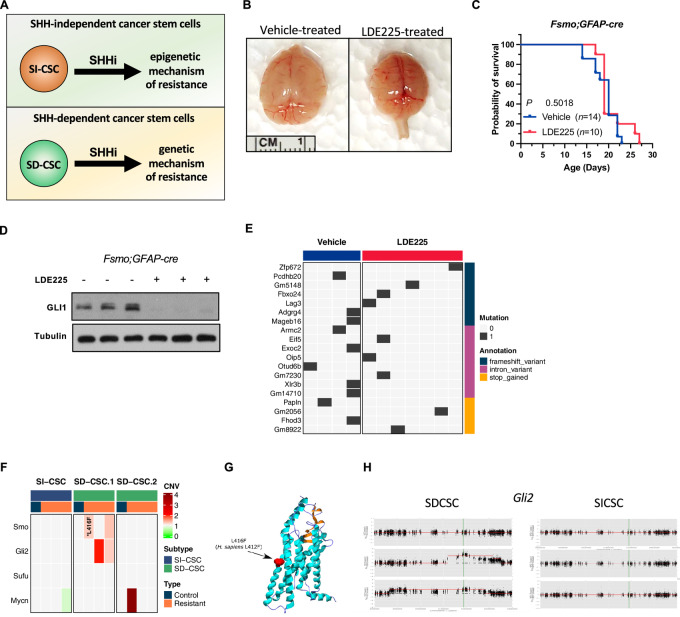
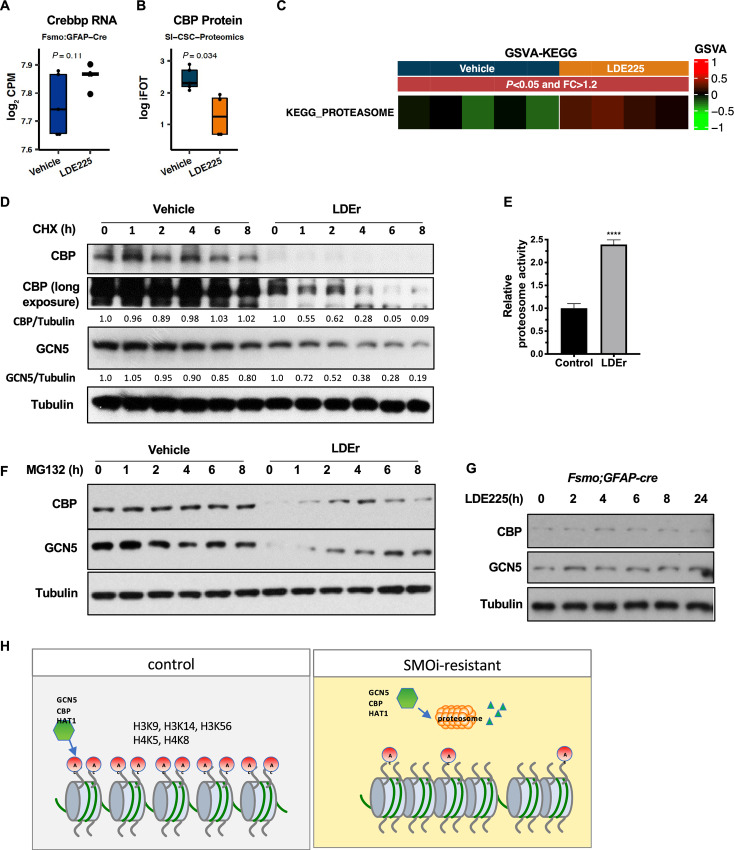
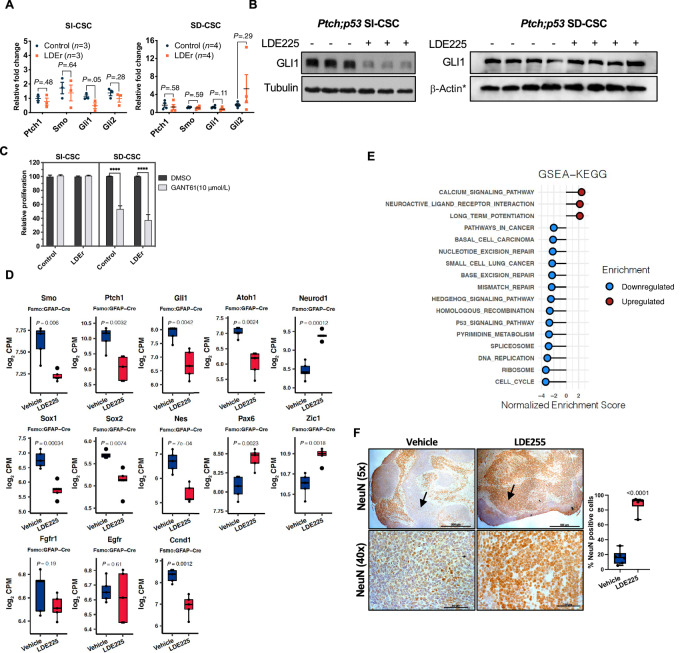
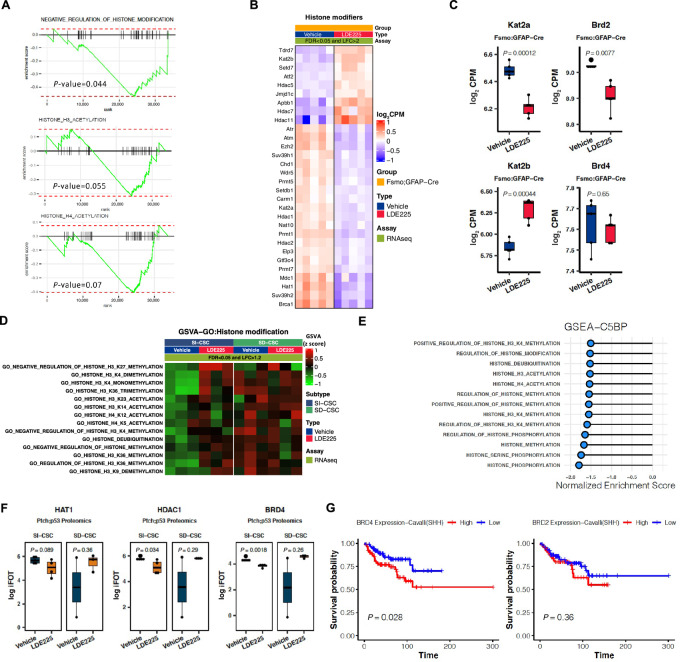
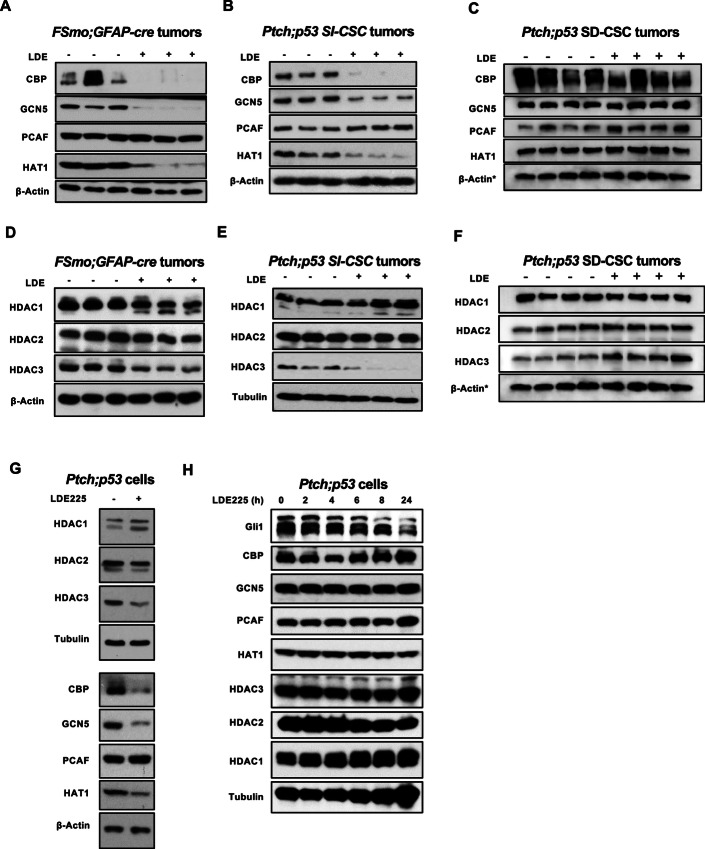
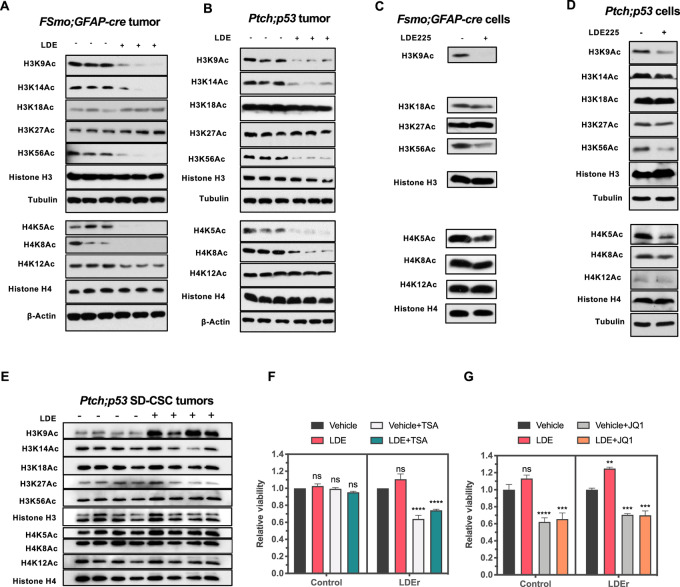
The emergence of treatment resistance significantly reduces the clinical utility of many effective targeted therapies. Although both genetic and epigenetic mechanisms of drug resistance have been reported, whether these mechanisms are stochastically selected in individual tumors or governed by a predictable underlying principle is unknown. Here, we report that the dependence of cancer stem cells (CSCs), not bulk tumor cells, on the targeted pathway determines the molecular mechanism of resistance in individual tumors. Using both spontaneous and transplantable mouse models of sonic hedgehog (SHH) medulloblastoma (MB) treated with an SHH/Smoothened inhibitor, sonidegib/LDE225, we show that genetic-based resistance occurs only in tumors that contain SHH-dependent CSCs (SD-CSCs). In contrast, SHH MBs containing SHH-dependent bulk tumor cells but SHH-independent CSCs (SI-CSCs) acquire resistance through epigenetic reprogramming. Mechanistically, elevated proteasome activity in SMOi-resistant SI-CSC MBs alters the tumor cell maturation trajectory through enhanced degradation of specific epigenetic regulators, including histone acetylation machinery components, resulting in global reductions in H3K9Ac, H3K14Ac, H3K56Ac, H4K5Ac, and H4K8Ac marks and gene expression changes. These results provide new insights into how selective pressure on distinct tumor cell populations contributes to different mechanisms of resistance to targeted therapies. This insight provides a new conceptual framework to understand responses and resistance to SMOis and other targeted therapies.
治疗耐药性的出现显著降低了许多有效靶向疗法的临床应用价值。尽管已经报道了耐药性的遗传和表观遗传机制,但这些机制是在单个肿瘤中随机选择的,还是受可预测的潜在原则支配的,目前尚不清楚。在这里,我们报告说,癌症干细胞(CSCs)而非肿瘤细胞群体对靶向途径的依赖性决定了个体肿瘤中耐药的分子机制。我们使用自发和可移植的 sonic hedgehog (SHH) 髓母细胞瘤(MB)小鼠模型,这些肿瘤用 SHH/Smoothened 抑制剂 sonidegib/LDE225 治疗,结果表明,只有含有 SHH 依赖性 CSCs(SD-CSCs)的肿瘤才会发生基于遗传的耐药性。相比之下,含有 SHH 依赖性肿瘤细胞但 SHH 非依赖性 CSCs(SI-CSCs)的 SHH MB 通过表观遗传重编程获得耐药性。从机制上讲,SMOi 耐药的 SI-CSC MB 中升高的蛋白酶体活性通过增强特定表观遗传调节剂的降解,改变肿瘤细胞成熟轨迹,包括组蛋白乙酰化机制成分,导致 H3K9Ac、H3K14Ac、H3K56Ac、H4K5Ac 和 H4K8Ac 标记和基因表达变化的全面减少。这些结果为了解选择性压力对不同肿瘤细胞群体如何导致靶向治疗的不同耐药机制提供了新的见解。这一见解为理解 SMOi 和其他靶向治疗的反应和耐药性提供了一个新的概念框架。