Department of Emergency Medicine, Beijing Chao-Yang Hospital Capital Medical University, Beijing, Beijing, China.
Department of Emergency Medicine, Capital Medical University Affiliated Beijing Friendship Hospital, Beijing, Beijing, China.
BMJ Open. 2022 Sep 8;12(9):e060246. doi: 10.1136/bmjopen-2021-060246.
Rapid changes in glucocorticoid (GC) levels and adrenal insufficiency are related to the development of post-cardiac arrest (CA) syndrome. However, GC receptor (GR) expression changes have not been studied. Hence, this study aimed to investigate the association of early changes in GR expression and prognosis and immune response in patients who experienced CA.
Prospective observational study.
Emergency department.
Patients (85) in the early period of return of spontaneous circulation (ROSC) after CA were admitted between October 2018 and October 2019. After a physical examination, age-matched and sex-matched healthy individuals (40) were recruited for the control group.
GR expression and cell counts of circulatory T and B lymphocytes, natural killer cells and regulatory T (Treg) cells were assessed. Plasma total cortisol and adrenocorticotrophic hormone (ACTH) levels were also tested.
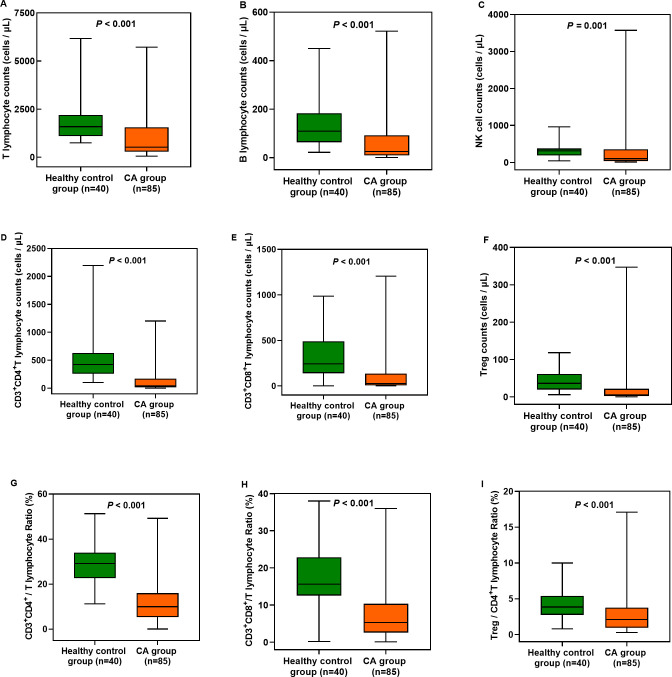
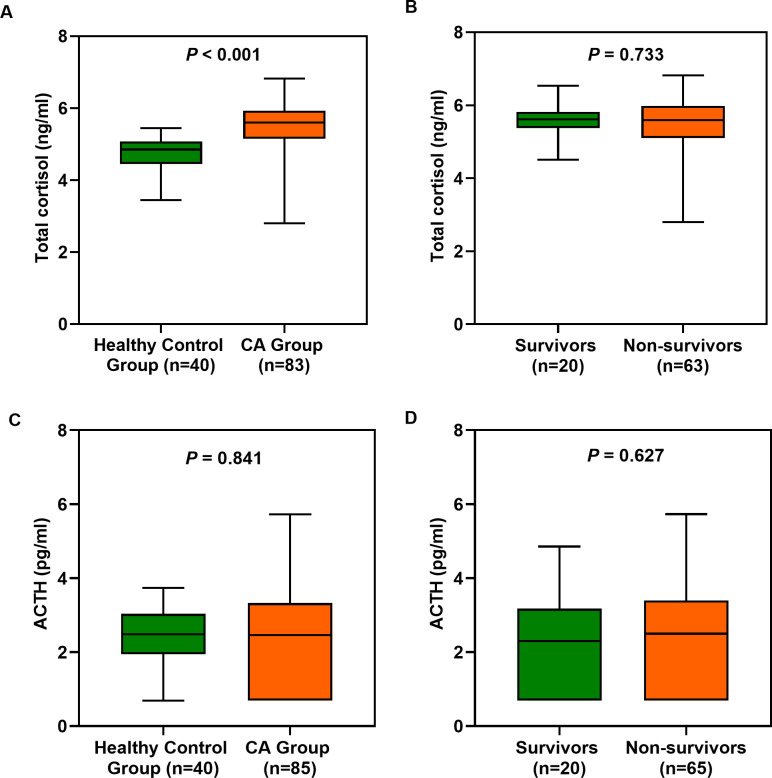
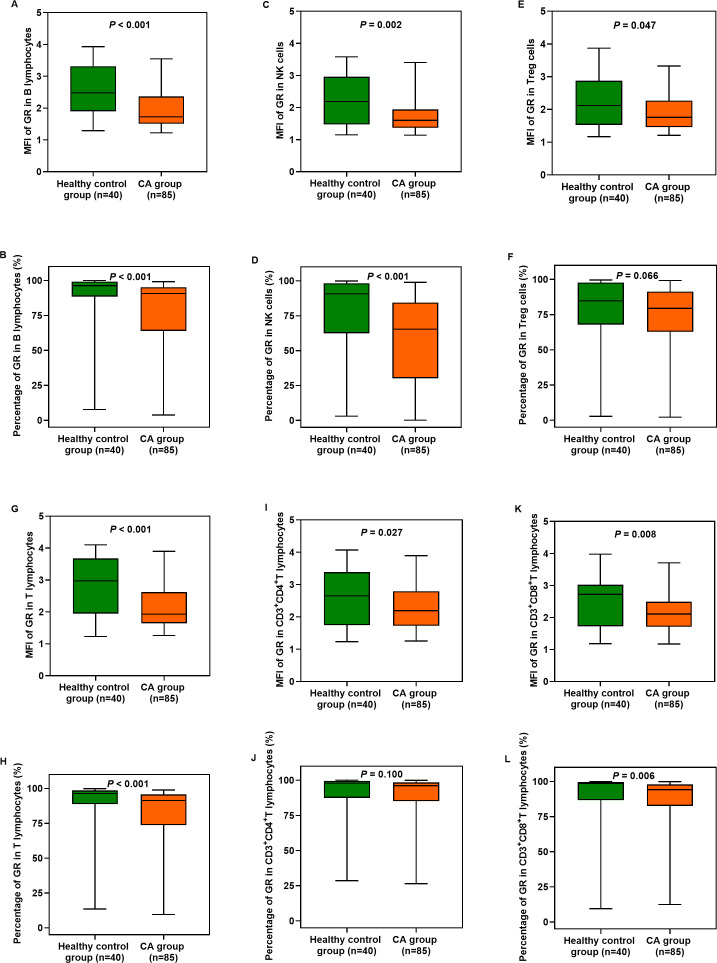
All cell counts were lower, and plasma total cortisol levels were higher (p<0.001) in patients who experienced CA than in the healthy control group. GR expression in Treg cells and CD3CD4 T lymphocytes were not significantly different, but the mean fluorescence intensity and GR expression in other cells were lower in patients who experienced CA (p<0.05) than in the healthy control group. ACTH levels were not different. There were no significant differences between survivors and non-survivors.
This study revealed that GR expression and cell counts rapidly decreased, whereas plasma total cortisol levels increased in the early period after ROSC among patients who experienced CA. Our findings provide important information about GR level and function, and immunosuppressive status in these patients. Assessing GR expression in patients who experienced CA may help screening for those who are more sensitive to GC therapy.
糖皮质激素(GC)水平的快速变化和肾上腺功能不全与心搏骤停(CA)后综合征的发生有关。然而,GC 受体(GR)表达的变化尚未得到研究。因此,本研究旨在探讨 CA 患者早期 GR 表达变化与预后和免疫反应的关系。
前瞻性观察性研究。
急诊科。
2018 年 10 月至 2019 年 10 月间,CA 后自主循环恢复(ROSC)早期入院的患者(85 例)。体格检查后,招募年龄和性别匹配的健康个体(40 例)作为对照组。
评估了 GR 表达和循环 T 和 B 淋巴细胞、自然杀伤细胞和调节性 T(Treg)细胞的细胞计数。还检测了血浆总皮质醇和促肾上腺皮质激素(ACTH)水平。
与健康对照组相比,CA 患者的所有细胞计数均较低,血浆总皮质醇水平较高(p<0.001)。Treg 细胞和 CD3CD4 T 淋巴细胞中的 GR 表达无显著差异,但 CA 患者其他细胞中的平均荧光强度和 GR 表达均低于健康对照组(p<0.05)。ACTH 水平无差异。幸存者和非幸存者之间无显著差异。
本研究表明,CA 患者 ROSC 后早期,GR 表达和细胞计数迅速下降,而血浆总皮质醇水平升高。我们的发现提供了有关这些患者 GR 水平和功能以及免疫抑制状态的重要信息。评估 CA 患者的 GR 表达可能有助于筛选对 GC 治疗更敏感的患者。