Teferra Demsew Mitiku, Ngoo Livingstone M H, Nyakoe George N
Pan-African University Institute of Basic Science, Technology and Innovation, Nairobi, Kenya.
Department of Electrical & Communications Engineering, Multimedia University of Kenya, Nairobi, Kenya.
Heliyon. 2023 Jan 5;9(1):e12802. doi: 10.1016/j.heliyon.2023.e12802. eCollection 2023 Jan.
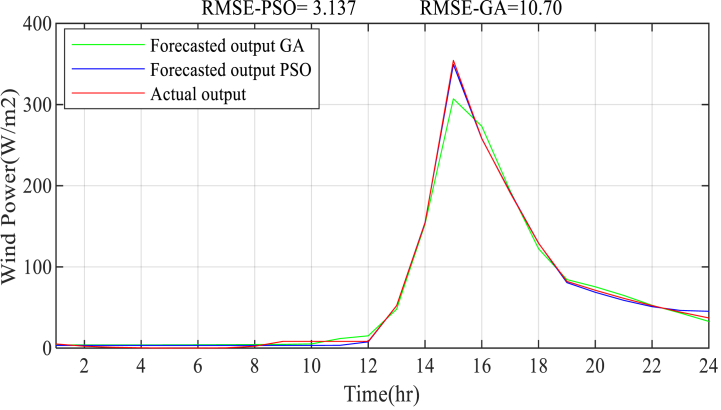
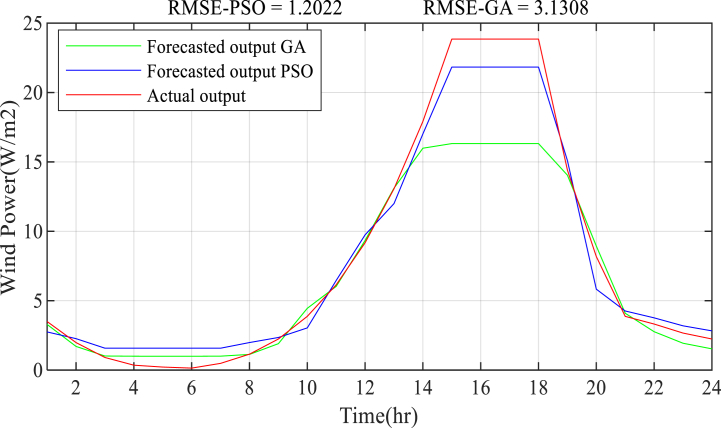
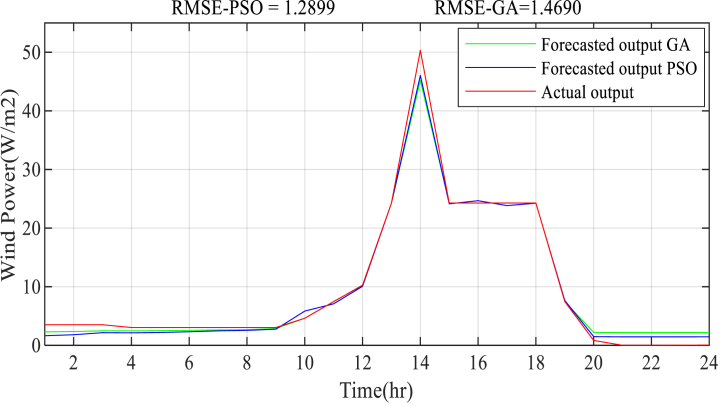
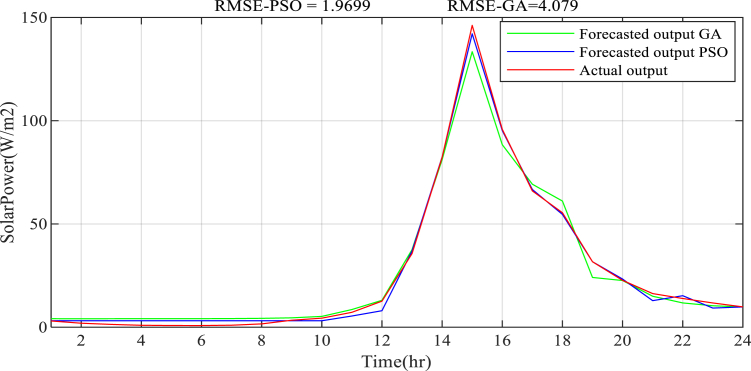
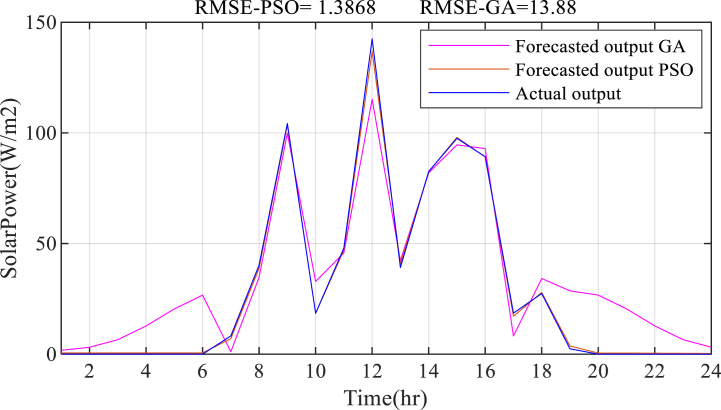
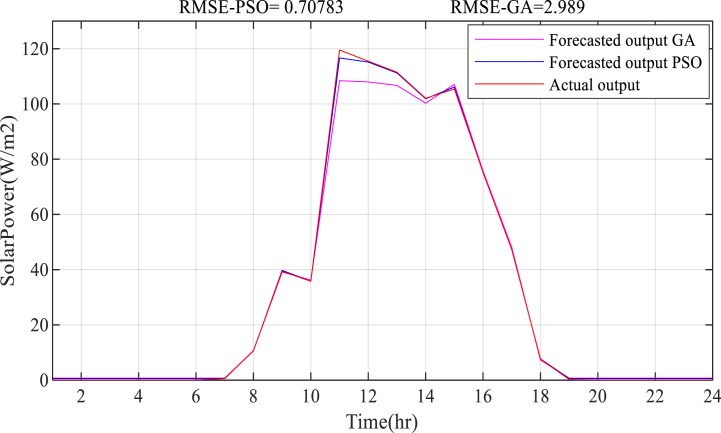
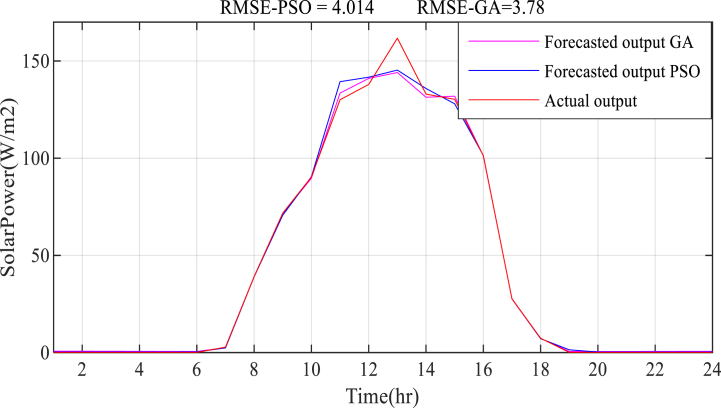
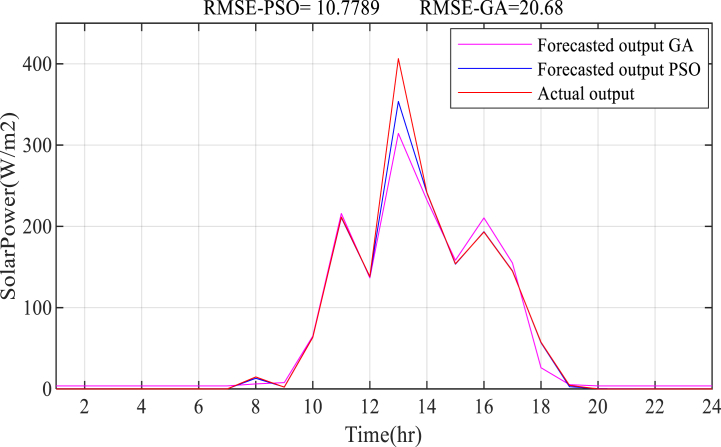
Regardless of their nature of stochasticity and uncertain nature, wind and solar resources are the most abundant energy resources used in the development of microgrid systems. In microgrid systems and distribution networks, the uncertain nature of both solar and wind resources results in power quality and system stability issues. The randomization behavior of solar and wind energy resources is controlled through the precise development of a power prediction model. Fuzzy-based solar PV and wind prediction models may more efficiently manage this randomness and uncertain character. However, this method has several drawbacks, it has limited performance when the volumes of wind and solar resources historical data are huge in size and it has also many membership functions of the fuzzy input and output variables as well as multiple fuzzy rules available. The hybrid Fuzzy-PSO intelligent prediction approach improves the fuzzy system's limitations and hence increases the prediction model's performance. The Fuzzy-PSO hybrid forecast model is developed using MATLAB programming of the particle swarm optimization (PSO) algorithm with the help of the global optimization toolbox. In this paper, an error correction factor (ECF) is considered a new fuzzy input variable. It depends on the validation and forecasted data values of both wind and solar prediction models to improve the accuracy of the prediction model. The impact of ECF is observed in fuzzy, Fuzzy-PSO, and Fuzzy-GA wind and solar PV power forecasting models. The hybrid Fuzzy-PSO prediction model of wind and solar power generation has a high degree of accuracy compared to the Fuzzy and Fuzzy-GA forecasting models. The rest of this paper is organized as: Section II is about the analysis of solar and wind resources row data. The Fuzzy-PSO prediction model problem formulation is covered in Section III. Section IV, is about the results and discussion of the study. Section V contains the conclusion. The references and abbreviations are presented at the end of the paper.
尽管风能和太阳能资源具有随机性和不确定性,但它们是微电网系统开发中使用的最丰富的能源资源。在微电网系统和配电网中,太阳能和风能资源的不确定性会导致电能质量和系统稳定性问题。通过精确开发功率预测模型来控制太阳能和风能资源的随机行为。基于模糊的太阳能光伏和风能预测模型可能更有效地管理这种随机性和不确定性特征。然而,这种方法有几个缺点,当风能和太阳能资源历史数据量巨大时,其性能有限,并且模糊输入和输出变量有许多隶属函数以及多个可用的模糊规则。混合模糊-粒子群优化智能预测方法改善了模糊系统的局限性,从而提高了预测模型的性能。模糊-粒子群优化混合预测模型是借助全局优化工具箱,使用粒子群优化(PSO)算法的MATLAB编程开发的。在本文中,误差校正因子(ECF)被视为一个新的模糊输入变量。它取决于风能和太阳能预测模型的验证数据和预测数据值,以提高预测模型的准确性。在模糊、模糊-粒子群优化和模糊-遗传算法的风能和太阳能光伏发电预测模型中观察到了ECF的影响。与模糊和模糊-遗传算法预测模型相比,风能和太阳能发电的混合模糊-粒子群优化预测模型具有较高的准确性。本文的其余部分组织如下:第二节是关于太阳能和风能资源行数据的分析。第三节涵盖了模糊-粒子群优化预测模型的问题表述。第四节是关于该研究的结果和讨论。第五节包含结论。参考文献和缩写在本文末尾列出。