Xinjiang Medical University, Urumqi, Xinjiang Province, China.
Department of Orthopedics, The Fourth Affiliated Hospital of Xinjiang Medical University, Urumqi, Xinjiang Province, China.
Medicine (Baltimore). 2023 Jan 27;102(4):e32729. doi: 10.1097/MD.0000000000032729.
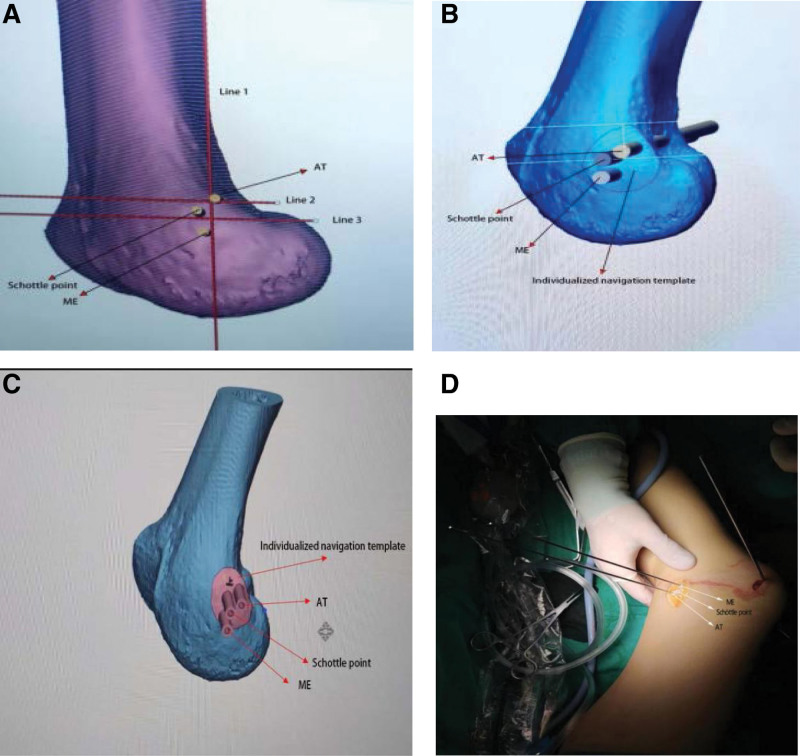
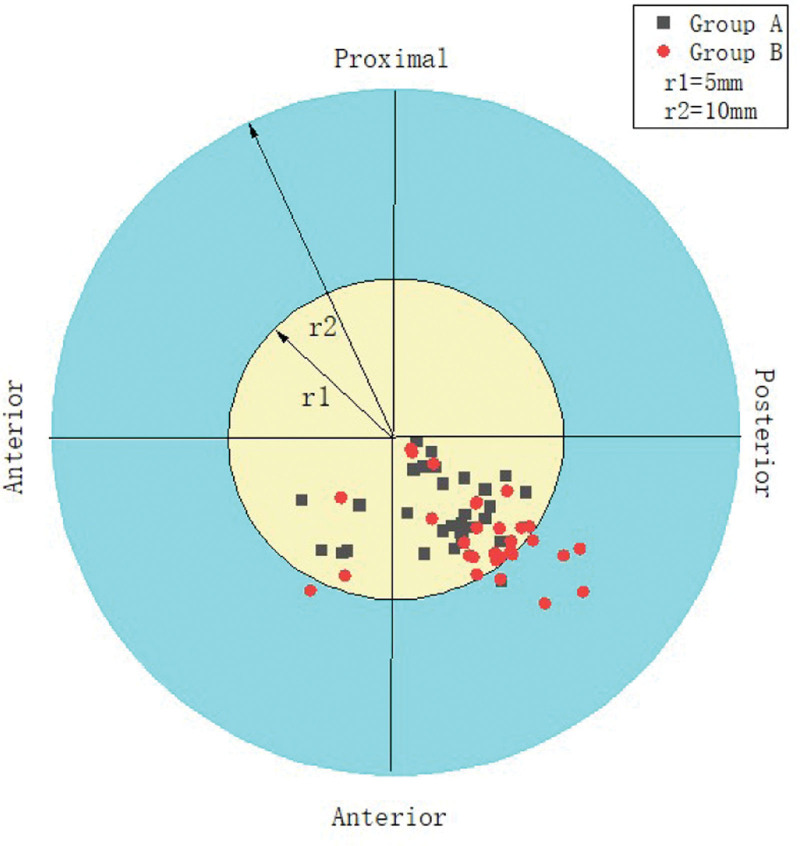
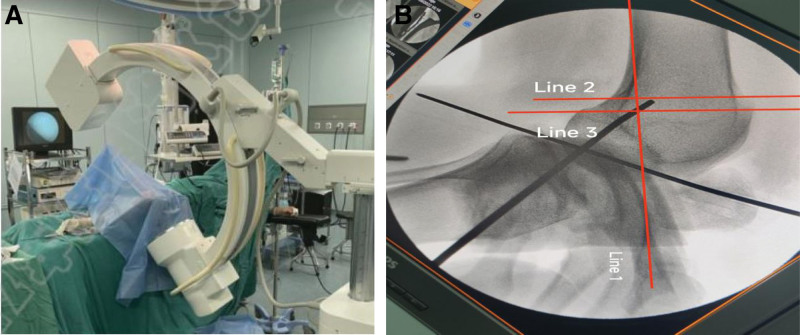
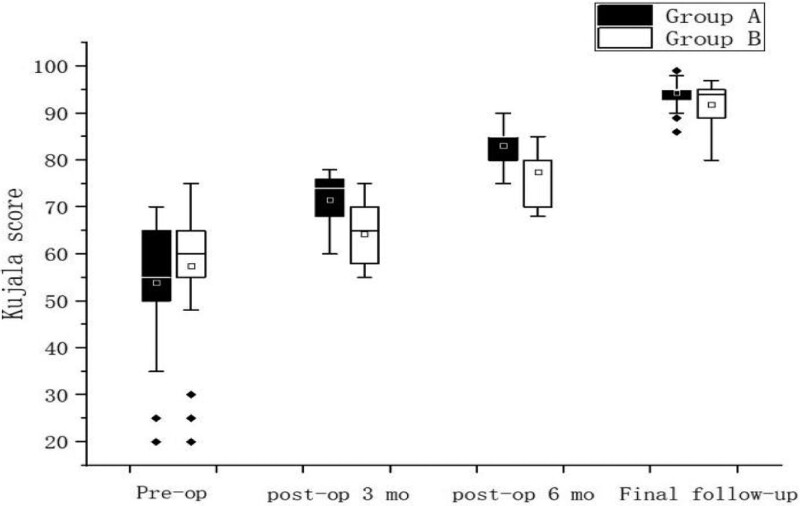
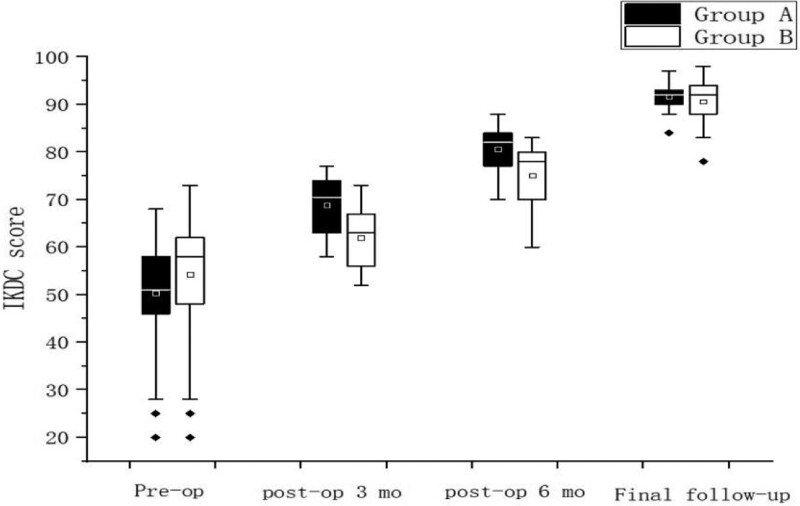
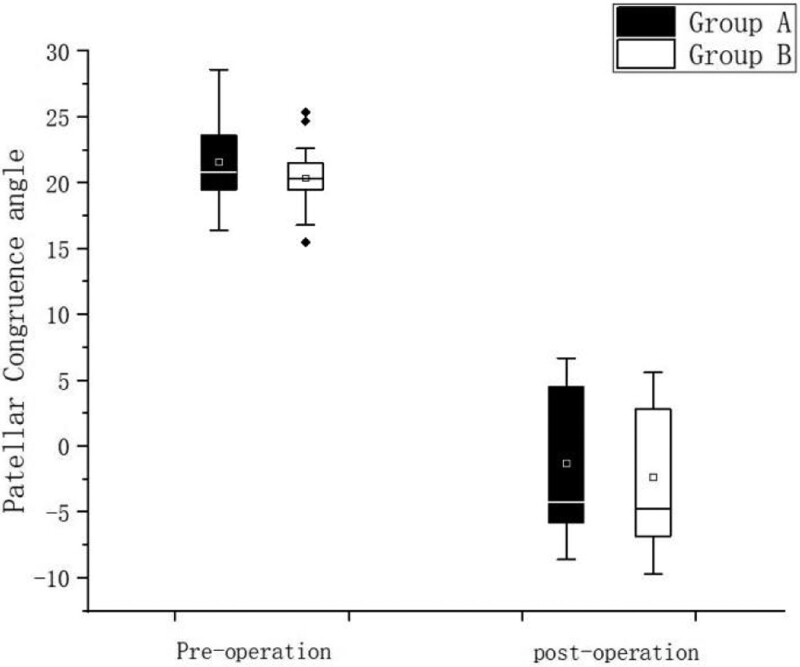
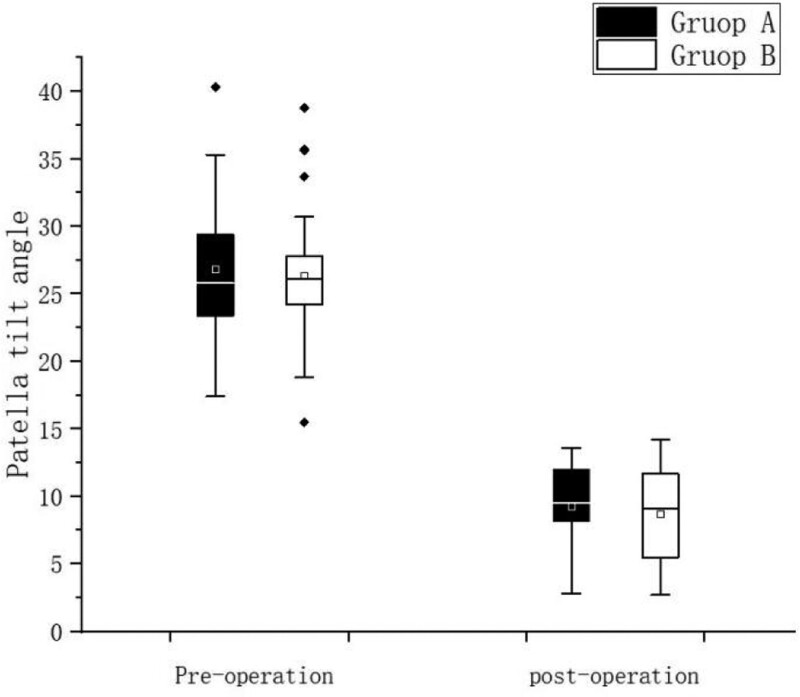
During medial patellofemoral ligament (MPFL) reconstruction, fluoroscopic determination of the femoral tunnel point is the most common method. However, there is a decrease in tunnel position accuracy due to rotation of the femur during fluoroscopy, as well as the damage to the operator from multiple fluoroscopies, whereas the 3D-printed individualized navigation template is not affected by this factor. This study focuses on the accuracy and early clinical efficacy of 2 different ways to determine the femoral tunnel (Schöttle point) for double-bundle isometric MPFL reconstruction. This is a retrospective study, conducted between 2016 and 2019, in which 60 patients with recurrent patellar dislocation were divided into 2 groups: 30 with MPFL reconstruction at the Schöttle point determined by 3D-printed individualized navigation template (group A) and 30 with MPFL reconstruction at the Schöttle point determined by fluoroscopic guidance (group B). The changes in patella congruence angle and patella tilt angle before and after surgery were assessed using computed tomography scans of the knee, knee function was assessed using the Kujala knee score and the international knee documentation committee (IKDC) score, and the 2 approaches were compared for the intraoperative establishment of the femoral tunnel position at a distance from Schöttle point. At a minimum of 3 years follow-up, patella tilt angle and patella congruence angle returned to normal levels and were statistically different from the preoperative range, with no significant differences between the 2 groups at the same period, and Kujala and IKDC scores of knee function were significantly improved in both groups after surgery. The mean Kujala and IKDC scores were statistically different between groups A and B at 3 and 6 months postoperatively. No statistically significant differences were seen between the 2 groups at the final follow-up. Both femoral tunnel localization approaches for double-bundle isometric MPFL reconstruction resulted in good knee function. At no < 3 years of follow-up, the use of a 3D-printed individualized navigation template did result in more accurate isometric points and higher knee function scores in the early postoperative period.
在进行内侧髌股韧带(MPFL)重建时,透视确定股骨隧道点是最常用的方法。然而,由于透视过程中股骨的旋转以及多次透视对术者造成的损害,隧道位置的准确性会降低,而 3D 打印个体化导航模板则不受此因素影响。本研究关注两种不同方法确定双束等距 MPFL 重建的股骨隧道(Schöttle 点)的准确性和早期临床疗效。这是一项回顾性研究,于 2016 年至 2019 年进行,共纳入 60 例复发性髌骨脱位患者,分为两组:30 例行 3D 打印个体化导航模板确定的 MPFL 重建(A 组),30 例行透视引导确定的 MPFL 重建(B 组)。通过膝关节 CT 扫描评估术前和术后髌骨吻合角和髌骨倾斜角的变化,采用 Kujala 膝关节评分和国际膝关节文献委员会(IKDC)评分评估膝关节功能,比较两种方法在术中建立距 Schöttle 点的股骨隧道位置的差异。至少随访 3 年,髌骨倾斜角和髌骨吻合角恢复正常水平,与术前范围有统计学差异,同期两组间无显著差异,两组术后膝关节功能的 Kujala 和 IKDC 评分均显著改善。术后 3 个月和 6 个月,A 组和 B 组的平均 Kujala 和 IKDC 评分有统计学差异。两组在最终随访时无统计学差异。双束等距 MPFL 重建的两种股骨隧道定位方法均能获得良好的膝关节功能。在至少 3 年的随访中,使用 3D 打印个体化导航模板在术后早期确实能获得更准确的等距点和更高的膝关节功能评分。