Burgess Claire L, Huang Jessie, Bawa Pushpinder, Alysandratos Konstantinos-Dionysios, Minakin Kasey, Morley Michael P, Babu Apoorva, Villacorta-Martin Carlos, Hinds Anne, Thapa Bibek R, Wang Feiya, Matschulat Adeline M, Morrisey Edward E, Varelas Xaralabos, Kotton Darrell N
Center for Regenerative Medicine of Boston University and Boston Medical Center, Boston, MA 02118, USA.
The Pulmonary Center and Department of Medicine, Boston University Chobanian & Avedisian School of Medicine, Boston, MA 02118, USA.
bioRxiv. 2023 Jan 20:2023.01.19.524655. doi: 10.1101/2023.01.19.524655.
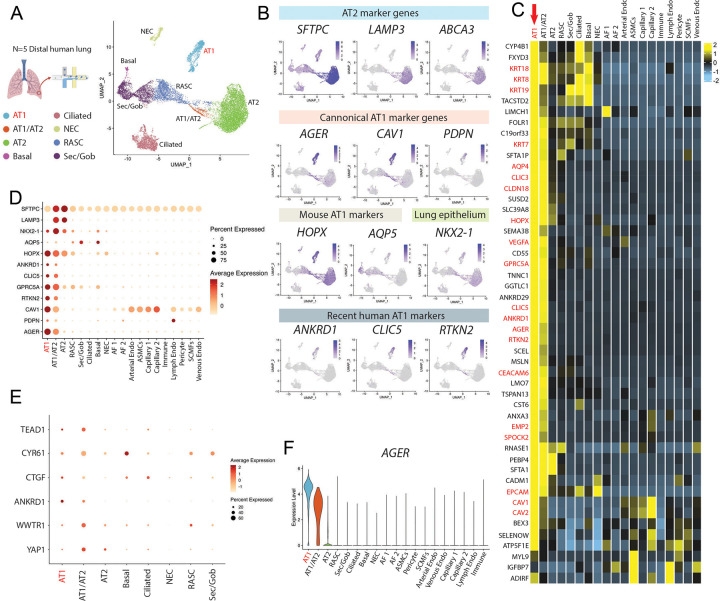
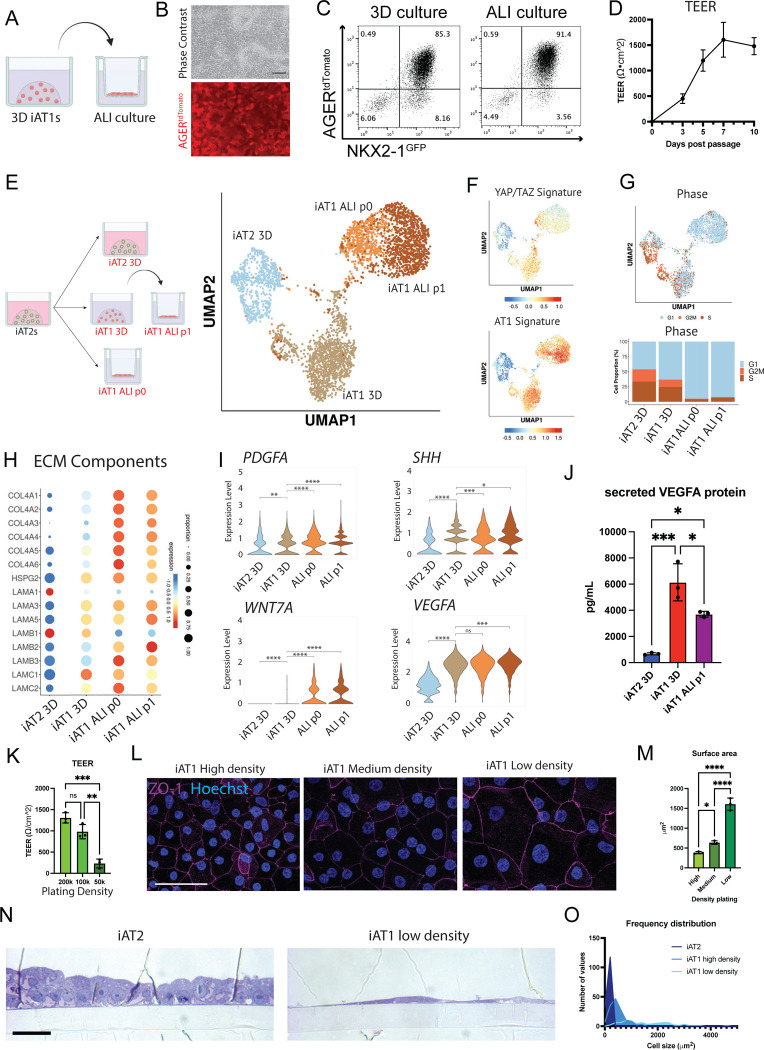
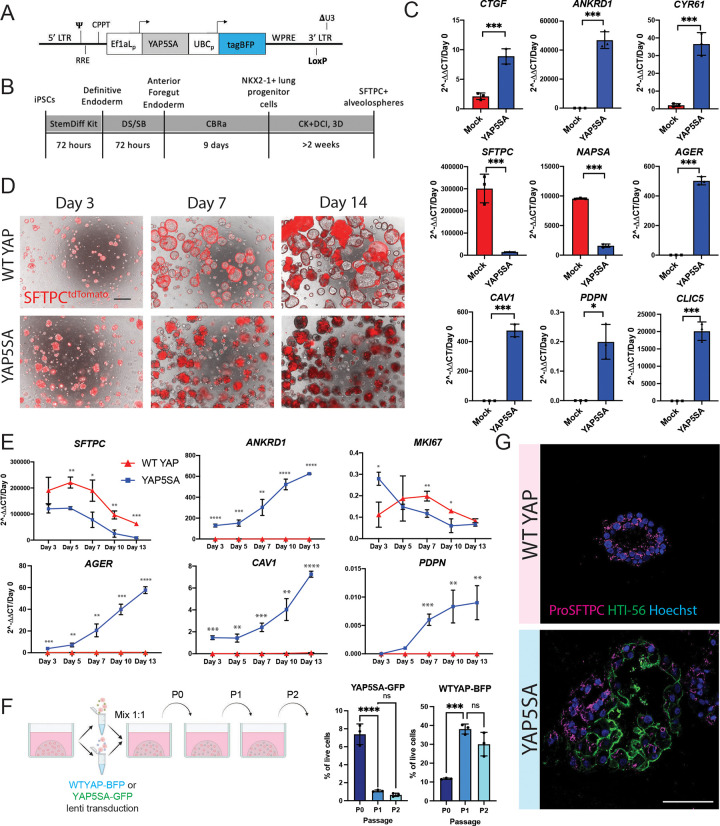
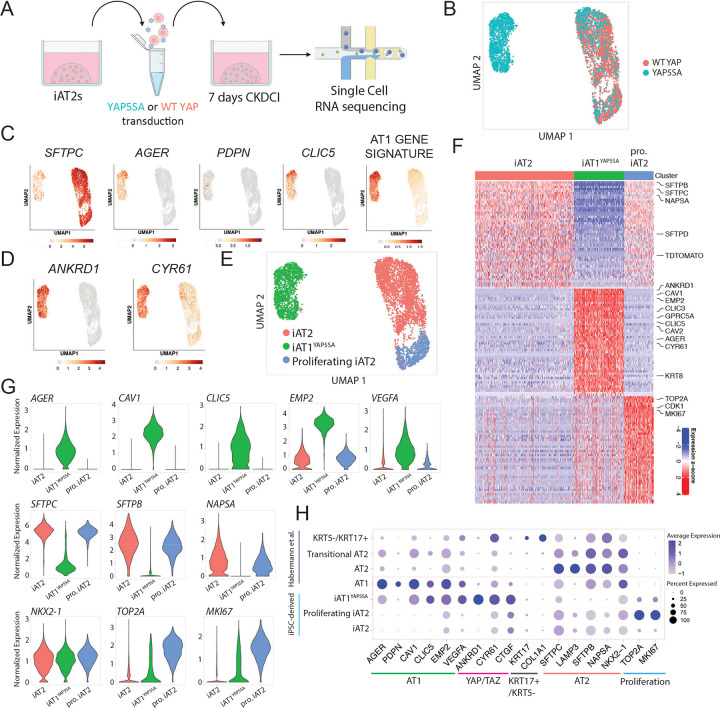
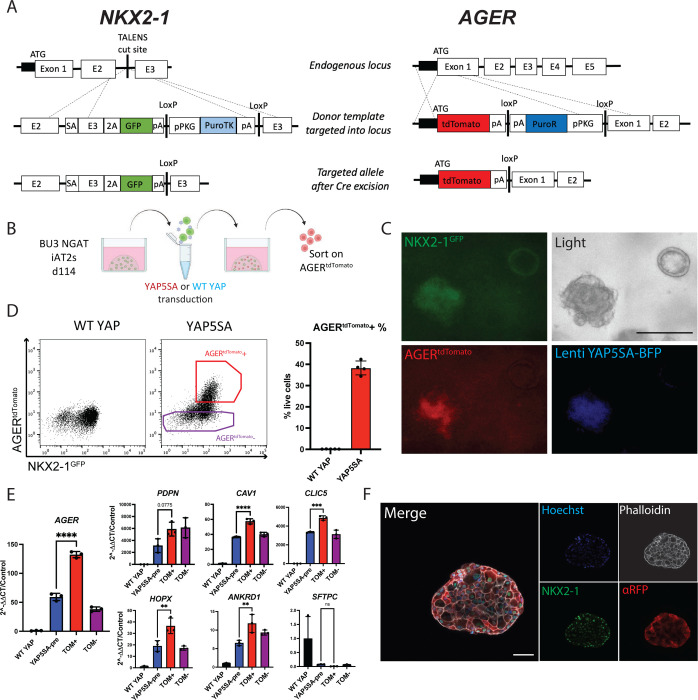
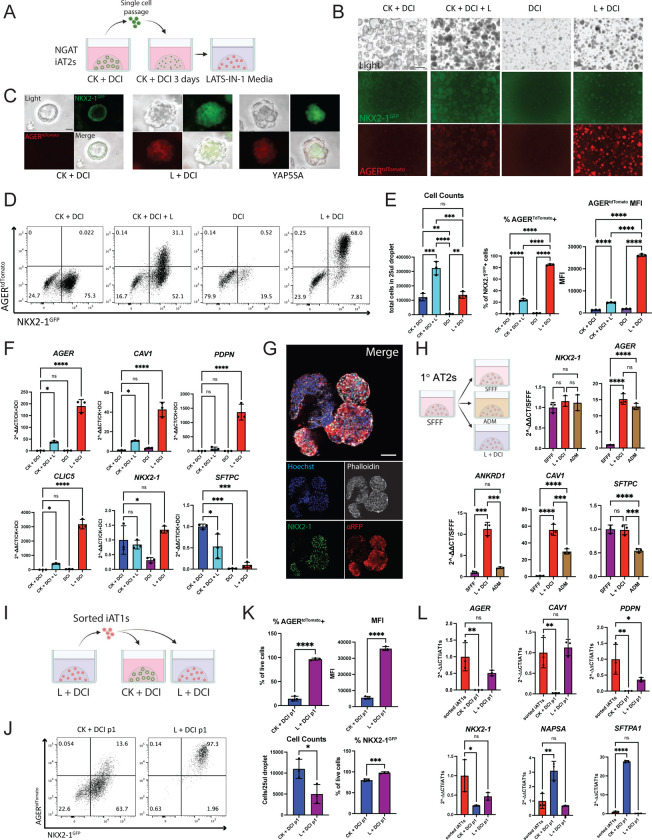
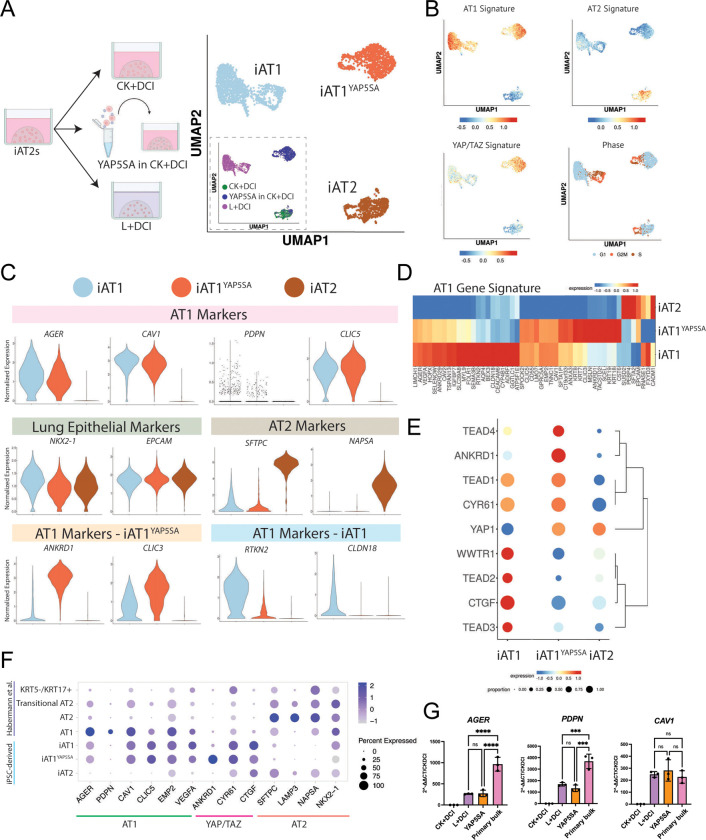
In the distal lung, alveolar epithelial type I cells (AT1s) comprise the vast majority of alveolar surface area and are uniquely flattened to allow the diffusion of oxygen into the capillaries. This structure along with a quiescent, terminally differentiated phenotype has made AT1s particularly challenging to isolate or maintain in cell culture. As a result, there is a lack of established models for the study of human AT1 biology, and in contrast to alveolar epithelial type II cells (AT2s), little is known about the mechanisms regulating their differentiation. Here we engineer a human in vitro AT1 model system through the directed differentiation of induced pluripotent stem cells (iPSC). We first define the global transcriptomes of primary adult human AT1s, suggesting gene-set benchmarks and pathways, such as Hippo-LATS-YAP/TAZ signaling, that are enriched in these cells. Next, we generate iPSC-derived AT2s (iAT2s) and find that activating nuclear YAP signaling is sufficient to promote a broad transcriptomic shift from AT2 to AT1 gene programs. The resulting cells express a molecular, morphologic, and functional phenotype reminiscent of human AT1 cells, including the capacity to form a flat epithelial barrier which produces characteristic extracellular matrix molecules and secreted ligands. Our results indicate a role for Hippo-LATS-YAP signaling in the differentiation of human AT1s and demonstrate the generation of viable AT1-like cells from iAT2s, providing an in vitro model of human alveolar epithelial differentiation and a potential source of human AT1s that until now have been challenging to viably obtain from patients.
在肺的远端,I型肺泡上皮细胞(AT1)构成了绝大部分的肺泡表面积,并且具有独特的扁平形态,以利于氧气扩散进入毛细血管。这种结构以及静止的终末分化表型使得AT1在细胞培养中难以分离或维持。因此,目前缺乏用于研究人类AT1生物学的成熟模型,并且与II型肺泡上皮细胞(AT2)相比,人们对调节其分化的机制知之甚少。在这里,我们通过诱导多能干细胞(iPSC)的定向分化构建了一个人类体外AT1模型系统。我们首先定义了原代成人人类AT1的整体转录组,揭示了在这些细胞中富集的基因集基准和信号通路,如Hippo-LATS-YAP/TAZ信号通路。接下来,我们生成了iPSC来源的AT2(iAT2),并发现激活核YAP信号足以促进从AT2基因程序到AT1基因程序的广泛转录组转变。由此产生的细胞表现出类似于人类AT1细胞的分子、形态和功能表型,包括形成扁平上皮屏障的能力,该屏障可产生特征性的细胞外基质分子和分泌配体。我们的结果表明Hippo-LATS-YAP信号在人类AT1分化中发挥作用,并证明了从iAT2生成有活力的AT1样细胞,提供了人类肺泡上皮分化的体外模型以及人类AT1的潜在来源,而迄今为止从患者体内获取有活力的AT1一直具有挑战性。