Swartz James A, Mackesy-Amiti Mary Ellen, Jimenez A David, Robison-Taylor Lisa, Prete Elizabeth
Jane Addams College of Social Work, University of Illinois Chicago.
Community Health Sciences, School of Public Health, University of Illinois Chicago.
Res Sq. 2023 Jan 13:rs.3.rs-2472117. doi: 10.21203/rs.3.rs-2472117/v1.
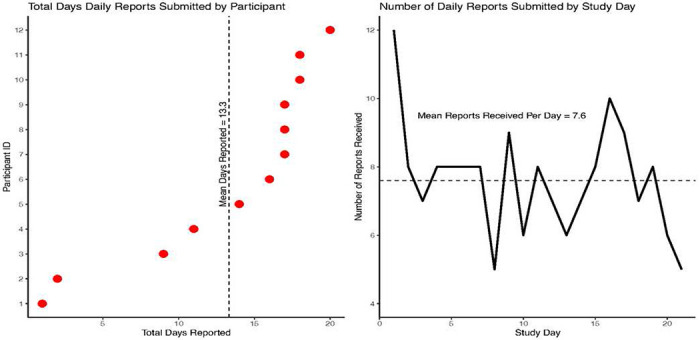
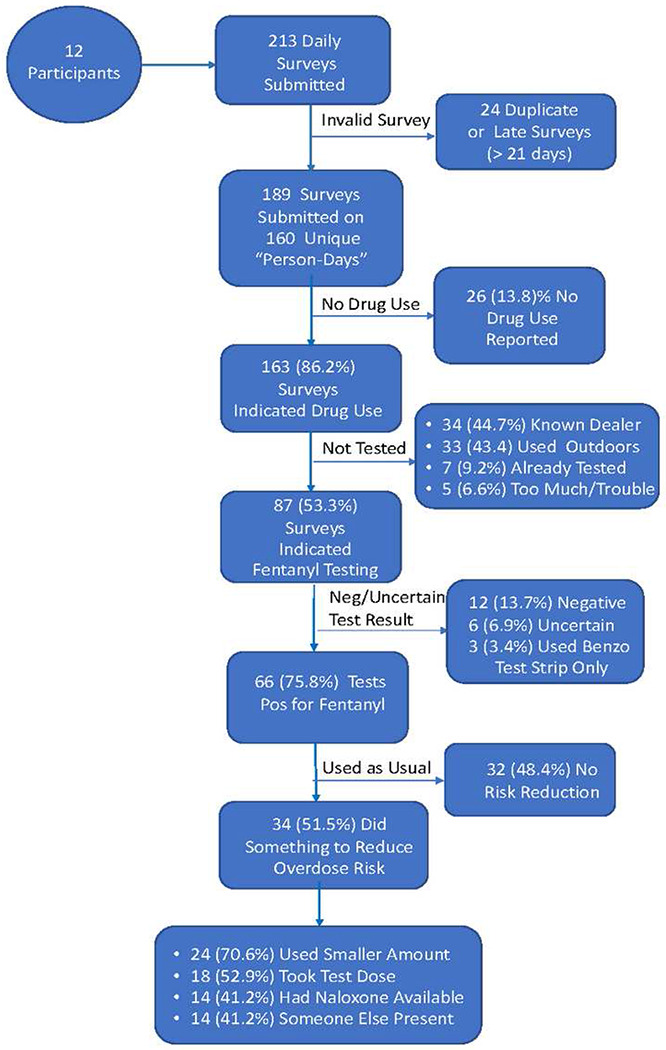
To date, evaluations of take-home fentanyl (and/or benzodiazepine) test strip use - the most common form of drug checking services - and potential effects on overdose risk have relied on retrospective accounts for some preceding time period, usually a week to several months. Such accounts, however, are subject to recall and memory biases. This pilot study assessed the feasibility of using experiential sampling to collect daily information in situ on drug checking and associated overdose risk reduction - the primary outcomes - among a sample of street opioid users and compared the results to retrospective reports. We recruited 12 participants from a Chicago-based syringe services program. Participants were 18 years of age or older, reported using opioids purchased on the street 3+ times per week in the past month, and had an available Android mobile phone. A phone-based app was programmed to collect daily drug checking information and provided to each participant along with a supply of fentanyl and benzodiazepine test strips and instructions for use over 21 days. Comparable retrospective data were collected via follow-up in-person surveys at the conclusion of daily report collection. We found a reasonably high rate of daily reporting (63.5%) with participants submitting reports on 160 "person-days" out of 252 possible days. Participants submitted daily reports an average of 13 of 21 days. Reports of test strip use frequency varied between the retrospective and daily reports with a relatively higher percentage of days/time using test strips obtained from the daily reports. We also found higher proportions reporting overdose risk reduction behaviors on the daily reports compared with the retrospective reviews. We believe the results support using daily experience sampling to collect information on drug checking behaviors among street drug users. Although resource intensive in comparison to retrospective reports, daily reporting potentially provides more detailed information on test strip use and its association with overdose risk reduction and, ultimately, fewer overdoses. Needed are larger trials and validation studies of daily experience sampling to identify the optimum protocol for collecting accurate information on drug checking and overdose risk reduction behavior.
迄今为止,对于带回家的芬太尼(和/或苯二氮卓类药物)检测试纸使用情况的评估——这是药物检测服务最常见的形式——以及对过量用药风险的潜在影响,一直依赖于对之前某个时间段(通常为一周到几个月)的回顾性描述。然而,此类描述容易受到回忆和记忆偏差的影响。这项试点研究评估了使用经验抽样法在街头阿片类药物使用者样本中现场收集每日药物检测及相关过量用药风险降低情况(主要结果)信息的可行性,并将结果与回顾性报告进行了比较。我们从芝加哥的一个注射器服务项目中招募了12名参与者。参与者年龄在18岁及以上,报告称在过去一个月中每周3次以上使用在街上购买的阿片类药物,并且拥有一部可用的安卓手机。一个基于手机的应用程序被编程用于收集每日药物检测信息,并与一批芬太尼和苯二氮卓类药物检测试纸以及21天的使用说明一起提供给每位参与者。在每日报告收集结束时,通过后续的面对面调查收集了可比的回顾性数据。我们发现每日报告率相当高(63.5%),参与者在252个可能的日子里提交了160个“人日”的报告。参与者在21天中平均有13天提交了每日报告。检测试纸使用频率的报告在回顾性报告和每日报告之间有所不同,从每日报告中获得的使用检测试纸的天数/时间百分比相对较高。我们还发现,与回顾性审查相比,每日报告中报告过量用药风险降低行为的比例更高。我们认为这些结果支持使用每日经验抽样法来收集街头吸毒者药物检测行为的信息。尽管与回顾性报告相比资源密集,但每日报告可能提供关于检测试纸使用及其与过量用药风险降低之间关联的更详细信息,并最终减少过量用药情况。需要进行更大规模的试验和每日经验抽样的验证研究,以确定收集关于药物检测和过量用药风险降低行为准确信息的最佳方案。