Zhou Zibo, Xu Kan, Yu Jinlu
Department of Neurosurgery, First Hospital of Jilin University, Changchun, China.
Front Neurol. 2023 Jan 12;13:1078185. doi: 10.3389/fneur.2022.1078185. eCollection 2022.
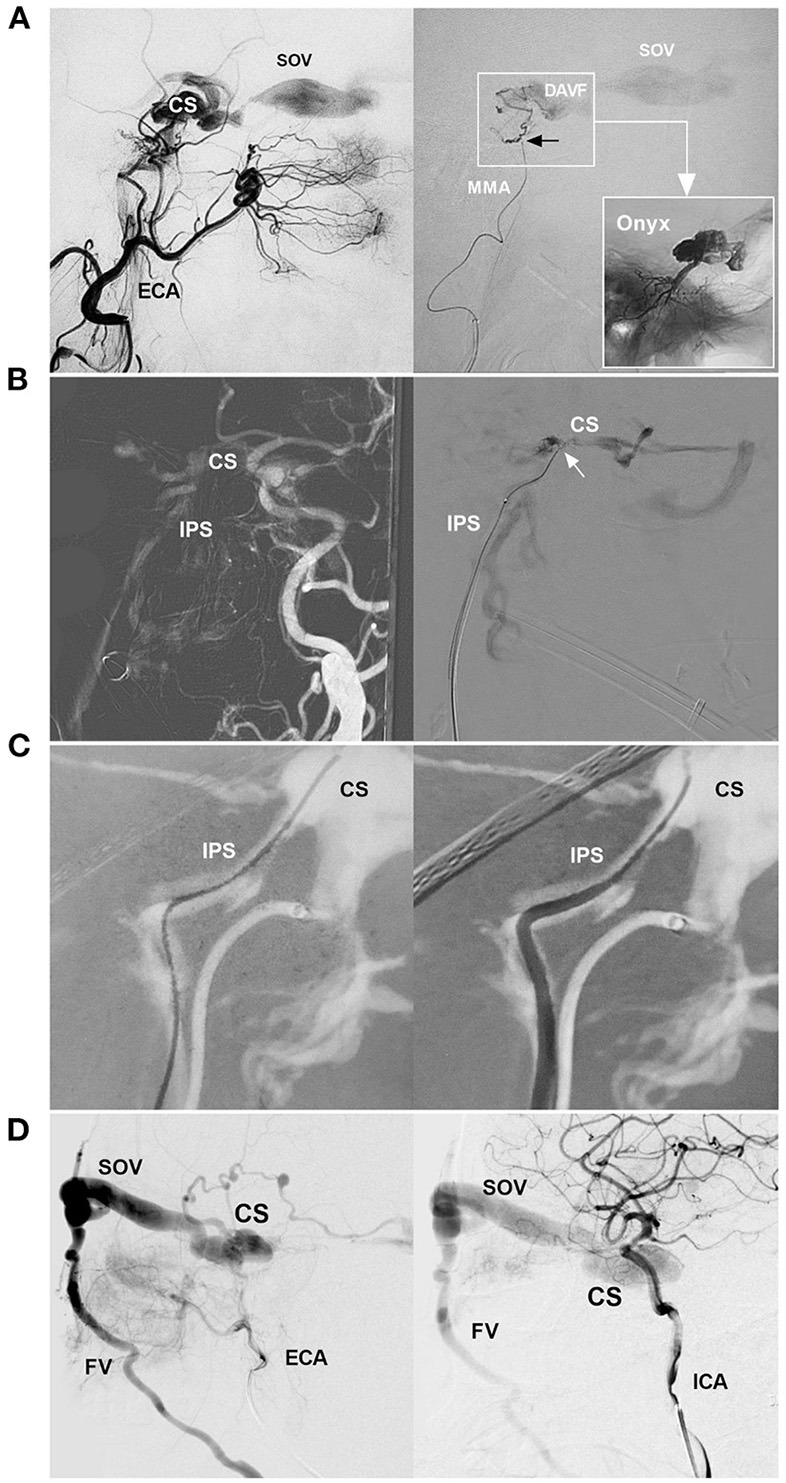
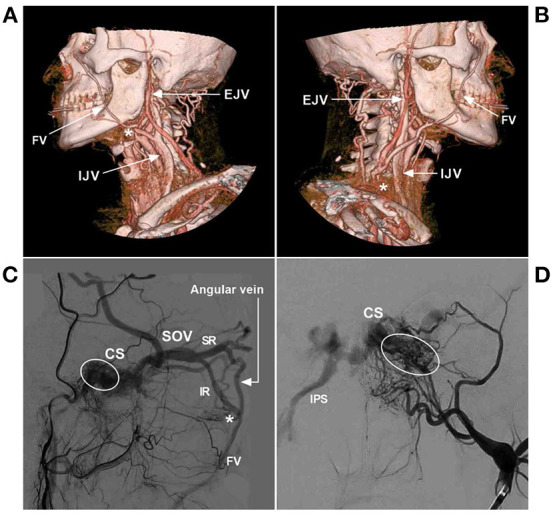
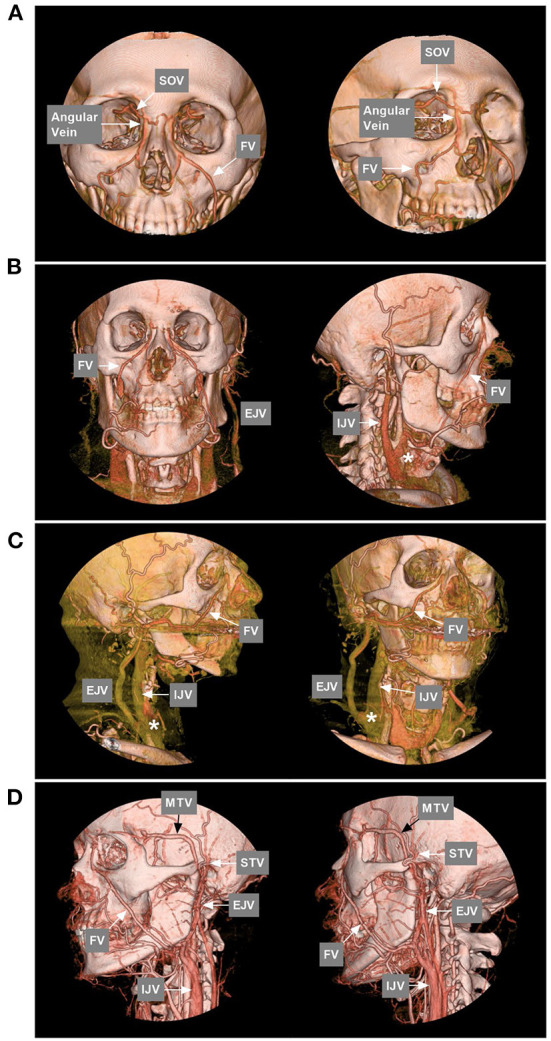
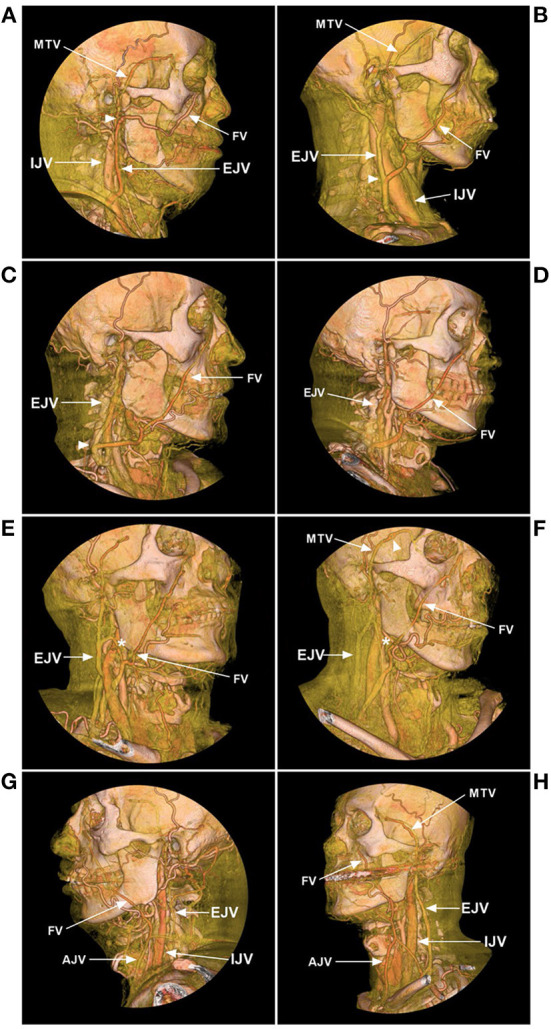
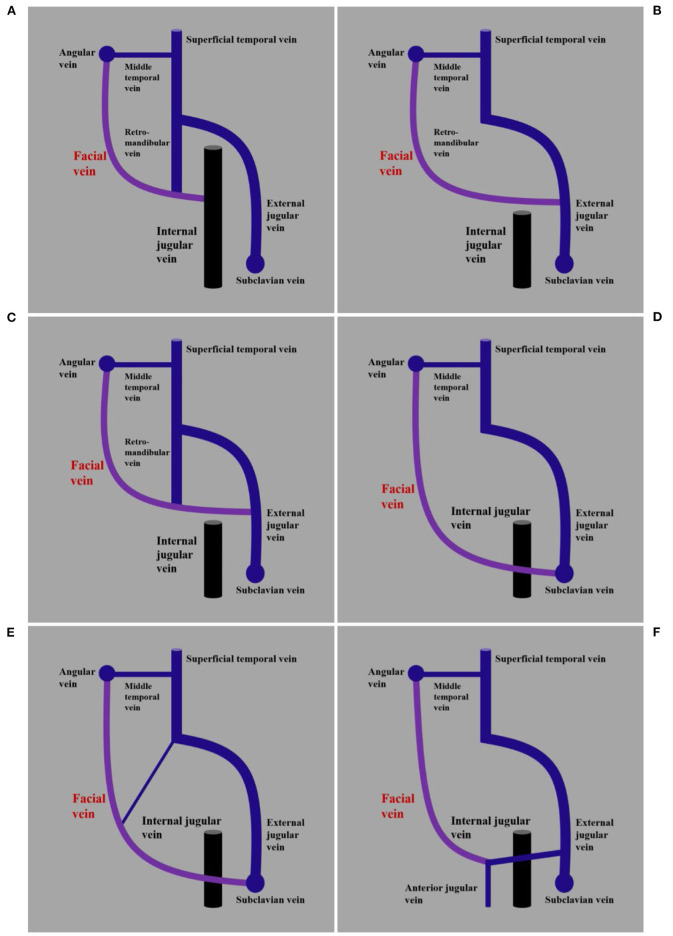
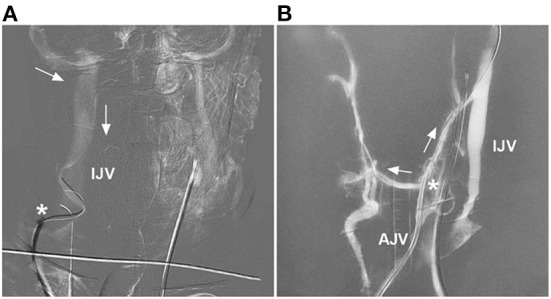
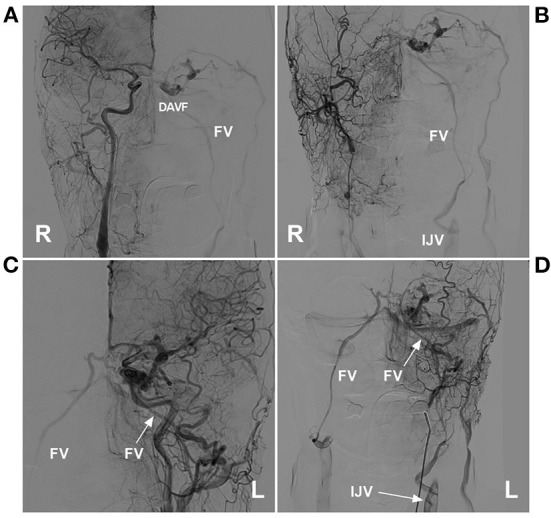
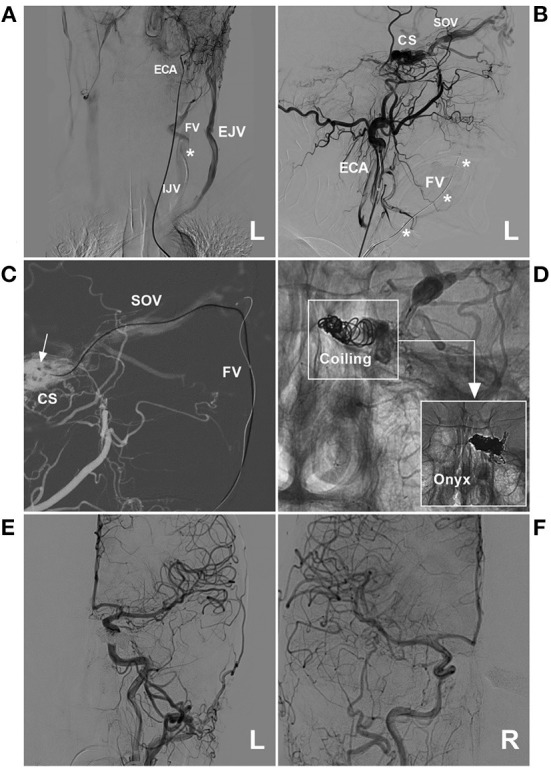
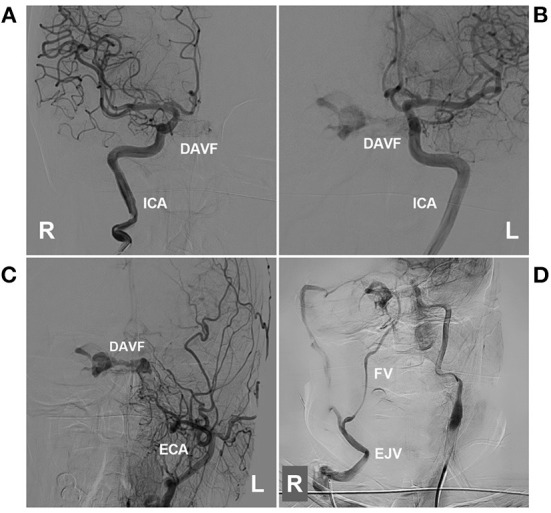
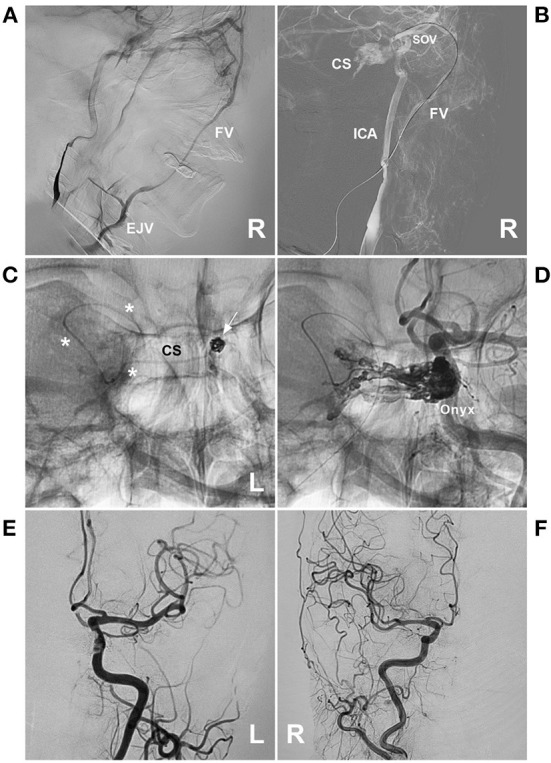
Cavernous sinus dural arteriovenous fistula (CS-DAVF) is an abnormal communication between the CS and dural arteries from the internal carotid artery and external carotid artery. CS-DAVFs are not uncommon. The preferred treatment for most CS-DAVFs is transvenous embolization (TVE), which can achieve a high cure rate with few complications. The trans-inferior petrous sinus (IPS) route from the internal jugular vein to the CS is the favorite and most direct route to perform TVE in the great majority of CS-DAVFs. However, when the trans-IPS route fails and if the facial vein (FV) is patent and dilated, transfemoral trans-FV-superior ophthalmic vein (SOV) embolization of the CS-DAVF can be attempted. However, the transfemoral trans-FV-SOV route to embolize CS-DAVFs is often challenging, and there is insufficient knowledge about it. Therefore, an updated review of the transfemoral trans-FV-SOV route to embolize CS-DAVFs is necessary, and this review includes our experience. The images in this review are from our institute without the dispute of copyright. Issues regarding the transfemoral trans-FV-SOV route to embolize CS-DAV were discussed, including the FV anatomy and variation, various TVE routes to access CS-DAVF, the procedure of the transfemoral trans-FV-SOV route to embolize CS-DAVF, difficulty, and solution of the transfemoral trans-FV-SOV route to embolize CS-DAVF, and complications and prognosis of transfemoral trans-FV-SOV to embolize CS-DAVF. By reviewing the transfemoral trans-FV-SOV route to embolize CS-DAVFs, we found that this route provides a valuable alternative to the other transvenous routes. A good prognosis can be obtained with the transfemoral trans-FV-SOV route to embolize CS-DAVFs in select cases.
海绵窦硬脑膜动静脉瘘(CS-DAVF)是海绵窦与来自颈内动脉和颈外动脉的硬脑膜动脉之间的异常交通。CS-DAVF并不少见。大多数CS-DAVF的首选治疗方法是经静脉栓塞(TVE),其治愈率高且并发症少。从颈内静脉经岩下窦(IPS)进入海绵窦的途径是绝大多数CS-DAVF进行TVE时最常用且最直接的途径。然而,当经IPS途径失败且面静脉(FV)通畅且扩张时,可尝试经股静脉经FV-眼上静脉(SOV)栓塞CS-DAVF。然而,经股静脉经FV-SOV途径栓塞CS-DAVF往往具有挑战性,并且对此了解不足。因此,有必要对经股静脉经FV-SOV途径栓塞CS-DAVF进行更新综述,本综述包括我们的经验。本综述中的图像来自我们研究所,不存在版权争议。讨论了经股静脉经FV-SOV途径栓塞CS-DAV的相关问题,包括FV的解剖结构和变异、进入CS-DAVF的各种TVE途径、经股静脉经FV-SOV途径栓塞CS-DAVF的操作过程、经股静脉经FV-SOV途径栓塞CS-DAVF的困难及解决方法,以及经股静脉经FV-SOV栓塞CS-DAVF的并发症和预后。通过回顾经股静脉经FV-SOV途径栓塞CS-DAVF,我们发现该途径为其他经静脉途径提供了有价值的替代方案。在某些情况下,经股静脉经FV-SOV途径栓塞CS-DAVF可获得良好预后。