Mei Haoran, Wen Wu, Fang Kang, Xiong Yuanpeng, Liu Weiqi, Wang Jie, Wan Renhua
Department of General Surgery, The First Affiliated Hospital of Nanchang University, Nanchang, China.
Department of General Surgery, The First Affiliated Hospital of Gannan Medical University, Ganzhou, China.
Front Oncol. 2023 Jan 11;12:1088659. doi: 10.3389/fonc.2022.1088659. eCollection 2022.
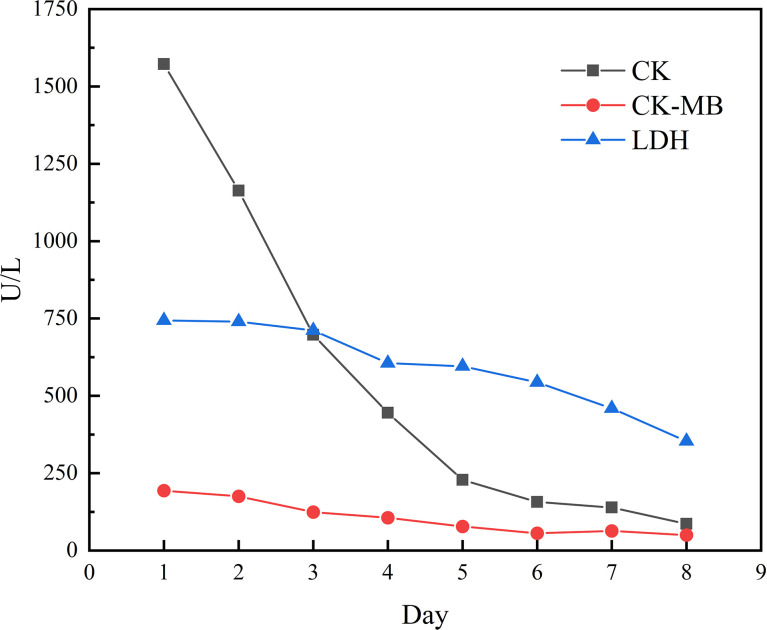
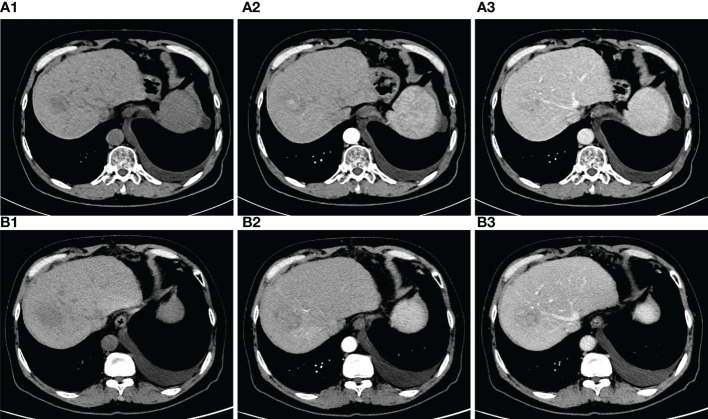
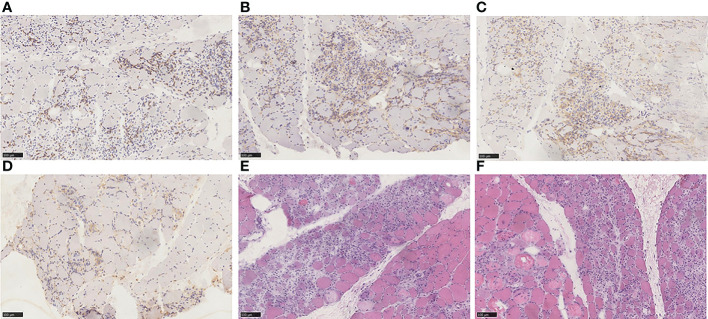
With the development of immunotherapy, immune checkpoint inhibitors (ICIs) are widely used in clinical oncology and have achieved good results. ICIs could induce immune-related adverse events (irAEs) in cancer treatment, which warrant sufficient attention. Among them, immune myositis can manifest severe symptoms affecting the whole body, and immune myocarditis occurs with a low incidence but high fatality rate. Here we report a case of grade 3/4 adverse reactions in a patient with partial hepatectomy for malignancy after using ICIs and describe the clinical presentation, laboratory results, treatment, and prognosis. It emphasizes that clinicians should focus on being alert to irAEs in liver cancer patients who have received ICI therapy. The case we present is a 56-year-old male diagnosed with hepatocellular carcinoma. Right hepatic lobectomy was performed in April 2019. Postoperative follow-up showed that transcatheter arterial chemoembolization (TACE) combined with sorafenib (400 mg twice daily) failed to stop the recurrence of the tumor. In December 2020, the patient started to use Camrelizumab injections (200mg/injection every 21 days as a cycle). After 3 cycles, the patient had decreased muscle strength in both lower extremities with chest tightness, dyspnea, and expectoration (whitish sputum). The diagnosis was ICIs injection-induced immune myocarditis and myositis accompanied. The patient's condition improved considerably by steroid pulse therapy timely. The case emphasizes that clinicians should focus on being alert to irAEs in liver cancer patients who have received ICI therapy.
随着免疫疗法的发展,免疫检查点抑制剂(ICIs)在临床肿瘤学中得到广泛应用并取得了良好效果。ICIs在癌症治疗中可诱发免疫相关不良事件(irAEs),这值得充分关注。其中,免疫性肌炎可表现出影响全身的严重症状,而免疫性心肌炎发生率低但死亡率高。在此,我们报告1例恶性肿瘤患者在接受ICIs治疗后行部分肝切除术后出现3/4级不良反应的病例,并描述其临床表现、实验室检查结果、治疗及预后情况。这强调临床医生应关注接受ICI治疗的肝癌患者发生irAEs的情况。我们呈现的病例是一名56岁男性,诊断为肝细胞癌。2019年4月行右肝叶切除术。术后随访显示,经动脉化疗栓塞术(TACE)联合索拉非尼(每日2次,每次400mg)未能阻止肿瘤复发。2020年12月,患者开始使用卡瑞利珠单抗注射液(每21天注射200mg为1个周期)。3个周期后,患者双下肢肌力下降,伴有胸闷、呼吸困难及咳痰(白色痰液)。诊断为ICI注射诱发的免疫性心肌炎并伴有肌炎。经及时的类固醇脉冲治疗,患者病情明显改善。该病例强调临床医生应关注接受ICI治疗的肝癌患者发生irAEs的情况。