Antropova E A, Khlebodarova T M, Demenkov P S, Venzel A S, Ivanisenko N V, Gavrilenko A D, Ivanisenko T V, Adamovskaya A V, Revva P M, Lavrik I N, Ivanisenko V A
Institute of Cytology and Genetics of the Siberian Branch of the Russian Academy of Scences, Novosibirsk, Russia.
Institute of Cytology and Genetics of the Siberian Branch of the Russian Academy of Scences, Novosibirsk, Russia Kurchatov Genomic Center of ICG SB RAS, Novosibirsk, Russia.
Vavilovskii Zhurnal Genet Selektsii. 2022 Dec;26(8):733-742. doi: 10.18699/VJGB-22-89.
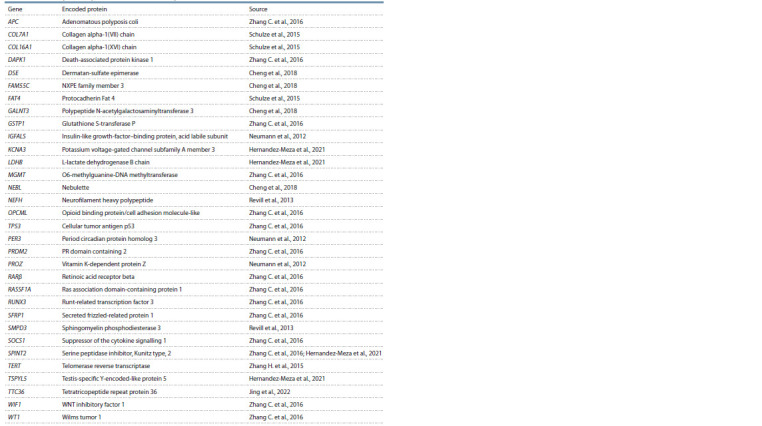
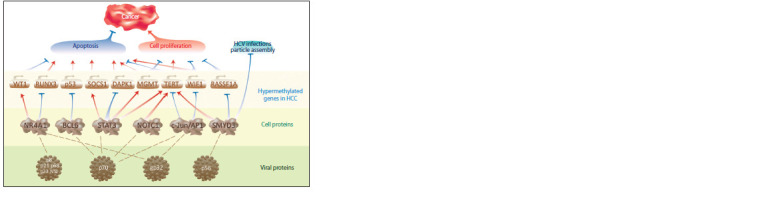
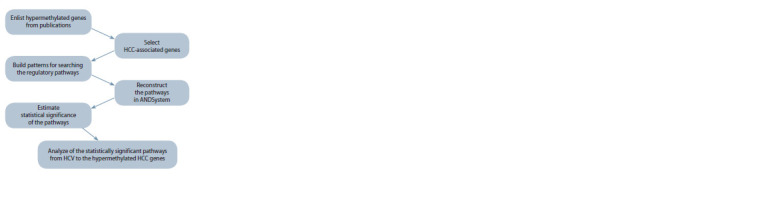
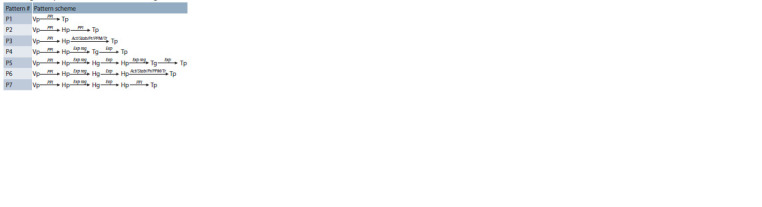
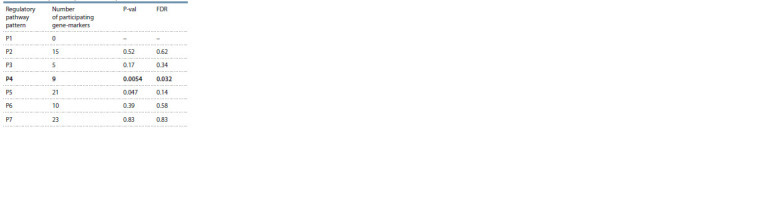
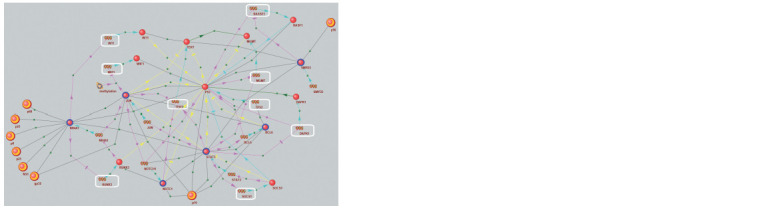
Hepatitis C virus (HCV) is a risk factor that leads to hepatocellular carcinoma (HCC) development. Epigenetic changes are known to play an important role in the molecular genetic mechanisms of virus-induced oncogenesis. Aberrant DNA methylation is a mediator of epigenetic changes that are closely associated with the HCC pathogenesis and considered a biomarker for its early diagnosis. The ANDSystem software package was used to reconstruct and evaluate the statistical significance of the pathways HCV could potentially use to regulate 32 hypermethylated genes in HCC, including both oncosuppressor and protumorigenic ones identified by genome-wide analysis of DNA methylation. The reconstructed pathways included those affecting protein-protein interactions (PPI), gene expression, protein activity, stability, and transport regulations, the expression regulation pathways being statistically significant. It has been shown that 8 out of 10 HCV proteins were involved in these pathways, the HCV NS3 protein being implicated in the largest number of regulatory pathways. NS3 was associated with the regulation of 5 tumor-suppressor genes, which may be the evidence of its central role in HCC pathogenesis. Analysis of the reconstructed pathways has demonstrated that following the transcription factor inhibition caused by binding to viral proteins, the expression of a number of oncosuppressors (WT1, MGMT, SOCS1, P53) was suppressed, while the expression of others (RASF1, RUNX3, WIF1, DAPK1) was activated. Thus, the performed gene-network reconstruction has shown that HCV proteins can influence not only the methylation status of oncosuppressor genes, but also their transcriptional regulation. The results obtained can be used in the search for pharmacological targets to develop new drugs against HCV-induced HCC.
丙型肝炎病毒(HCV)是导致肝细胞癌(HCC)发生的一个风险因素。已知表观遗传变化在病毒诱导的肿瘤发生分子遗传机制中发挥重要作用。异常的DNA甲基化是与HCC发病机制密切相关的表观遗传变化的介质,并被视为其早期诊断的生物标志物。使用ANDSystem软件包重建并评估了HCV可能用于调控HCC中32个高甲基化基因的信号通路的统计学意义,这些基因包括通过全基因组DNA甲基化分析鉴定出的抑癌基因和促癌基因。重建的信号通路包括影响蛋白质-蛋白质相互作用(PPI)、基因表达、蛋白质活性、稳定性和转运调控的通路,其中基因表达调控通路具有统计学意义。研究表明,10种HCV蛋白中有8种参与了这些信号通路,HCV NS3蛋白涉及的调控信号通路数量最多。NS3与5个肿瘤抑制基因的调控相关,这可能是其在HCC发病机制中起核心作用的证据。对重建信号通路的分析表明,在与病毒蛋白结合导致转录因子抑制后,一些抑癌基因(WT1、MGMT、SOCS1、P53)的表达受到抑制,而其他一些基因(RASF1、RUNX3、WIF1、DAPK1)的表达则被激活。因此,所进行的基因网络重建表明,HCV蛋白不仅可以影响抑癌基因的甲基化状态,还可以影响其转录调控。所得结果可用于寻找药理学靶点,以开发针对HCV诱导的HCC的新药。