Isah Abdulrasheed, Dioha Michael O, Debnath Ramit, Abraham-Dukuma Magnus C, Butu Hemen Mark
Energy and Technology Policy Group, ETH Zurich, Zurich, Switzerland.
Department of Economics, SOAS University of London, London, UK.
Energy Sustain Soc. 2023;13(1):2. doi: 10.1186/s13705-022-00379-9. Epub 2023 Jan 26.
Achieving climate targets will require a rapid transition to clean energy. However, renewable energy (RE) firms face financial, policy, and economic barriers to mobilizing sufficient investment in low-carbon technologies, especially in low- and middle-income countries. Here, we analyze the challenges and successes of financing the energy transition in Nigeria and Brazil using three empirically grounded levers: financing environments, channels, and instruments.
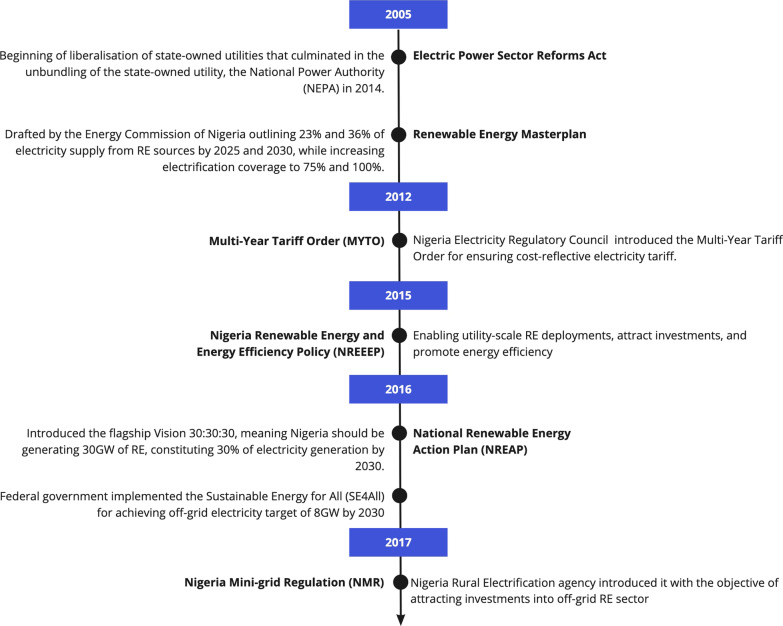
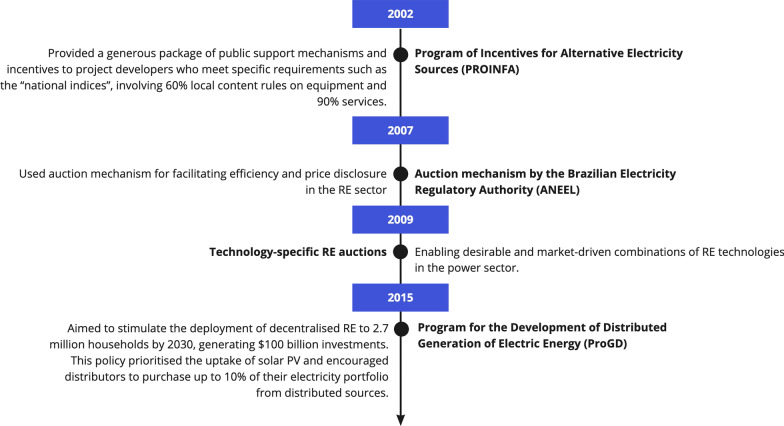
While Brazil has leveraged innovative policy instruments to mobilize large-scale investment in RE, policy uncertainty and weak financing mechanisms have hindered RE investments in Nigeria. Specifically, Brazil's energy transition has been driven by catalytic finance from the Brazilian Development Bank (BNDES). In contrast, bilateral agencies and multilateral development banks (MDBs) have been the largest financiers of renewables in Nigeria. Policy instruments and public-private partnerships need to be redesigned to attract finance and scale market opportunities for RE project developers in Nigeria.
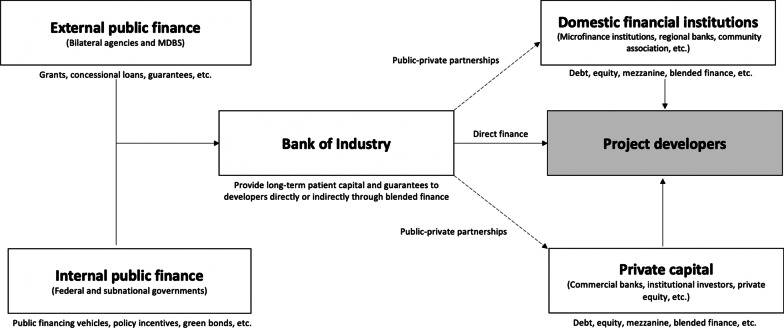
We conclude that robust policy frameworks, a dynamic public bank, strategic deployment of blended finance, and diversification of financing instruments would be essential to accelerate RE investment in Nigeria. Considering the crucial role of donors and MDBs in Nigeria, we propose a multi-stakeholder model to consolidate climate finance and facilitate the country's energy transition.
实现气候目标需要迅速向清洁能源转型。然而,可再生能源(RE)公司在为低碳技术筹集足够投资方面面临财务、政策和经济障碍,尤其是在低收入和中等收入国家。在此,我们运用三个基于实证的杠杆:融资环境、渠道和工具,分析尼日利亚和巴西能源转型融资的挑战与成功经验。
虽然巴西利用创新政策工具为可再生能源筹集了大规模投资,但政策不确定性和薄弱的融资机制阻碍了尼日利亚的可再生能源投资。具体而言,巴西的能源转型由巴西开发银行(BNDES)的催化融资推动。相比之下,双边机构和多边开发银行(MDBs)一直是尼日利亚可再生能源的最大融资方。需要重新设计政策工具和公私伙伴关系,以吸引资金并为尼日利亚可再生能源项目开发商扩大市场机会。
我们得出结论,强大的政策框架、充满活力的公共银行、混合融资的战略部署以及融资工具的多样化对于加速尼日利亚的可再生能源投资至关重要。考虑到捐助者和多边开发银行在尼日利亚的关键作用,我们提出一个多利益相关者模式,以整合气候融资并促进该国的能源转型。