Department of Ophthalmology, Eugene and Marilyn Glick Eye Institute, Indiana University School of Medicine, Indianapolis, IN, 46202, USA.
Department of Pharmacology & Toxicology, Indiana University School of Medicine, Indianapolis, IN, 46202, USA.
Sci Rep. 2023 Jan 31;13(1):1747. doi: 10.1038/s41598-023-28215-w.
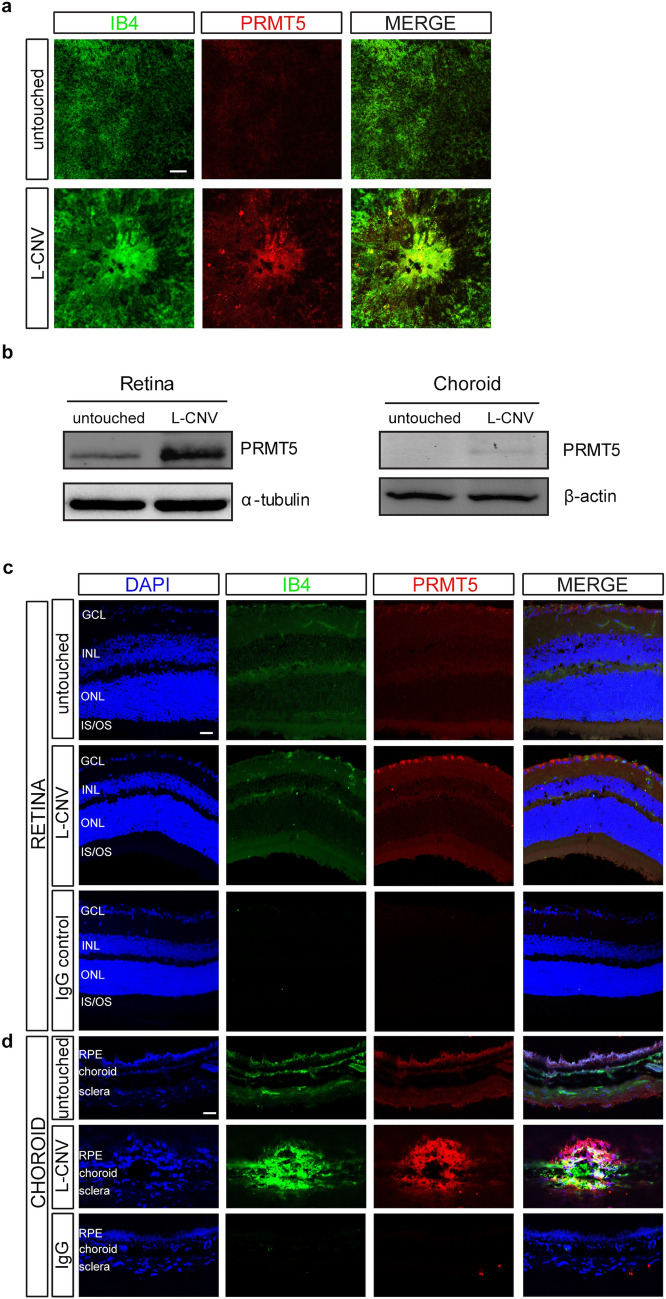
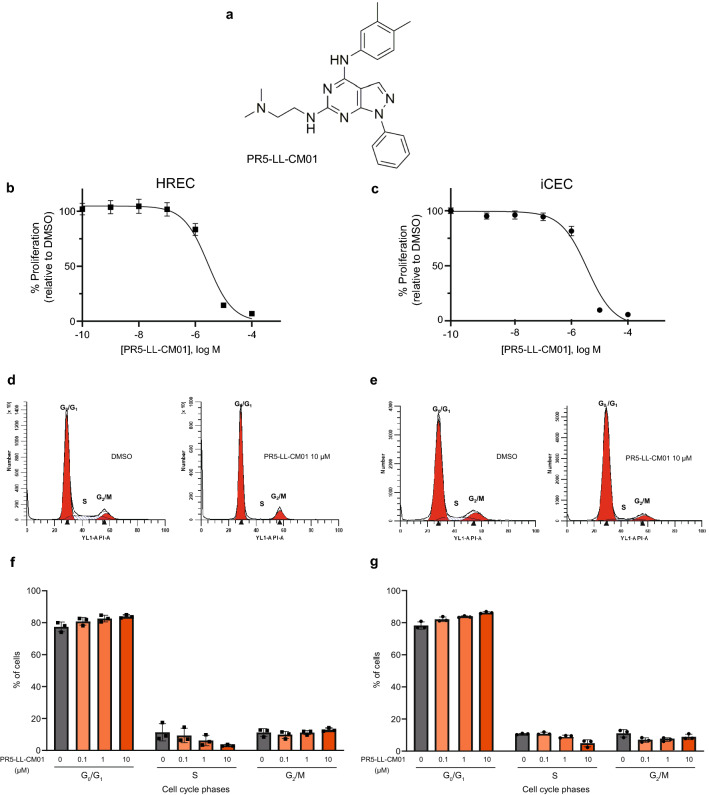
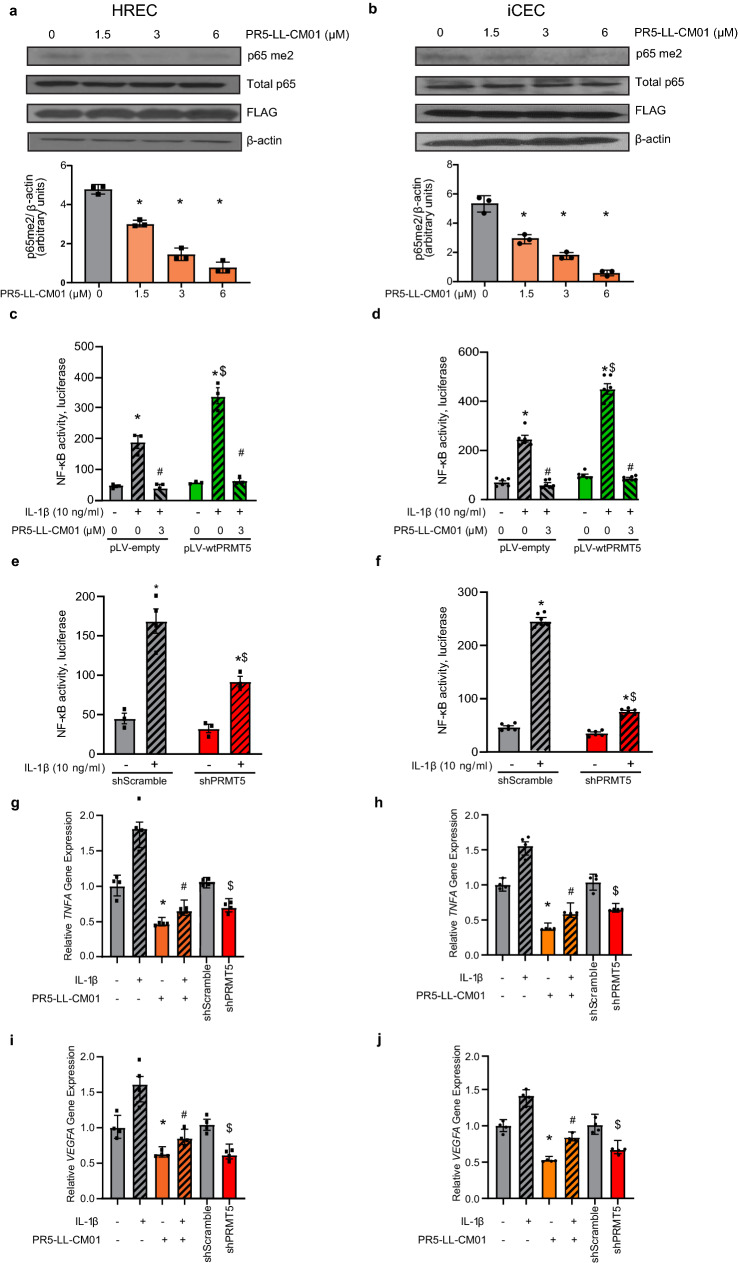
Ocular neovascular diseases including neovascular age-related macular degeneration (nvAMD) are widespread causes of blindness. Patients' non-responsiveness to currently used biologics that target vascular endothelial growth factor (VEGF) poses an unmet need for novel therapies. Here, we identify protein arginine methyltransferase 5 (PRMT5) as a novel therapeutic target for nvAMD. PRMT5 is a well-known epigenetic enzyme. We previously showed that PRMT5 methylates and activates a proangiogenic and proinflammatory transcription factor, the nuclear factor kappa B (NF-κB), which has a master role in tumor progression, notably in pancreatic ductal adenocarcinoma and colorectal cancer. We identified a potent and specific small molecule inhibitor of PRMT5, PR5-LL-CM01, that dampens the methylation and activation of NF-κB. Here for the first time, we assessed the antiangiogenic activity of PR5-LL-CM01 in ocular cells. Immunostaining of human nvAMD sections revealed that PRMT5 is highly expressed in the retinal pigment epithelium (RPE)/choroid where neovascularization occurs, while mouse eyes with laser induced choroidal neovascularization (L-CNV) showed PRMT5 is overexpressed in the retinal ganglion cell layer and in the RPE/choroid. Importantly, inhibition of PRMT5 by PR5-LL-CM01 or shRNA knockdown of PRMT5 in human retinal endothelial cells (HRECs) and induced pluripotent stem cell (iPSC)-derived choroidal endothelial cells (iCEC2) reduced NF-κB activity and the expression of its target genes, such as tumor necrosis factor α (TNF-α) and VEGF-A. In addition to inhibiting angiogenic properties of proliferation and tube formation, PR5-LL-CM01 blocked cell cycle progression at G/S-phase in a dose-dependent manner in these cells. Thus, we provide the first evidence that inhibition of PRMT5 impedes angiogenesis in ocular endothelial cells, suggesting PRMT5 as a potential therapeutic target to ameliorate ocular neovascularization.
眼部新生血管疾病包括新生血管性年龄相关性黄斑变性(nvAMD),是导致失明的常见原因。目前用于治疗新生血管疾病的生物制剂主要针对血管内皮生长因子(VEGF),但部分患者对此类药物反应不佳,这表明我们急需开发新的治疗方法。在这里,我们将蛋白精氨酸甲基转移酶 5(PRMT5)鉴定为治疗 nvAMD 的新型治疗靶点。PRMT5 是一种众所周知的表观遗传酶。我们之前曾表明,PRMT5 可甲基化并激活一种促血管生成和促炎的转录因子——核因子 κB(NF-κB),NF-κB 在肿瘤进展中具有重要作用,特别是在胰腺导管腺癌和结直肠癌中。我们鉴定出一种有效的、特异性的 PRMT5 小分子抑制剂 PR5-LL-CM01,它可以抑制 NF-κB 的甲基化和激活。在这里,我们首次评估了 PR5-LL-CM01 在眼部细胞中的抗血管生成活性。对 nvAMD 患者眼部组织进行免疫染色显示,PRMT5 在发生新生血管的视网膜色素上皮(RPE)/脉络膜中高度表达,而激光诱导脉络膜新生血管(L-CNV)的小鼠眼部中,PRMT5 在视网膜神经节细胞层和 RPE/脉络膜中过度表达。重要的是,在人视网膜内皮细胞(HRECs)和诱导多能干细胞(iPSC)衍生的脉络膜内皮细胞(iCEC2)中,PR5-LL-CM01 抑制 PRMT5 或 shRNA 敲低 PRMT5,可降低 NF-κB 活性及其靶基因的表达,如肿瘤坏死因子-α(TNF-α)和血管内皮生长因子-A(VEGF-A)。除了抑制增殖和管状形成的血管生成特性外,PR5-LL-CM01 还可在这些细胞中以剂量依赖性方式阻止细胞周期在 G1/S 期的进展。因此,我们首次提供证据表明,抑制 PRMT5 可阻止眼部内皮细胞的血管生成,提示 PRMT5 可能成为改善眼部新生血管的潜在治疗靶点。