Guangdong Provincial Key Laboratory of Malignant Tumor Epigenetics and Gene Regulation, Sun Yat-Sen Memorial Hospital, Sun Yat-Sen University, Guangzhou 510120, China; Department of Hepatobiliary Surgery, Sun Yat-sen Memorial Hospital, Sun Yat-sen University, Guangzhou 510120, China.
Department of Surgical Intensive Care Unit, Sun Yat-sen Memorial Hospital, Sun Yat-sen University, Guangzhou 510120, China.
J Adv Res. 2023 Feb;44:173-183. doi: 10.1016/j.jare.2022.03.012. Epub 2022 Mar 21.
Lenvatinib has recently become available as the first-line therapy for advanced hepatocellular carcinoma (HCC), but its molecular mechanism in HCC remains largely unknown.
The current study aims to identify the molecular mechanisms of lenvatinib in HCC.
Gene expression microarrays, flow cytometry, western blot, qRT-PCR, immunohistochemistry and immunofluorescence were used to study the response of HCC cells to lenvatinib. Xenograft tumor of Huh7 cells was also established to detect the effect of lenvatinib in vivo.
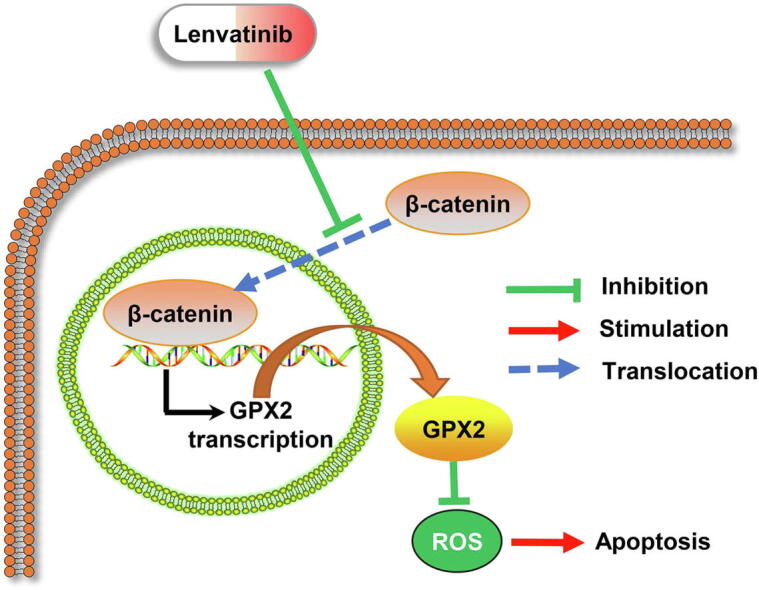
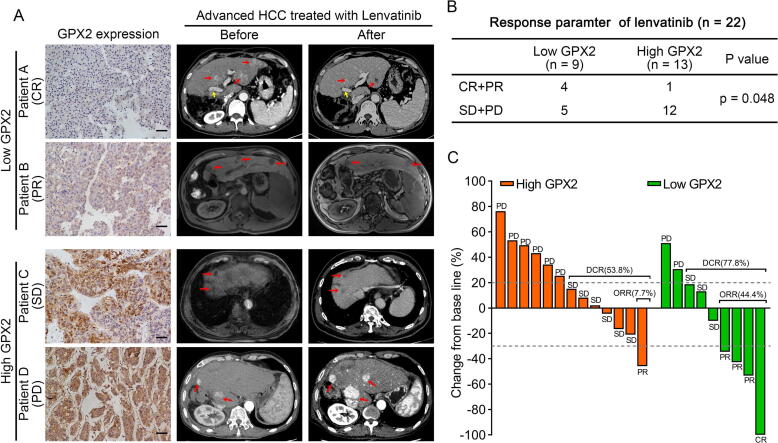
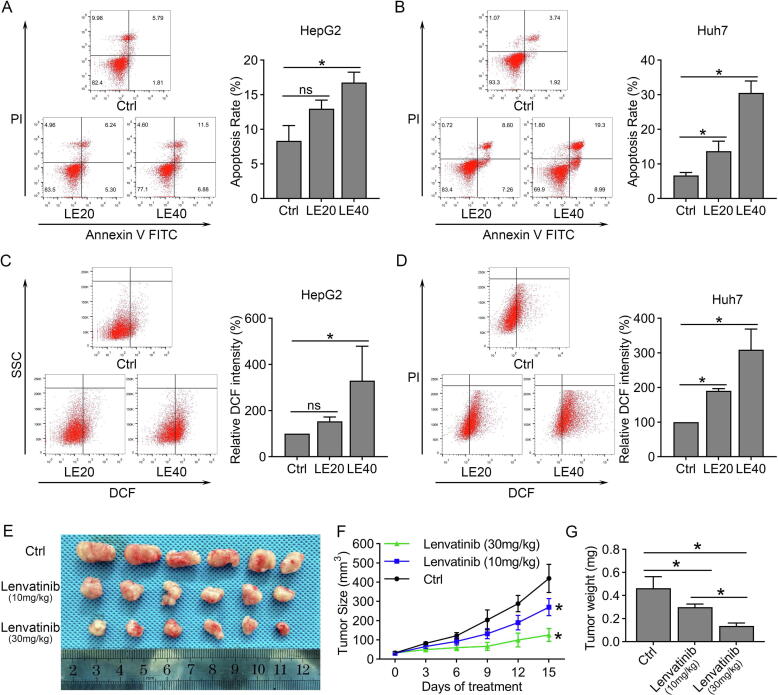
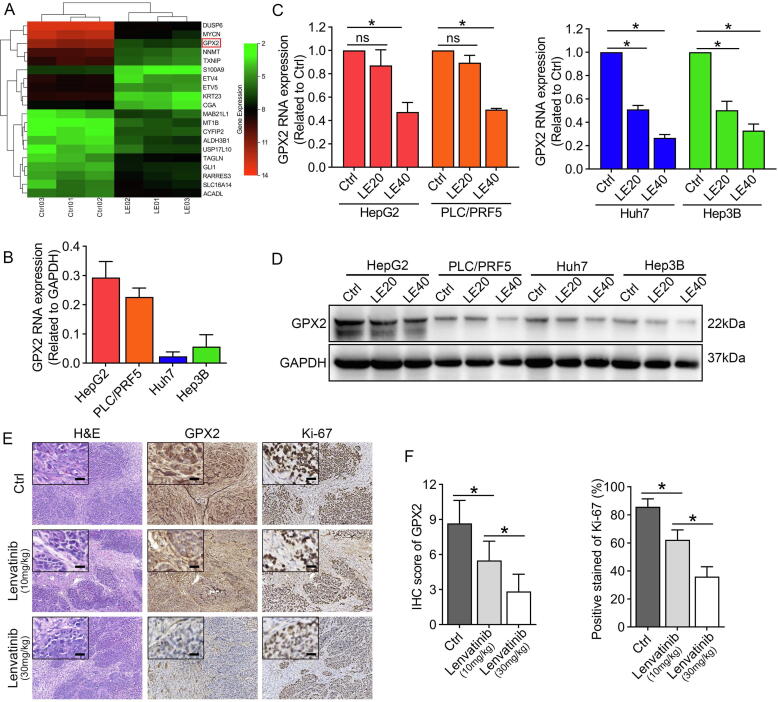
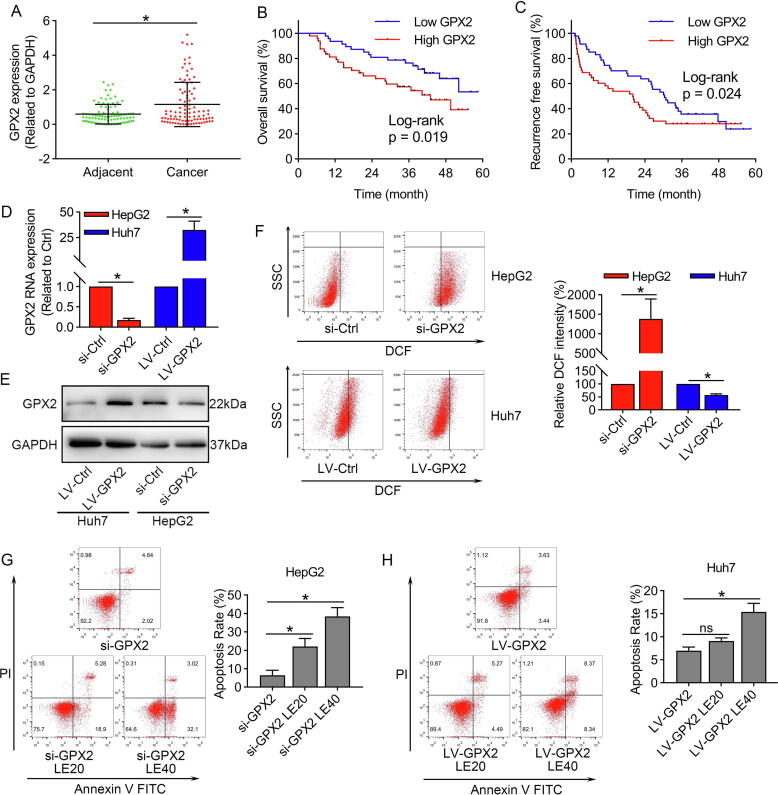
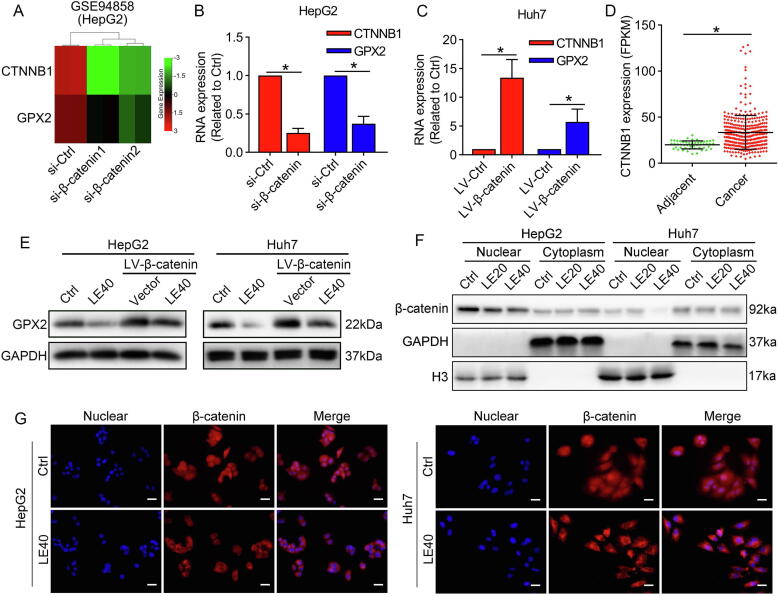
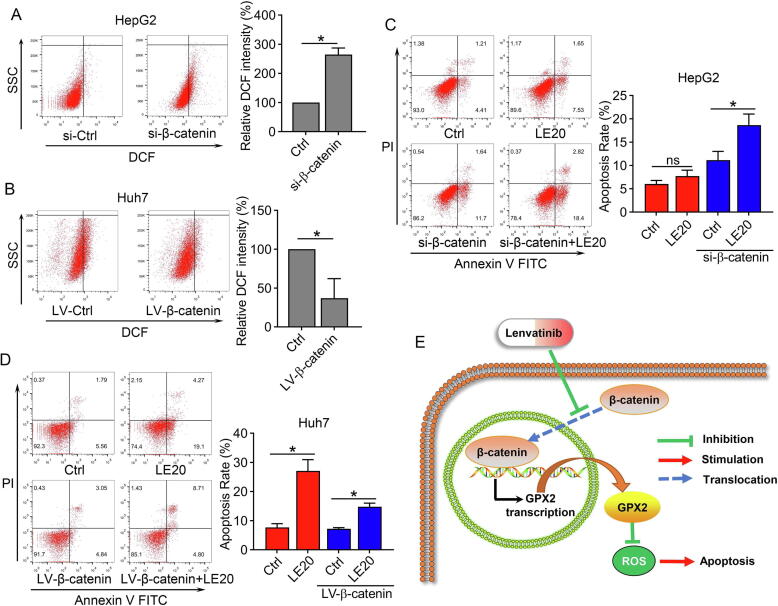
Herein, we found that lenvatinib could induce apoptosis via increasing reactive oxygen species (ROS) levels in HCC cells. Then, microarray analysis and qRT-PCR results confirmed that GPX2 was a vital target for lenvatinib against HCC. Loss and gain function of experiment showed that regulating GPX2 levels markedly affected the lenvatinib-induced ROS levels and apoptosis in HCC cells. In addition, analyses of The Cancer Genome Atlas database and the qRT-PCR results in our cohort both showed that GPX2 markedly overexpressed in tumor tissues and correlated with poor overall survival in HCC. Mechanistically, our findings further demonstrated that GPX2 was a downstream gene regulated by β-catenin, while lenvatinib could prevent nuclear translocation of β-catenin and further inhibit GPX2 expression in HCC cells. More importantly, the correlation of GPX2 expression with lenvatinib response was further analyzed in 22 HCC patients who received lenvatinib therapy, and the results showed that the objective response rate (ORR) in patients with low GPX2 expression was 44.4% (4/9), while the ORR in patients with high GPX2 levels was only 7.7% (1/13).
Our findings indicated that GPX2 plays an important role in lenvatinib-induced HCC cell apoptosis, which might serve as a biomarker for instruction of lenvatinib therapy in HCC patients.
仑伐替尼最近已被批准用于晚期肝细胞癌(HCC)的一线治疗,但它在 HCC 中的分子机制在很大程度上仍不清楚。
本研究旨在确定仑伐替尼在 HCC 中的分子机制。
使用基因表达微阵列、流式细胞术、western blot、qRT-PCR、免疫组织化学和免疫荧光法研究 HCC 细胞对仑伐替尼的反应。还建立了 Huh7 细胞的异种移植肿瘤模型,以检测仑伐替尼在体内的作用。
在此,我们发现仑伐替尼可通过增加 HCC 细胞中的活性氧(ROS)水平诱导细胞凋亡。然后,微阵列分析和 qRT-PCR 结果证实,GPX2 是仑伐替尼抑制 HCC 的重要靶点。实验中的失活和获得功能表明,调节 GPX2 水平显著影响 HCC 细胞中仑伐替尼诱导的 ROS 水平和细胞凋亡。此外,对 The Cancer Genome Atlas 数据库的分析和我们队列中的 qRT-PCR 结果均表明,GPX2 在肿瘤组织中明显过表达,并与 HCC 患者的总体生存不良相关。从机制上讲,我们的研究结果进一步表明,GPX2 是β-连环蛋白调节的下游基因,而仑伐替尼可阻止β-连环蛋白的核转位,并进一步抑制 HCC 细胞中的 GPX2 表达。更重要的是,在接受仑伐替尼治疗的 22 名 HCC 患者中进一步分析了 GPX2 表达与仑伐替尼反应的相关性,结果表明,GPX2 低表达患者的客观缓解率(ORR)为 44.4%(4/9),而 GPX2 高表达患者的 ORR 仅为 7.7%(1/13)。
我们的研究结果表明,GPX2 在仑伐替尼诱导的 HCC 细胞凋亡中起重要作用,可作为指导 HCC 患者仑伐替尼治疗的生物标志物。