Medical College of Wisconin, Milwaukee, WI, USA.
Medical College of Wisconsin, Milwaukee, WI, USA.
Am J Case Rep. 2023 Feb 2;24:e938305. doi: 10.12659/AJCR.938305.
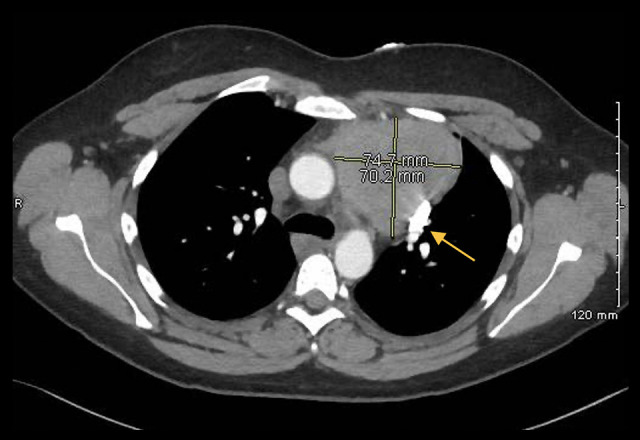
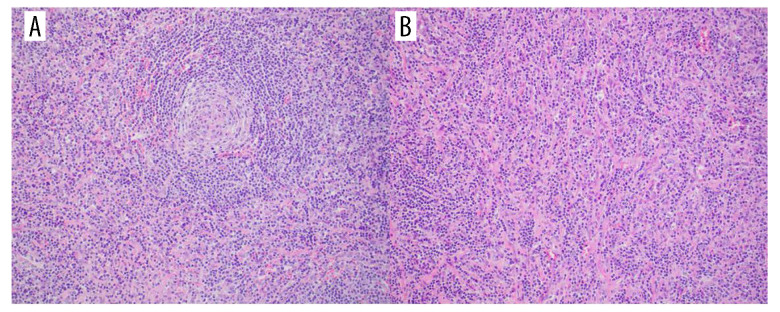
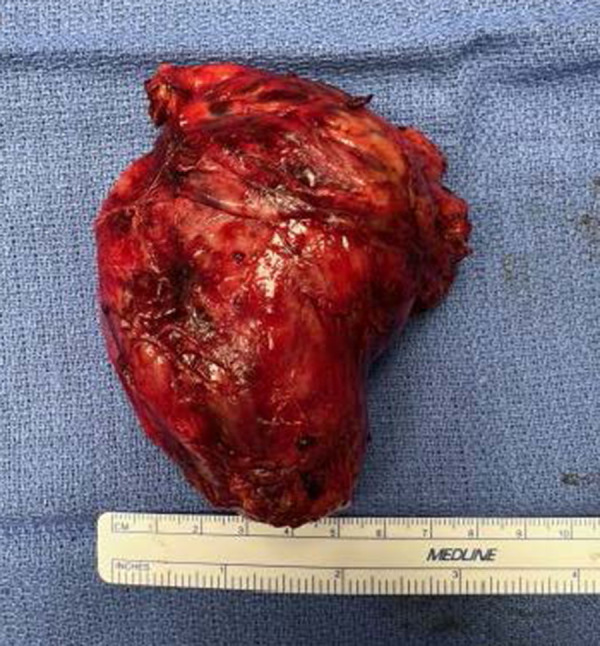
BACKGROUND Castleman disease was first described in 1956 as mediastinal masses composed of benign lymphoid hyperplasia with germinal center formation and capillary proliferation closely resembling thymomas. It has been linked with many multi-system disorders, including myasthenia gravis. Cases of Castleman disease with corresponding myasthenia gravis have higher rates of postoperative myasthenic crisis, which are reported as high as 37.5%. We encountered a case of Castleman disease with myasthenia gravis that was discovered early and managed successfully with complete surgical resection and no postoperative myasthenic crisis. CASE REPORT A 25-year-old woman with an uncomplicated history presented with shortness of breath, numbness in hands, tiring with chewing, and fatigue. Myasthenia gravis was diagnosed with serology test results, and a 7.5×7.0-cm mediastinal mass was discovered in addition to the incidental finding of a persistent left superior vena cava, closely abutting the mass. Biopsy showed lymphoid proliferation, regressed germinal centers surrounded by small lymphocytes, and vascular proliferation, consistent with unicentric Castleman disease, hyaline-vascular type. The patient was successfully treated for Castleman disease with myasthenia gravis, and no postoperative myasthenic crisis occurred. CONCLUSIONS Castleman disease associated with myasthenia gravis can dramatically increase the risk of postoperative myasthenic crisis. Our literature review of all 16 cases of Castleman disease with myasthenia gravis since 1973 revealed that 18.75% of cases were associated with a postoperative myasthenic crisis. This association elicits the importance of prompt diagnosis of myasthenia gravis when evaluating mediastinal masses and the value of having neurology and anesthesiology staff aware of the increased risk of crisis.
卡斯特曼病于 1956 年首次描述为由良性淋巴组织增生组成的纵隔肿块,伴有生发中心形成和毛细血管增生,与胸腺瘤非常相似。它与许多多系统疾病有关,包括重症肌无力。伴有相应重症肌无力的卡斯特曼病病例术后肌无力危象发生率较高,报道高达 37.5%。我们遇到了一例早期发现的卡斯特曼病伴重症肌无力病例,通过完全手术切除成功治疗,无术后肌无力危象。
一名 25 岁女性,无复杂病史,表现为呼吸急促、手部麻木、咀嚼疲劳和疲劳。血清学检查结果诊断为重症肌无力,并发现 7.5×7.0cm 纵隔肿块,此外还发现左侧永存上腔静脉意外发现,紧贴肿块。活检显示淋巴组织增生,退化的生发中心被小淋巴细胞包围,伴有血管增生,符合单中心卡斯特曼病,透明血管型。患者成功接受卡斯特曼病伴重症肌无力治疗,无术后肌无力危象发生。
伴重症肌无力的卡斯特曼病可显著增加术后肌无力危象的风险。我们对 1973 年以来所有 16 例伴有重症肌无力的卡斯特曼病病例进行文献复习,发现 18.75%的病例与术后肌无力危象有关。这种关联提示在评估纵隔肿块时,及时诊断重症肌无力的重要性,以及让神经科和麻醉科工作人员了解增加危机风险的价值。