Yin Wenjing, Lu Tianqi, Chen Zhengai, Lu Tao, Ye Hanfei, Mao Yijian, Luo Yiting, Lu Mei, Zhu Xudong, Yuan Xi, Rao Yuchun, Wang Yuexing
College of Chemistry and Life Sciences, Zhejiang Normal University, Jinhua, Zhejiang, China.
State Key Laboratory of Rice Biology, China National Rice Research Institute, Hangzhou, Zhejiang, China.
Front Plant Sci. 2023 Jan 16;13:1041081. doi: 10.3389/fpls.2022.1041081. eCollection 2022.
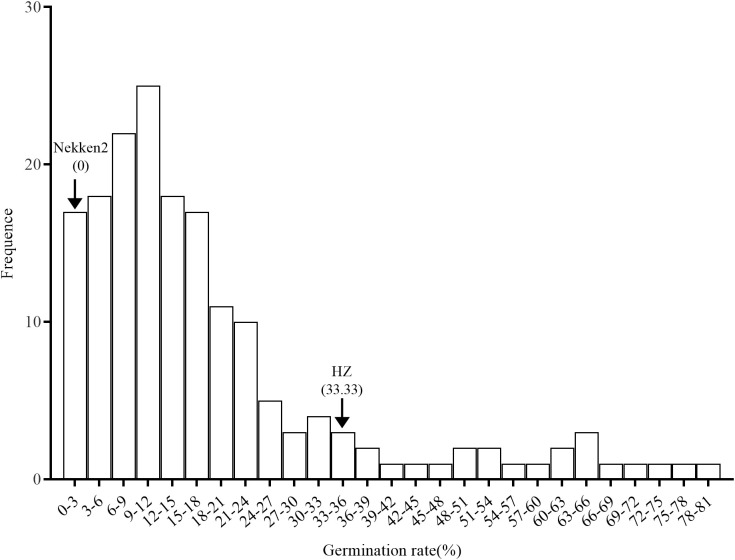
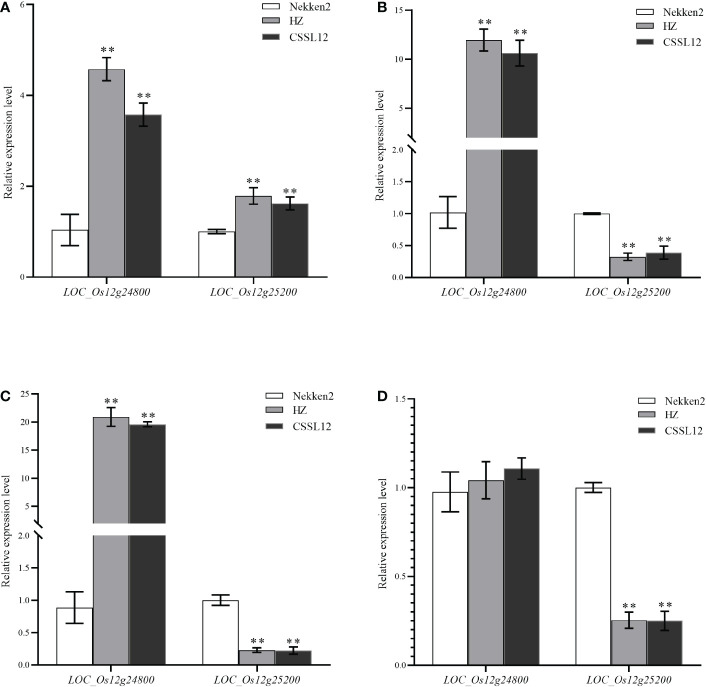
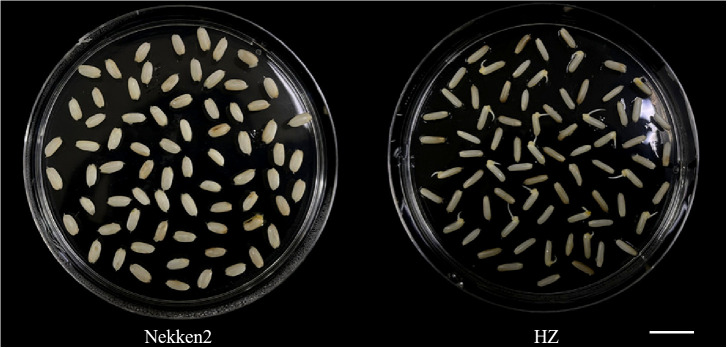
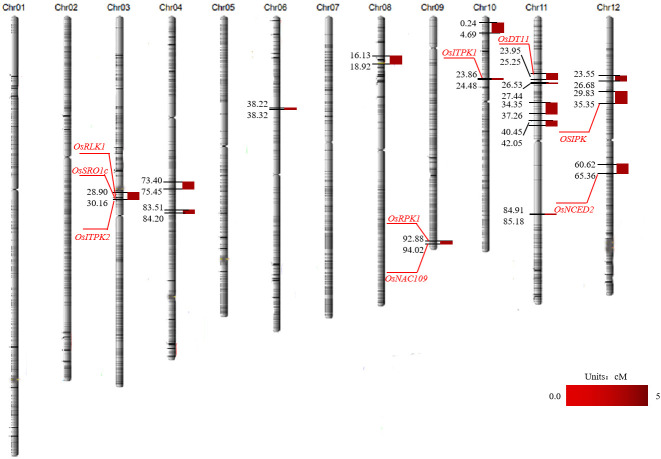
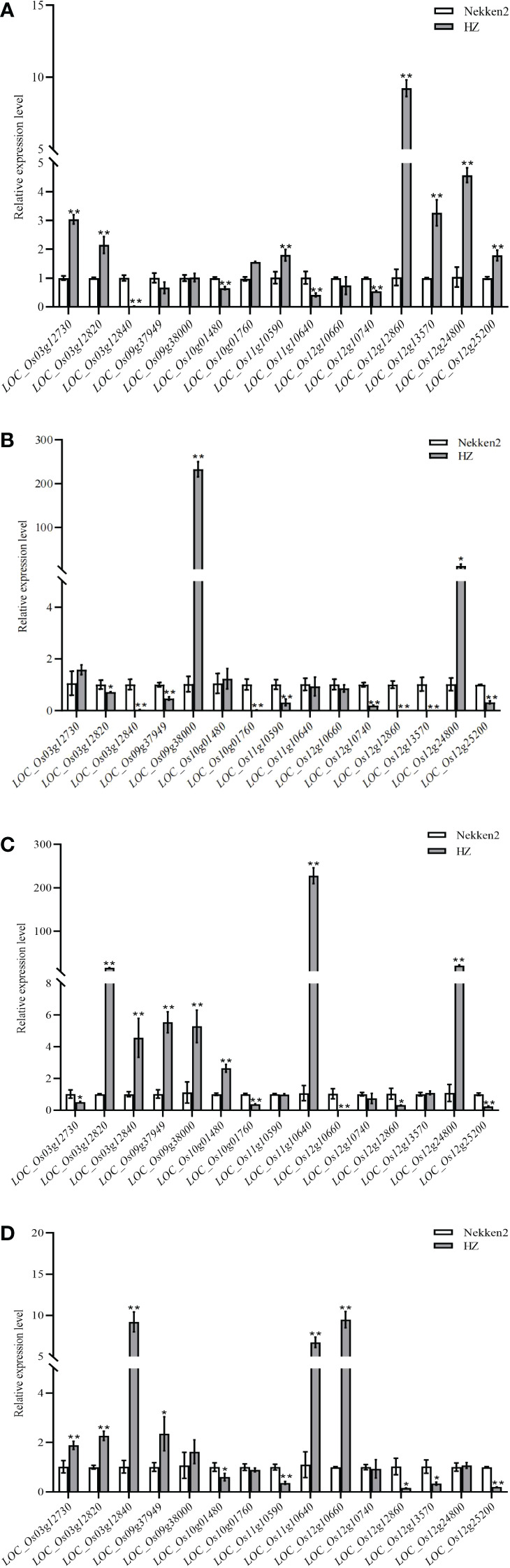
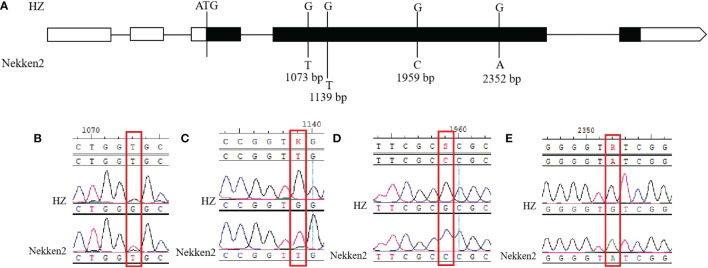
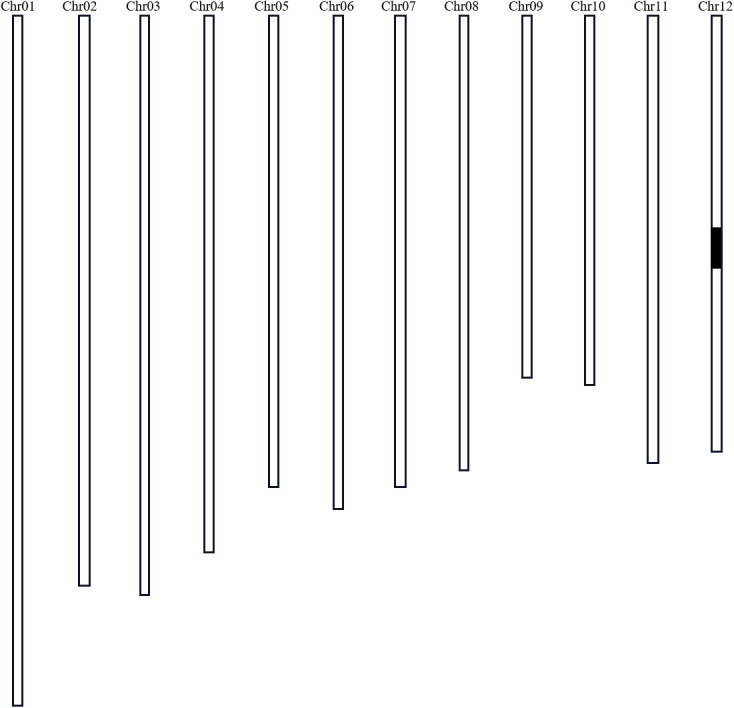
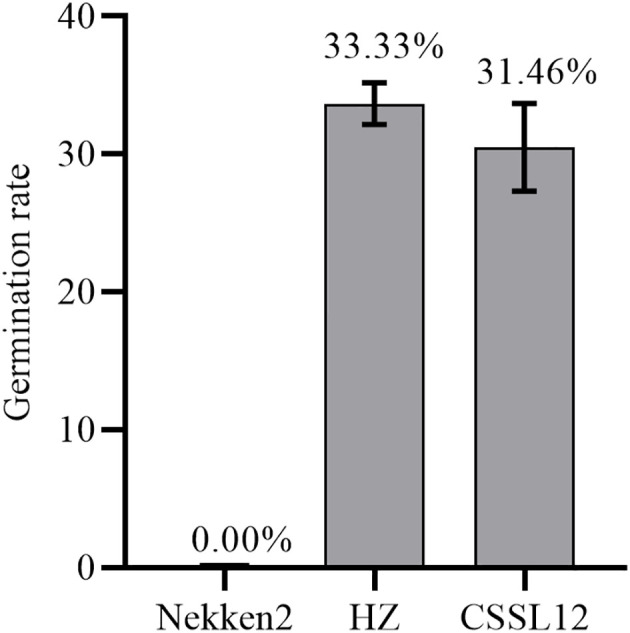
Soil salinization has a serious influence on rice yield and quality. How to enhance salt tolerance in rice is a topical issue. In this study, 120 recombinant inbred line populations were generated through nonstop multi-generation selfing using a male indica rice variety Huazhan ( L. subsp. cv. 'HZ') and a female variety of Nekken2 ( L. subsp. cv. 'Nekken2') as the parents. Germination under 80 mM NaCl conditions was measured and analyzed, and quantitative trait locus (QTL) mapping was completed using a genetic map. A total of 16 salt-tolerance QTL ranges were detected at bud stage in rice, which were situated on chromosomes 3, 4, 6, 8, 9, 10, 11, and 12. The maximum limit of detection was 4.69. Moreover, the was narrowed to a 192 kb region on chromosome 12 using map-based cloning strategy. Statistical analysis of the expression levels of these candidate genes under different NaCl concentrations by qRT-PCR revealed that () was significantly down-regulated with increasing NaCl concentration, and the expression level of the chlorine-transporter-encoding gene in HZ was significantly higher than that of Nekken2 under 0 mM NaCl. Sequencing analysis of promoter region indicated that the gene expression difference between parents may be due to eight base differences in the promoter region. Through QTL mining and analysis, a plurality of candidate genes related to salt tolerance in rice was obtained, and the results showed that might negatively regulate salt tolerance in rice. The results provide the basis for further screening and cultivation of salt-tolerant rice varieties and have laid the foundation for elucidating further molecular regulation mechanisms of salt tolerance in rice.
土壤盐渍化对水稻产量和品质有严重影响。如何提高水稻的耐盐性是一个热门问题。在本研究中,以籼稻品种华占(L. subsp. cv. 'HZ')为父本、日本品种根健2号(L. subsp. cv. 'Nekken2')为母本,通过连续多代自交构建了120个重组自交系群体。测定并分析了80 mM NaCl条件下的发芽情况,并利用遗传图谱完成了数量性状基因座(QTL)定位。在水稻芽期共检测到16个耐盐QTL区间,位于第3、4、6、8、9、10、11和12号染色体上。检测的最大区间为4.69。此外,利用图位克隆策略将其缩小到第12号染色体上192 kb的区域。通过qRT-PCR对这些候选基因在不同NaCl浓度下的表达水平进行统计分析,结果显示()随NaCl浓度升高显著下调,且在0 mM NaCl条件下,HZ中氯转运蛋白编码基因的表达水平显著高于根健2号。对启动子区域的测序分析表明,亲本间的基因表达差异可能是由于启动子区域存在8个碱基差异。通过QTL挖掘与分析,获得了多个与水稻耐盐性相关的候选基因,结果表明可能对水稻耐盐性起负调控作用。这些结果为进一步筛选和培育耐盐水稻品种提供了依据,也为阐明水稻耐盐性的分子调控机制奠定了基础。