The Wistar Institute, Philadelphia, Pennsylvania, USA.
Rush University, Chicago, Illinois, USA.
mBio. 2023 Feb 28;14(1):e0339322. doi: 10.1128/mbio.03393-22. Epub 2023 Feb 2.
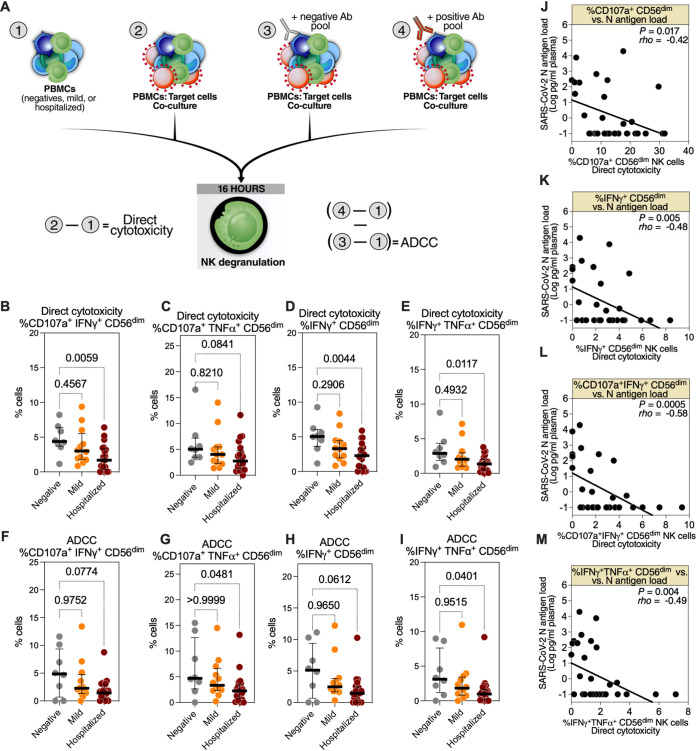
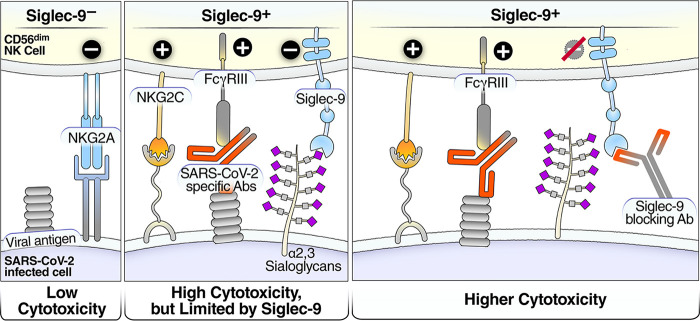
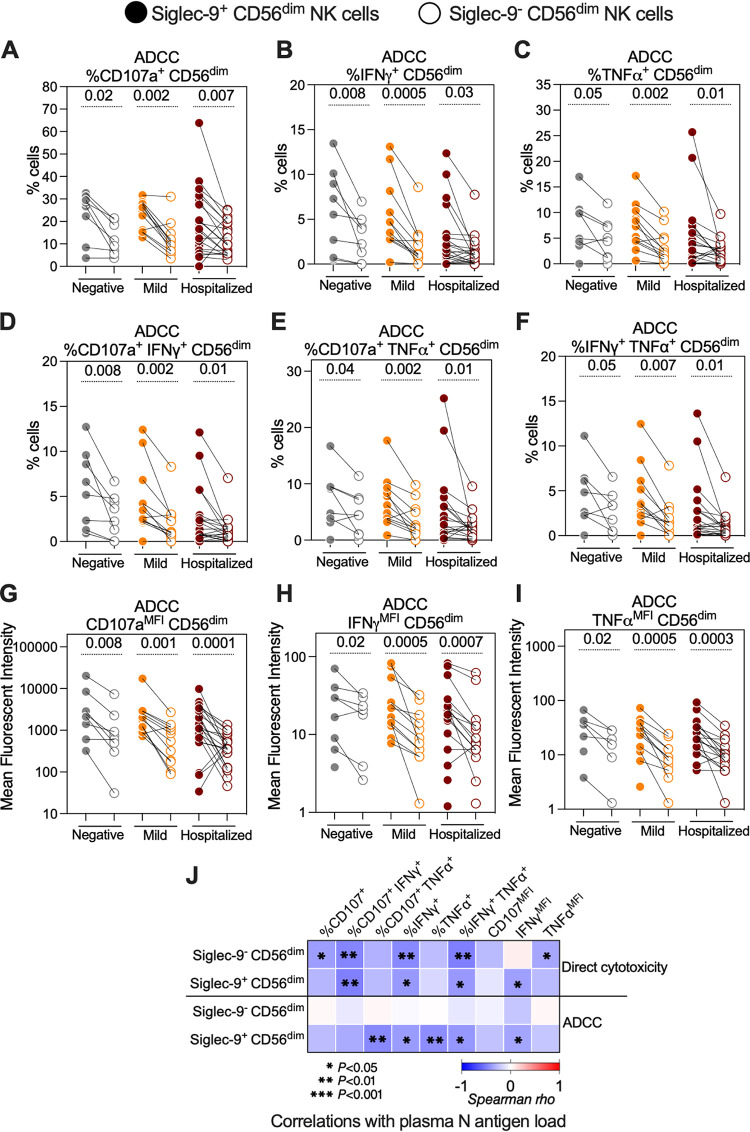
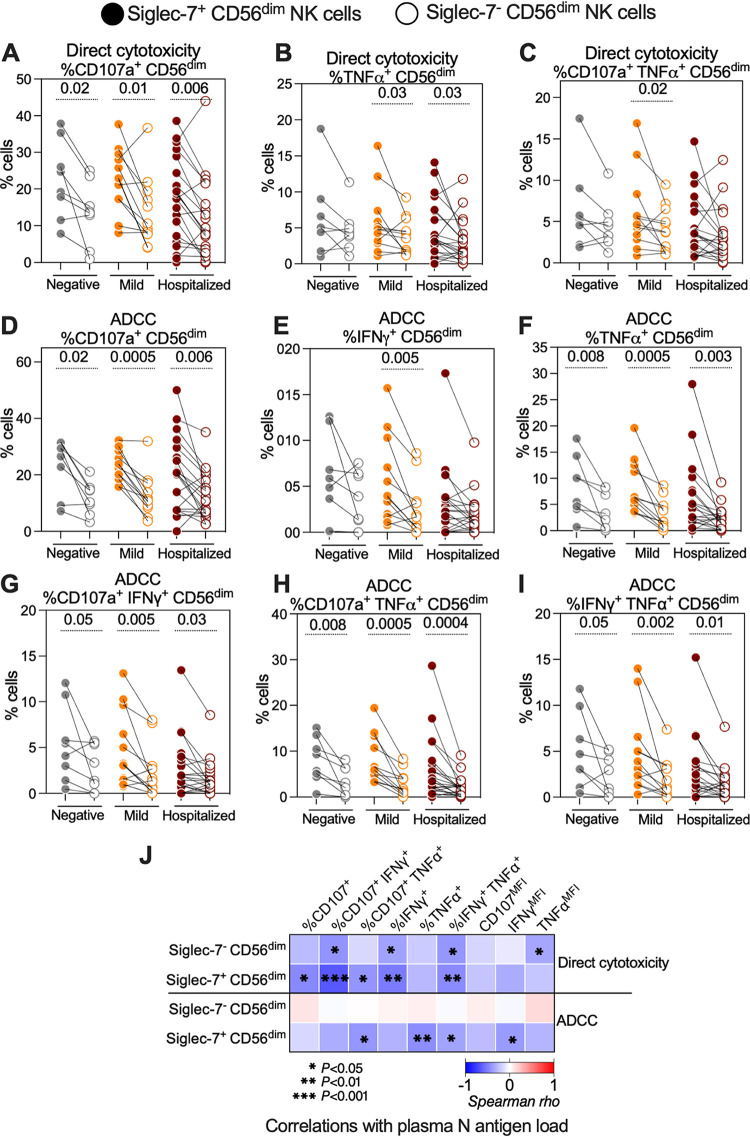
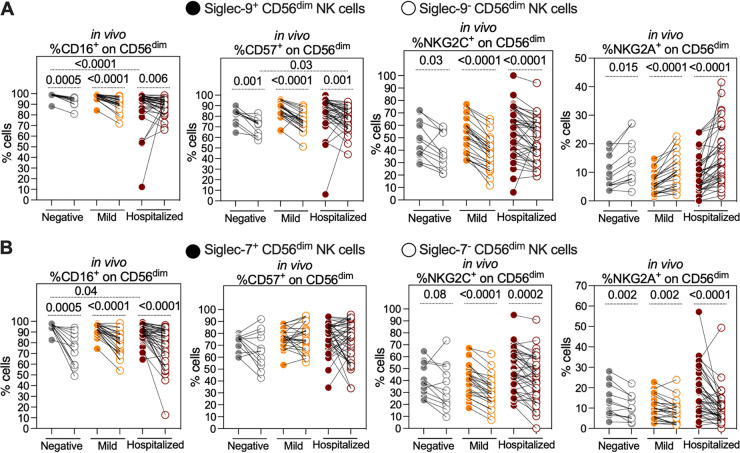
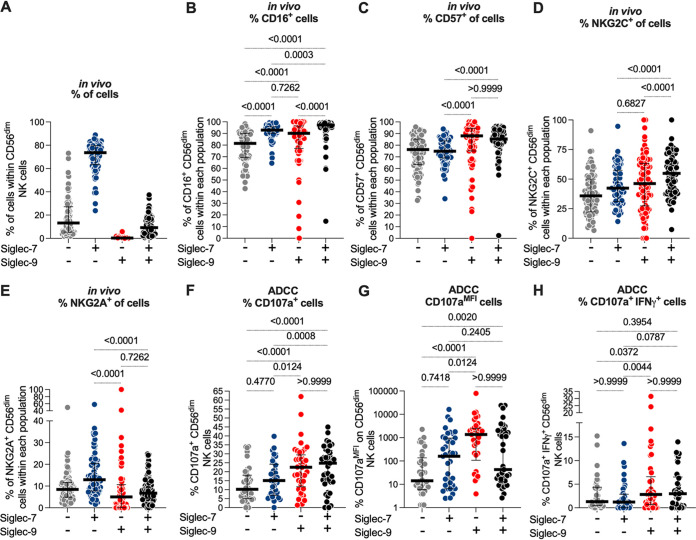
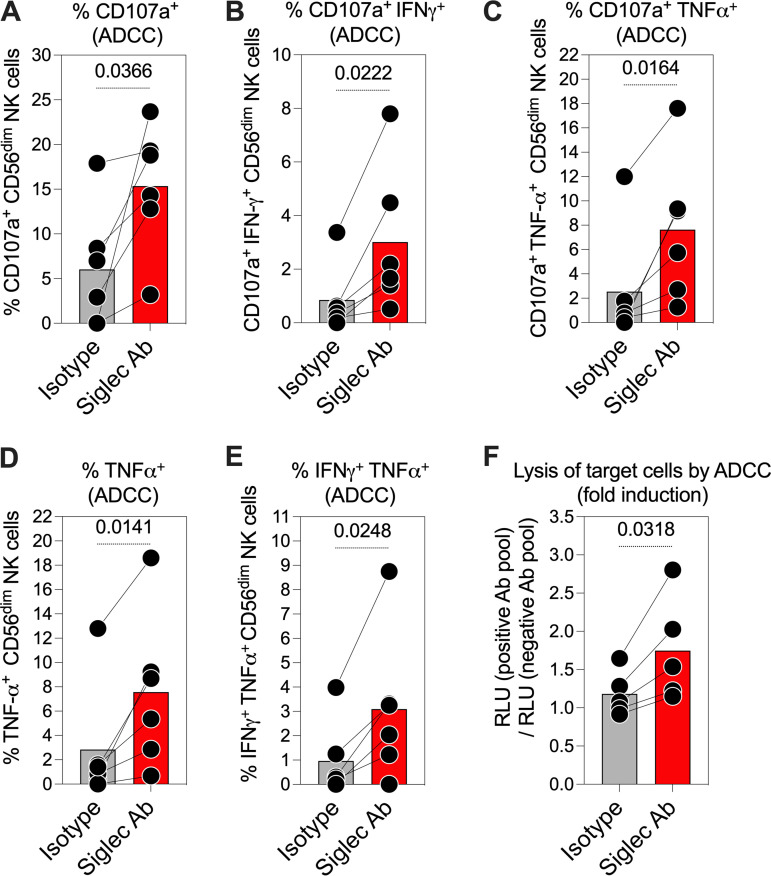
Severe acute respiratory syndrome coronavirus 2 (SARS-CoV-2) infection alters the immunological profiles of natural killer (NK) cells. However, whether NK antiviral functions are impaired during severe coronavirus disease 2019 (COVID-19) and what host factors modulate these functions remain unclear. We found that NK cells from hospitalized COVID-19 patients degranulate less against SARS-CoV-2 antigen-expressing cells (in direct cytolytic and antibody-dependent cell cytotoxicity [ADCC] assays) than NK cells from mild COVID-19 patients or negative controls. The lower NK degranulation was associated with higher plasma levels of SARS-CoV-2 nucleocapsid antigen. Phenotypic and functional analyses showed that NK cells expressing the glyco-immune checkpoint Siglec-9 elicited higher ADCC than Siglec-9 NK cells. Consistently, Siglec-9 NK cells exhibit an activated and mature phenotype with higher expression of CD16 (FcγRIII; mediator of ADCC), CD57 (maturation marker), and NKG2C (activating receptor), along with lower expression of the inhibitory receptor NKG2A, than Siglec-9 CD56 NK cells. These data are consistent with the concept that the NK cell subpopulation expressing Siglec-9 is highly activated and cytotoxic. However, the Siglec-9 molecule itself is an inhibitory receptor that restrains NK cytotoxicity during cancer and other viral infections. Indeed, blocking Siglec-9 significantly enhanced the ADCC-mediated NK degranulation and lysis of SARS-CoV-2-antigen-positive target cells. These data support a model in which the Siglec-9 CD56 NK subpopulation is cytotoxic even while it is restrained by the inhibitory effects of Siglec-9. Alleviating the Siglec-9-mediated restriction on NK cytotoxicity may further improve NK immune surveillance and presents an opportunity to develop novel immunotherapeutic tools against SARS-CoV-2 infected cells. One mechanism that cancer cells use to evade natural killer cell immune surveillance is by expressing high levels of sialoglycans, which bind to Siglec-9, a glyco-immune checkpoint molecule on NK cells. This binding inhibits NK cell cytotoxicity. Several viruses, such as hepatitis B virus (HBV) and HIV, also use a similar mechanism to evade NK surveillance. We found that NK cells from SARS-CoV-2-hospitalized patients are less able to function against cells expressing SARS-CoV-2 Spike protein than NK cells from SARS-CoV-2 mild patients or uninfected controls. We also found that the cytotoxicity of the Siglec-9 NK subpopulation is indeed restrained by the inhibitory nature of the Siglec-9 molecule and that blocking Siglec-9 can enhance the ability of NK cells to target cells expressing SARS-CoV-2 antigens. Our results suggest that a targetable glyco-immune checkpoint mechanism, Siglec-9/sialoglycan interaction, may contribute to the ability of SARS-CoV-2 to evade NK immune surveillance.
严重急性呼吸系统综合症冠状病毒 2(SARS-CoV-2)感染改变了自然杀伤(NK)细胞的免疫谱。然而,在严重的 2019 年冠状病毒病(COVID-19)期间,NK 抗病毒功能是否受损,以及哪些宿主因素调节这些功能仍不清楚。我们发现,与轻度 COVID-19 患者或阴性对照者相比,住院 COVID-19 患者的 NK 细胞对表达 SARS-CoV-2 抗原的细胞的脱颗粒作用(在直接细胞溶解和抗体依赖性细胞细胞毒性[ADCC]测定中)减少。较低的 NK 脱颗粒与较高的 SARS-CoV-2 核衣壳抗原血浆水平相关。表型和功能分析表明,表达糖免疫检查点 Siglec-9 的 NK 细胞比 Siglec-9 NK 细胞引发更高的 ADCC。一致地,Siglec-9 NK 细胞表现出激活和成熟的表型,具有更高的 CD16(FcγRIII;ADCC 的介质)、CD57(成熟标志物)和 NKG2C(激活受体)的表达,同时具有更低的抑制性受体 NKG2A 的表达,比 Siglec-9 CD56 NK 细胞。这些数据与 NK 细胞亚群表达 Siglec-9 的概念一致,即该亚群高度激活和细胞毒性。然而,Siglec-9 分子本身是一种抑制性受体,在癌症和其他病毒感染期间限制 NK 细胞的细胞毒性。事实上,阻断 Siglec-9 显著增强了 SARS-CoV-2 抗原阳性靶细胞的 ADCC 介导的 NK 脱颗粒和裂解。这些数据支持一种模型,即 Siglec-9 CD56 NK 亚群具有细胞毒性,即使它受到 Siglec-9 的抑制作用的限制。减轻 Siglec-9 介导的对 NK 细胞毒性的限制可能进一步提高 NK 免疫监视,并为针对 SARS-CoV-2 感染细胞的新型免疫治疗工具提供机会。癌细胞逃避自然杀伤细胞免疫监视的一种机制是表达高水平的唾液酸糖,这些糖与 NK 细胞上的糖免疫检查点分子 Siglec-9 结合。这种结合抑制 NK 细胞的细胞毒性。几种病毒,如乙型肝炎病毒(HBV)和 HIV,也使用类似的机制来逃避 NK 监视。我们发现,与 SARS-CoV-2 轻度患者或未感染者相比,来自 SARS-CoV-2 住院患者的 NK 细胞对表达 SARS-CoV-2 刺突蛋白的细胞的功能降低。我们还发现,Siglec-9 NK 亚群的细胞毒性确实受到 Siglec-9 分子的抑制性质的限制,阻断 Siglec-9 可以增强 NK 细胞靶向表达 SARS-CoV-2 抗原的细胞的能力。我们的结果表明,可靶向的糖免疫检查点机制 Siglec-9/唾液酸糖相互作用可能有助于 SARS-CoV-2 逃避 NK 免疫监视。