Addictive Substance Project, Tokyo Metropolitan Institute of Medical Science, 2-1-6 Kamikitazawa, Setagaya-Ku, Tokyo, 156-8506, Japan.
Department of Neuropediatrics, Tokyo Metropolitan Neurological Hospital, 2-6-1 Musashidai, Fuchu, Tokyo, 183-0042, Japan.
Hum Genomics. 2023 Feb 2;17(1):4. doi: 10.1186/s40246-023-00450-2.
Tuberous sclerosis complex (TSC) is an autosomal dominant disorder that is associated with neurological symptoms, including autism spectrum disorder. Tuberous sclerosis complex is caused by pathogenic germline mutations of either the TSC1 or TSC2 gene, but somatic mutations were identified in both genes, and the combined effects of TSC1 and TSC2 mutations have been unknown.
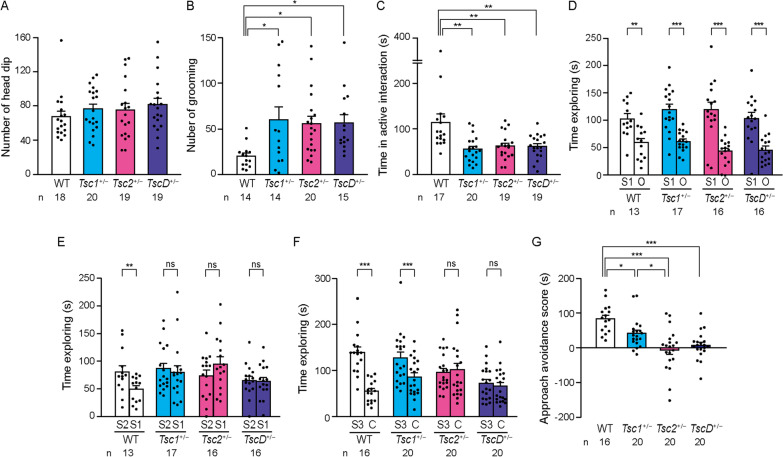
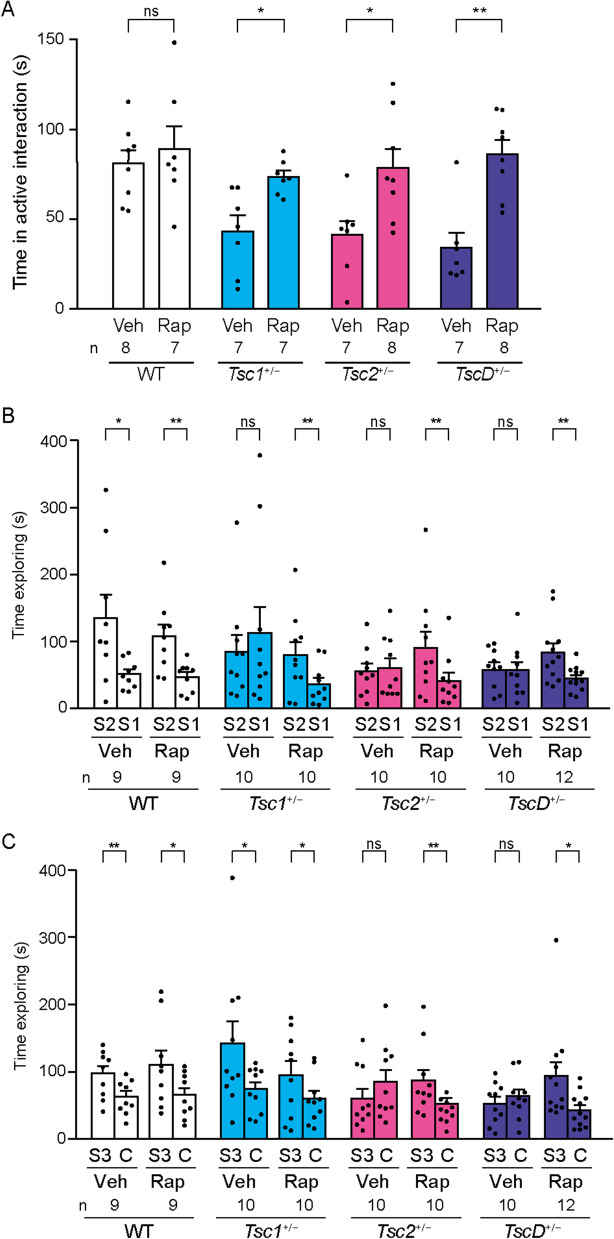
The present study investigated social behaviors by the social interaction test and three-chambered sociability tests, effects of rapamycin treatment, and gene expression profiles with a gene expression microarray in Tsc1 and Tsc2 double heterozygous mutant (TscD) mice.
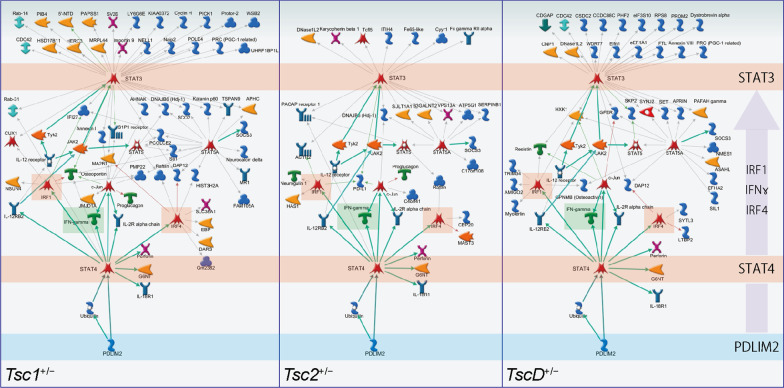
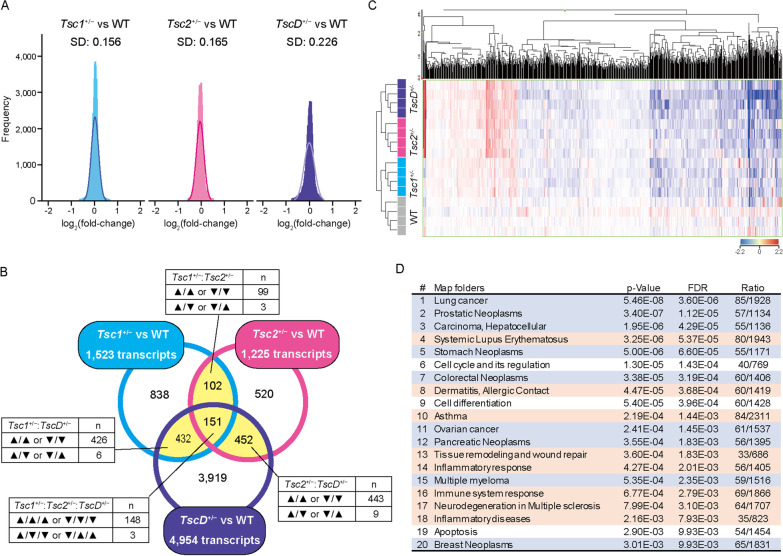
TscD mice exhibited impairments in social behaviors, and the severity of impairments was similar to Tsc2 mice rather than Tsc1 mice. Impairments in social behaviors were rescued by rapamycin treatment in all mutant mice. Gene expression profiles in the brain were greatly altered in TscD mice more than in Tsc1 and Tsc2 mice. The gene expression changes compared with wild type (WT) mice were similar between TscD and Tsc2 mice, and the overlapping genes whose expression was altered in mutant mice compared with WT mice were enriched in the neoplasm- and inflammation-related canonical pathways. The "signal transducer and activator of transcription 3, interferon regulatory factor 1, interferon regulatory factor 4, interleukin-2R α chain, and interferon-γ" signaling pathway, which is initiated from signal transducer and activator of transcription 4 and PDZ and LIM domain protein 2, was associated with impairments in social behaviors in all mutant mice.
It is unclear whether the signaling pathway also plays a critical role in autism spectrum disorders not caused by Tsc1 and Tsc2 mutations.
These findings suggest that TSC1 and TSC2 double mutations cause autistic behaviors similarly to TSC2 mutations, although significant changes in gene expression were attributable to the double mutations. These findings contribute to the knowledge of genotype-phenotype correlations in TSC and suggest that mutations in both the TSC1 and TSC2 genes act in concert to cause neurological symptoms, including autism spectrum disorder.
结节性硬化症(TSC)是一种常染色体显性遗传病,与包括自闭症谱系障碍在内的神经症状有关。TSC 由 TSC1 或 TSC2 基因的致病性种系突变引起,但在这两个基因中都发现了体细胞突变,而 TSC1 和 TSC2 突变的综合影响尚不清楚。
本研究通过社会互动测试和三腔社交测试研究了社会行为,研究了雷帕霉素治疗的效果以及 Tsc1 和 Tsc2 双杂合突变(TscD)小鼠的基因表达谱。
TscD 小鼠表现出社会行为障碍,其严重程度与 Tsc2 小鼠相似,而与 Tsc1 小鼠不同。雷帕霉素治疗可挽救所有突变小鼠的社会行为障碍。与野生型(WT)小鼠相比,TscD 小鼠的大脑基因表达谱发生了很大变化,而 Tsc1 和 Tsc2 小鼠的变化更大。与 WT 小鼠相比,突变小鼠中改变表达的基因在 TscD 和 Tsc2 小鼠之间相似,在突变小鼠中与 WT 小鼠相比改变表达的重叠基因富集在肿瘤和炎症相关的经典途径中。从信号转导和转录激活因子 4 和 PDZ 和 LIM 结构域蛋白 2 开始的“信号转导和转录激活因子 3、干扰素调节因子 1、干扰素调节因子 4、白细胞介素 2Rα 链和干扰素-γ”信号通路与所有突变小鼠的社会行为障碍有关。
尚不清楚该信号通路是否也在由 Tsc1 和 Tsc2 突变引起的自闭症谱系障碍中发挥关键作用。
这些发现表明,TSC1 和 TSC2 双突变导致自闭症行为类似于 TSC2 突变,尽管基因表达的显著变化归因于双突变。这些发现有助于了解 TSC 中的基因型-表型相关性,并表明 TSC1 和 TSC2 基因的突变协同作用导致包括自闭症谱系障碍在内的神经症状。