Thomas Douglas, Weiss Brian
National Institute of Standards and Technology, Gaithersburg, MD, 20899, USA.
Int J Progn Health Manag. 2021;12(1). doi: 10.36001/ijphm.2021.v12i1.2883.
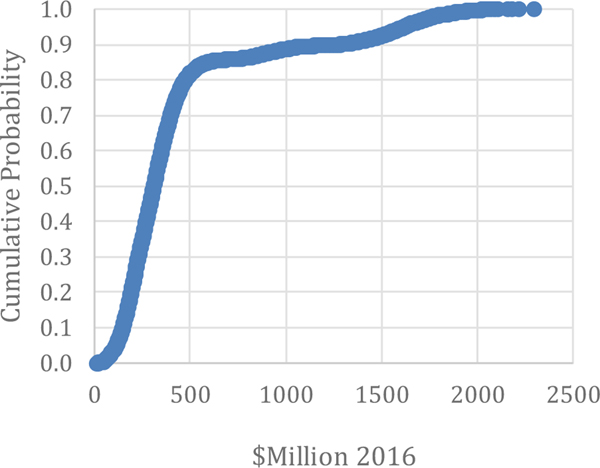
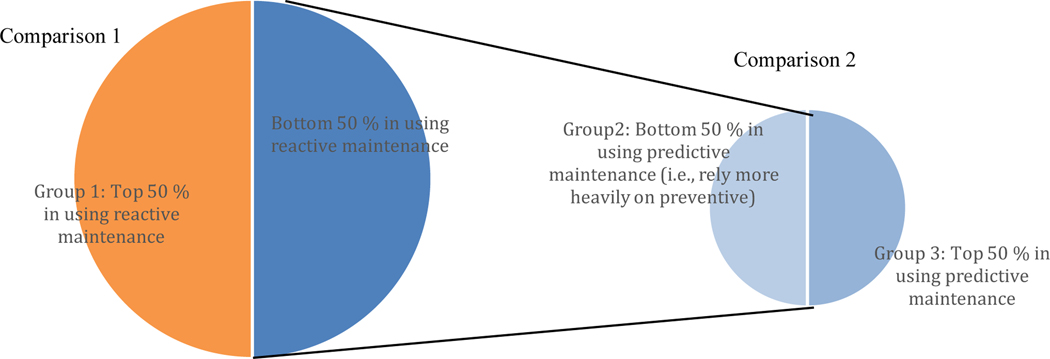
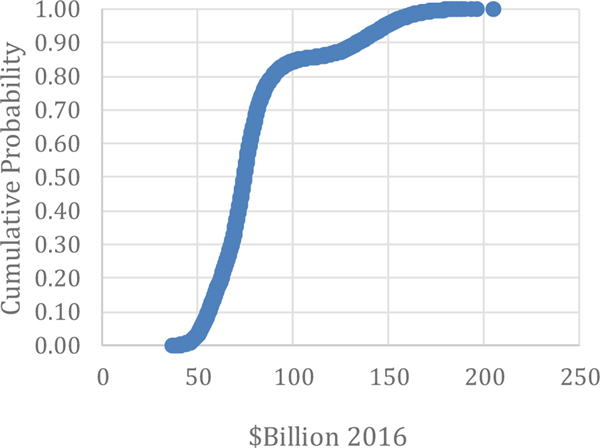
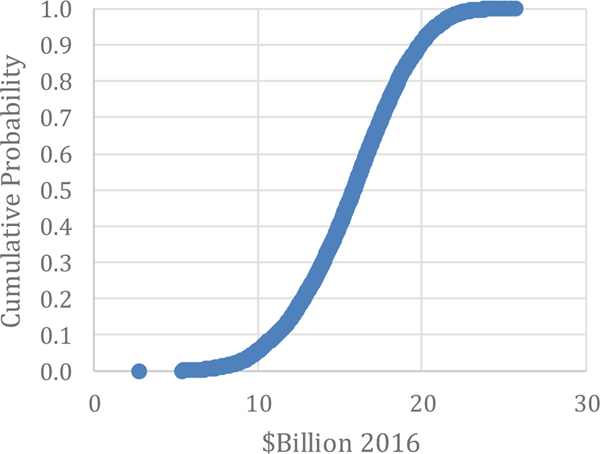
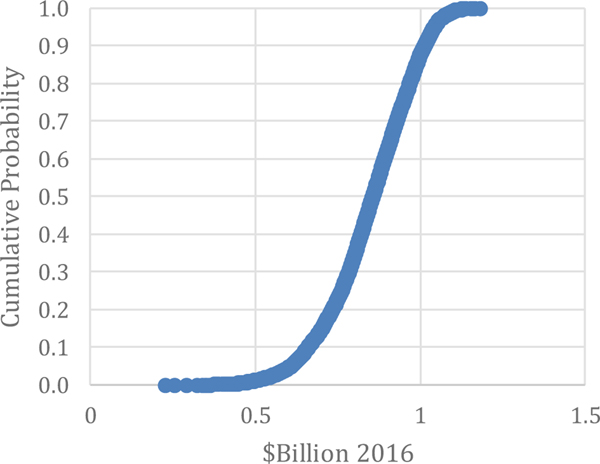
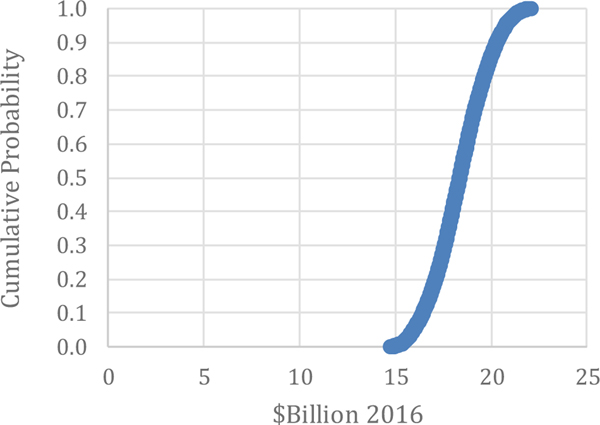
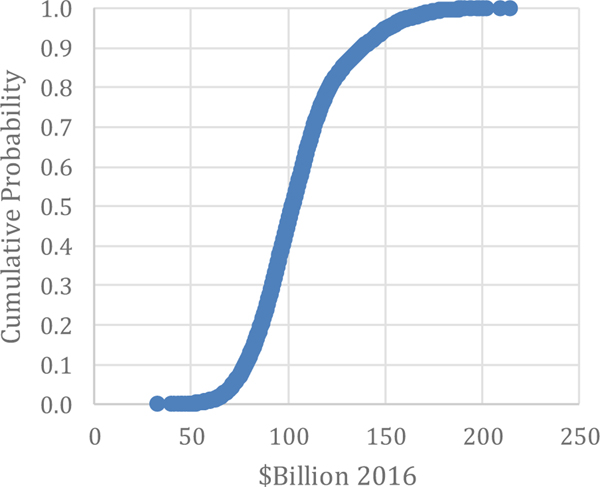
The costs/benefits associated with investing in advanced maintenance techniques is not well understood. Using data collected from manufacturers, we estimate the national losses due to inadequate maintenance and make comparisons between those that rely on reactive maintenance, preventive maintenance, and predictive maintenance. The total annual costs/losses associated with maintenance is estimated to be on average $222.0 billion, as estimated using Monte Carlo analysis. Respondents were categorized into three groups and compared. The first group is the top 50 % of respondents that rely on reactive maintenance, measured in expenditures. The remaining respondents were split in half based on their reliance on predictive maintenance. The top 50 % of respondents in using reactive maintenance, measured in expenditures, compared to the other respondents suggests that there are substantial benefits of moving away from reactive maintenance toward preventive and/or predictive maintenance. The bottom 50 %, which relies more heavily on predictive and preventive maintenance, had 52.7 % less unplanned downtime and 78.5 % less defects. The comparison between the smaller two groups, which rely more heavily on preventive and predictive maintenance, shows that there is 18.5 % less unplanned downtime and 87.3 % less defects for those that rely more on predictive than preventive.
投资先进维护技术所涉及的成本/效益尚未得到充分理解。利用从制造商处收集的数据,我们估算了因维护不足造成的国家损失,并对依赖被动维护、预防性维护和预测性维护的情况进行了比较。使用蒙特卡洛分析估算,与维护相关的年度总成本/损失平均约为2220亿美元。受访者被分为三组并进行比较。第一组是在支出方面依赖被动维护的前50%的受访者。其余受访者根据对预测性维护的依赖程度分为两半。在支出方面,使用被动维护的前50%的受访者与其他受访者相比,这表明从被动维护转向预防性和/或预测性维护有很大益处。更依赖预测性和预防性维护的后50%的受访者,其计划外停机时间减少了52.7%,缺陷减少了78.5%。对更依赖预防性和预测性维护的较小两组受访者的比较表明,更依赖预测性维护而非预防性维护的受访者,其计划外停机时间减少了18.5%,缺陷减少了87.3%。