Faculty of Natural Sciences and Mathematics, University of Maribor, Maribor, Slovenia; Faculty of Medicine, University of Maribor, Maribor, Slovenia.
Faculty of Medicine, University of Maribor, Maribor, Slovenia.
Biophys J. 2023 Mar 7;122(5):784-801. doi: 10.1016/j.bpj.2023.01.039. Epub 2023 Feb 2.
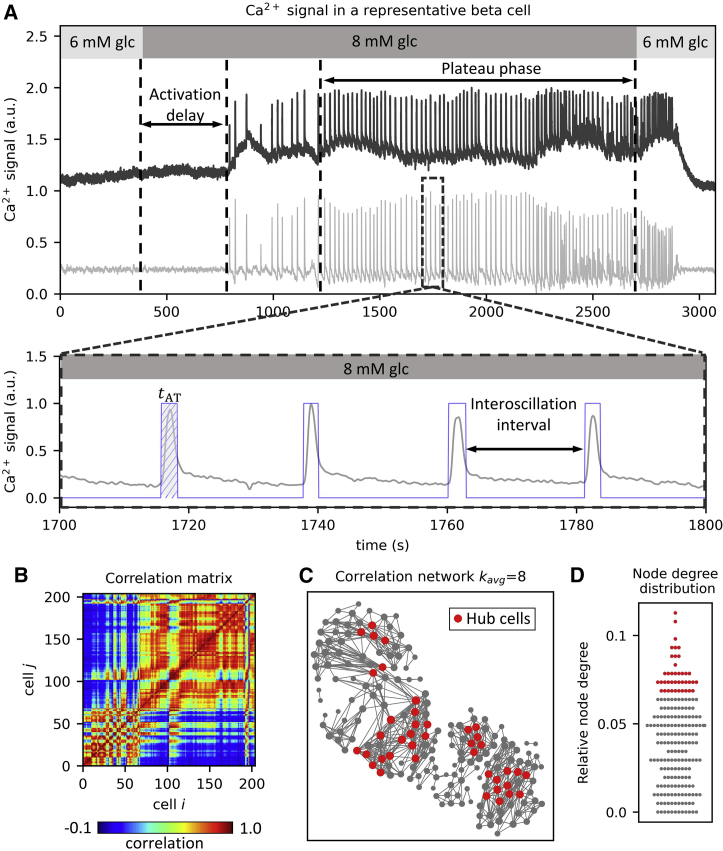
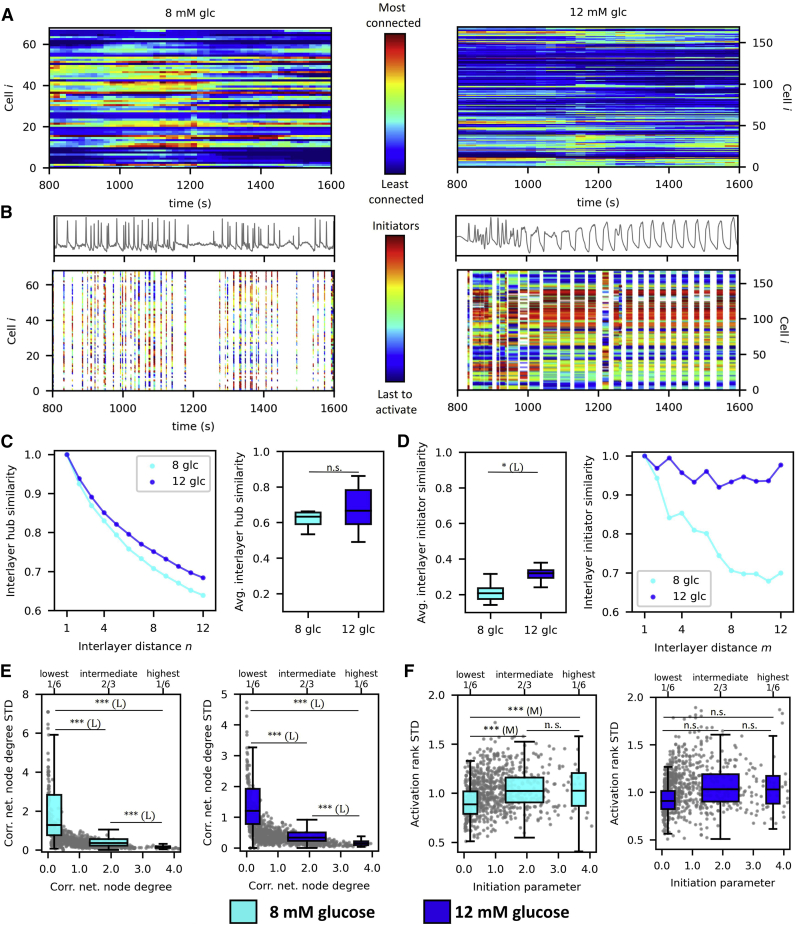
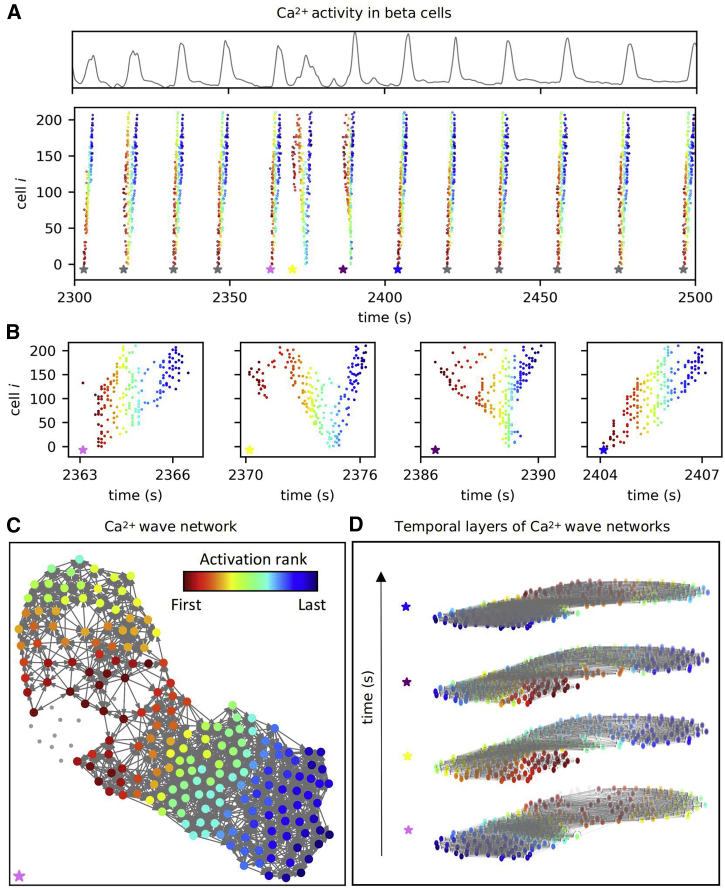
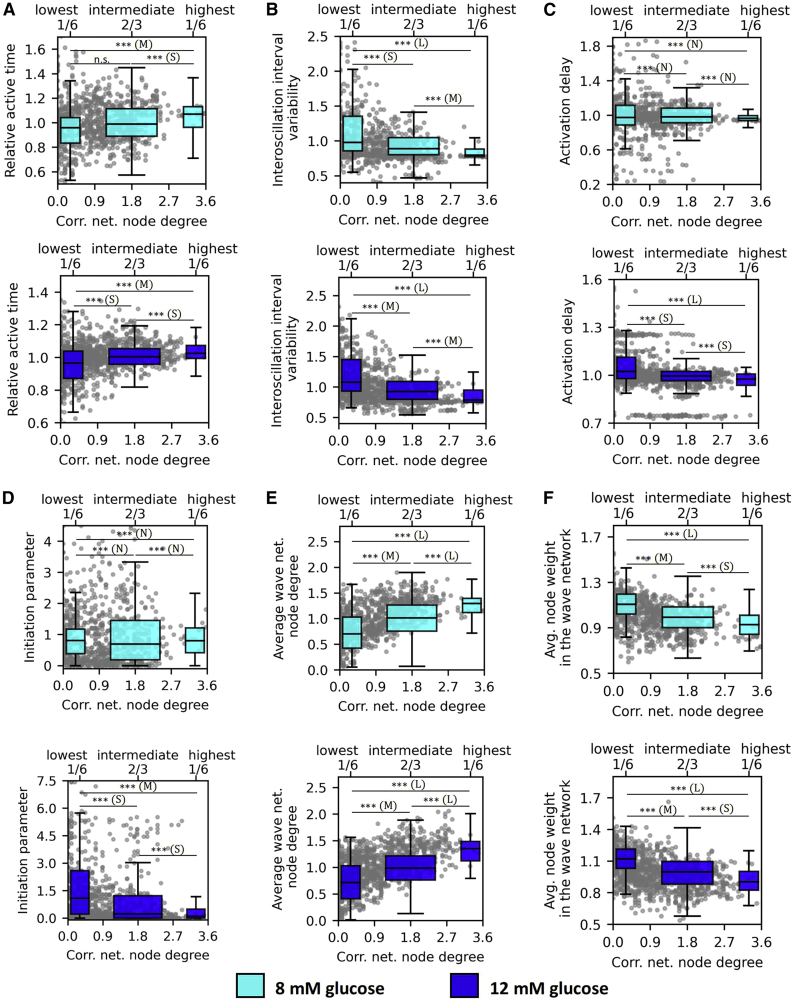
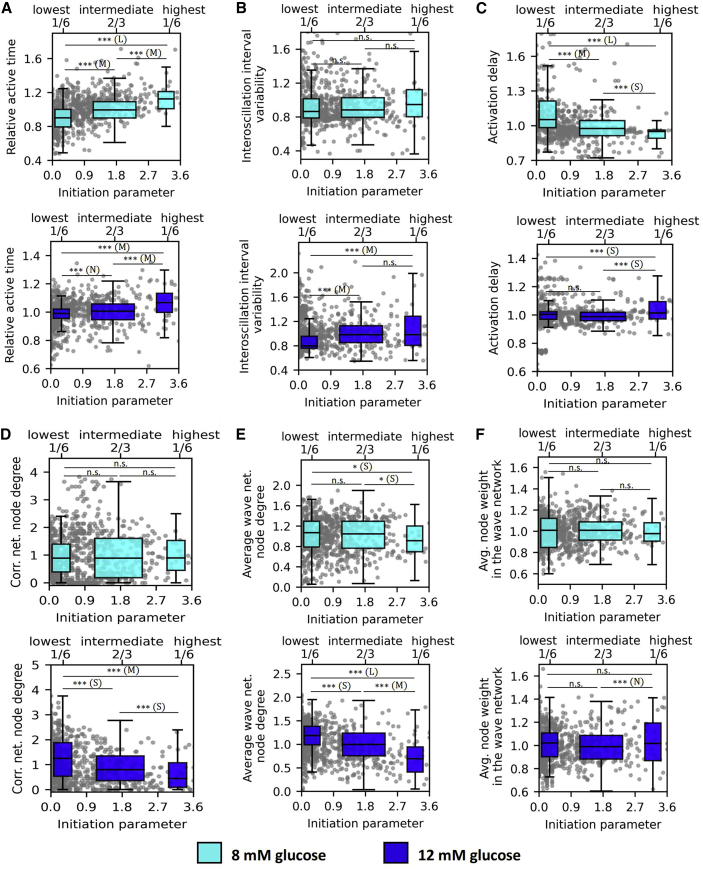
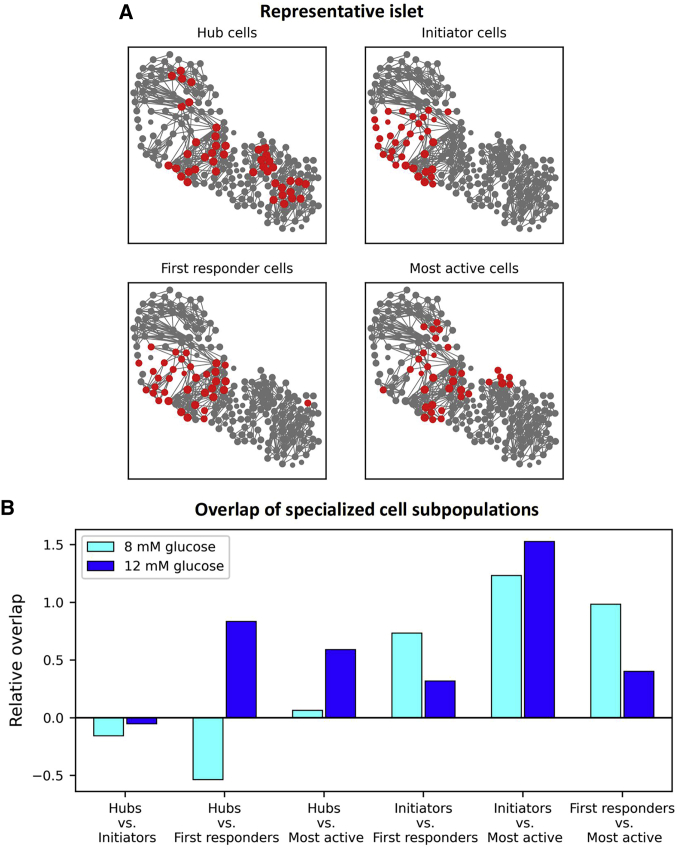
Islets of Langerhans operate as multicellular networks in which several hundred β cells work in synchrony to produce secretory pulses of insulin, a hormone crucial for controlling metabolic homeostasis. Their collective rhythmic activity is facilitated by gap junctional coupling and affected by their functional heterogeneity, but the details of this robust and coordinated behavior are still not fully understood. Recent advances in multicellular imaging and optogenetic and photopharmacological strategies, as well as in network science, have led to the discovery of specialized β cell subpopulations that were suggested to critically determine the collective dynamics in the islets. In particular hubs, i.e., β cells with many functional connections, are believed to significantly enhance communication capacities of the intercellular network and facilitate an efficient spreading of intercellular Ca waves, whereas wave-initiator cells trigger intercellular signals in their cohorts. Here, we determined Ca signaling characteristics of these two β cell subpopulations and the relationship between them by means of functional multicellular Ca imaging in mouse pancreatic tissue slices in combination with methods of complex network theory. We constructed network layers based on individual Ca waves to identify wave initiators, and functional correlation-based networks to detect hubs. We found that both cell types exhibit a higher-than-average active time under both physiological and supraphysiological glucose concentrations, but also that they differ significantly in many other functional characteristics. Specifically, Ca oscillations in hubs are more regular, and their role appears to be much more stable over time than for initiator cells. Moreover, in contrast to wave initiators, hubs transmit intercellular signals faster than other cells, which implies a stronger intercellular coupling. Our research indicates that hubs and wave-initiator cell subpopulations are both natural features of healthy pancreatic islets, but their functional roles in principle do not overlap and should thus not be considered equal.
胰岛以多细胞网络的形式运作,其中几百个β细胞协同工作,产生胰岛素分泌脉冲,这是控制代谢稳态的关键激素。它们的集体节律活动受到缝隙连接耦合的促进,并受到其功能异质性的影响,但这种稳健协调的行为细节仍未完全理解。最近在多细胞成像以及光遗传学和光药理学策略方面的进展,以及网络科学的进展,导致发现了专门的β细胞亚群,这些亚群被认为对胰岛的集体动力学起着至关重要的作用。特别是,具有许多功能连接的β细胞(即枢纽细胞)被认为显著增强了细胞间网络的通讯能力,并促进了细胞间 Ca 波的有效传播,而波发起细胞则在其群体中引发细胞间信号。在这里,我们通过在小鼠胰腺组织切片中进行功能性多细胞 Ca 成像,并结合复杂网络理论的方法,确定了这两种β细胞亚群的 Ca 信号特征及其之间的关系。我们基于单个 Ca 波构建了网络层以识别波发起细胞,并基于功能相关网络检测枢纽细胞。我们发现,这两种细胞类型在生理和超生理葡萄糖浓度下,其活跃时间都高于平均值,但在许多其他功能特征上也存在显著差异。具体而言,枢纽细胞的 Ca 振荡更为规则,并且其作用在时间上似乎比发起细胞更为稳定。此外,与波发起细胞不同,枢纽细胞比其他细胞更快地传递细胞间信号,这意味着它们的细胞间耦合更强。我们的研究表明,枢纽细胞和波发起细胞亚群都是健康胰岛的自然特征,但它们的功能作用原则上并不重叠,因此不应被视为等同。