Institute of Radiochemistry and Radioecology, University of Pannonia, Veszprém, 8200, Hungary.
Engineering Department, G.C, Shahid Beheshti University, P.O. Box: 1983963113, Tehran, Iran.
Sci Rep. 2023 Feb 4;13(1):2064. doi: 10.1038/s41598-022-23642-7.
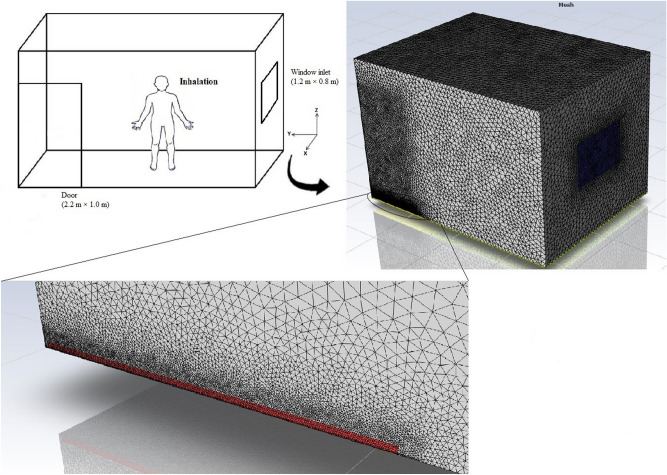
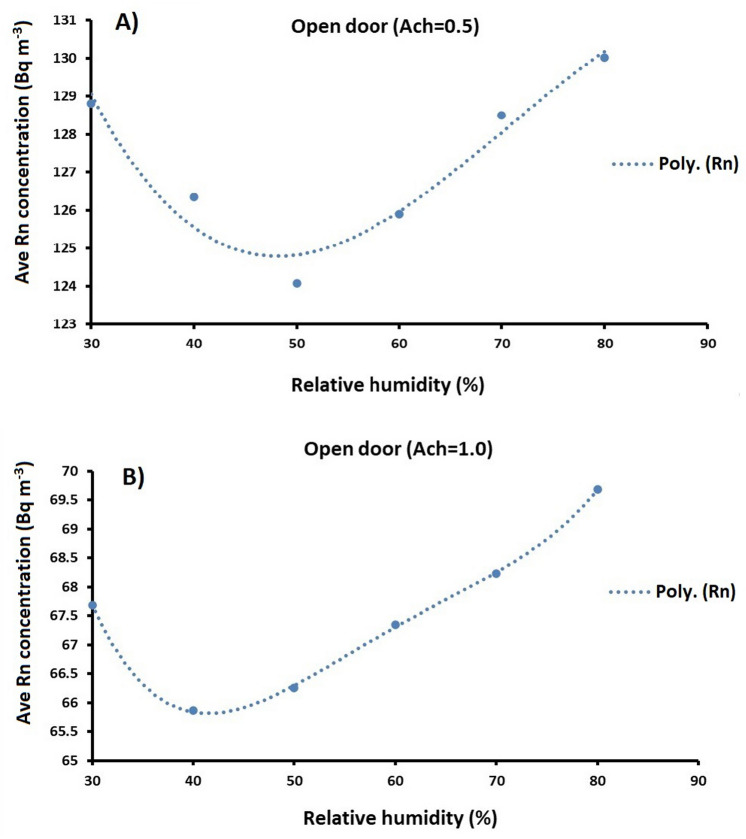
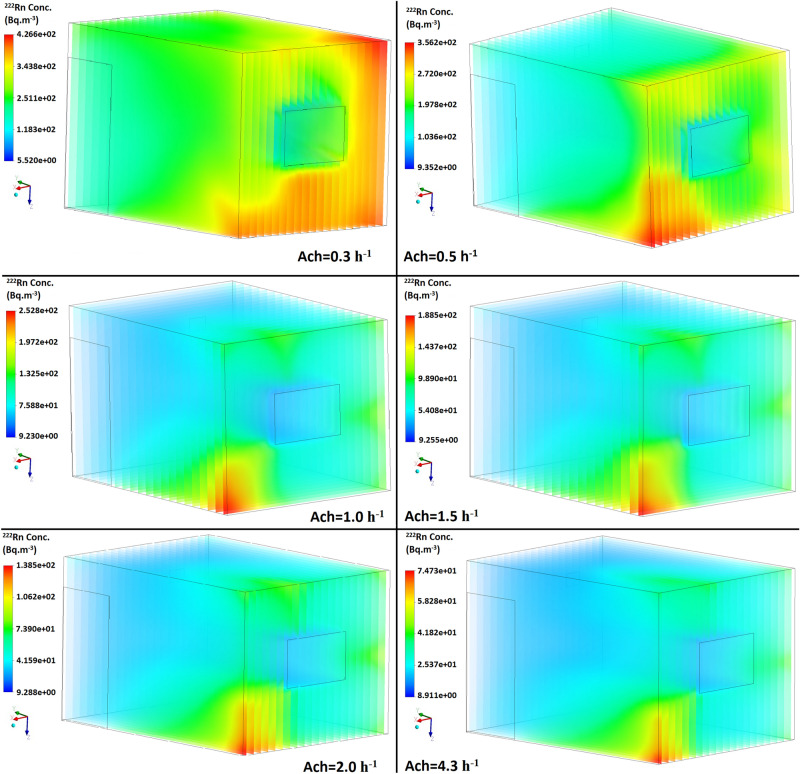
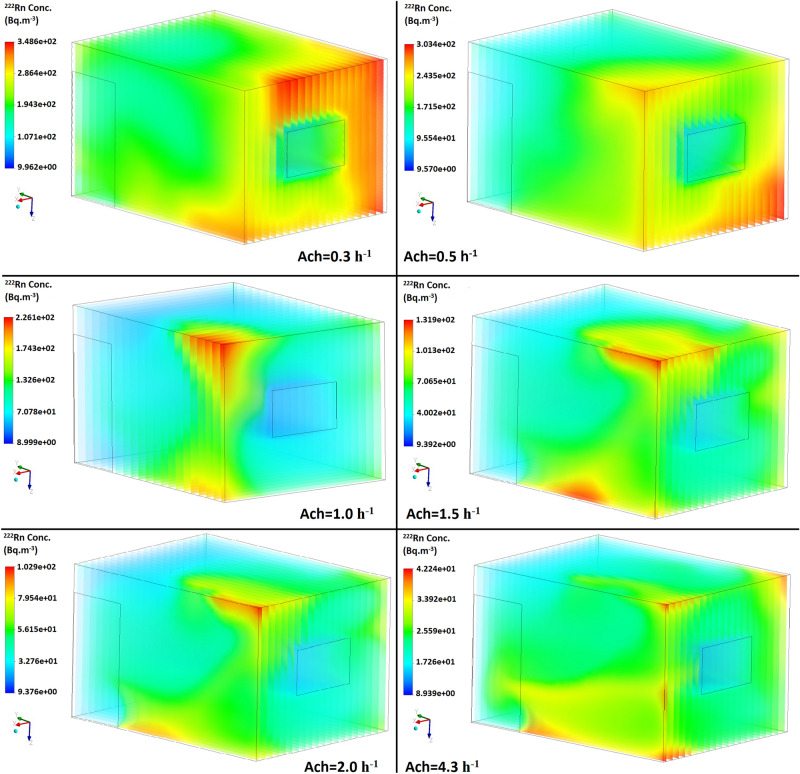
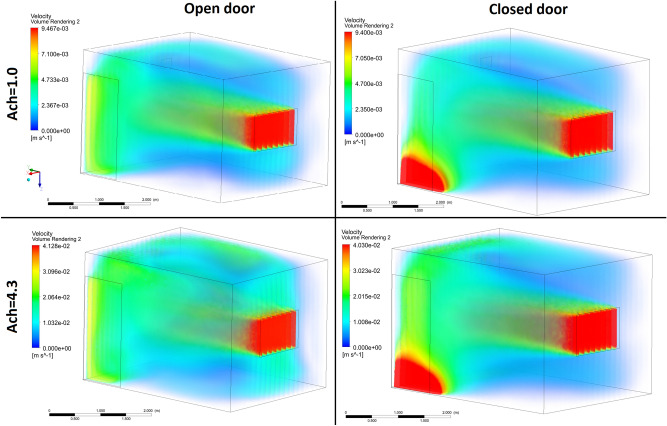
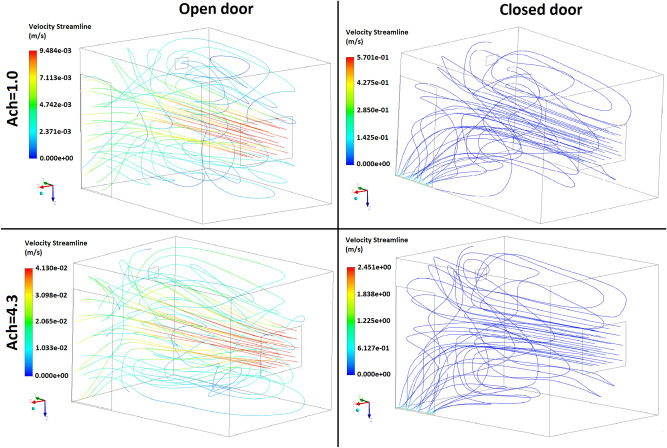
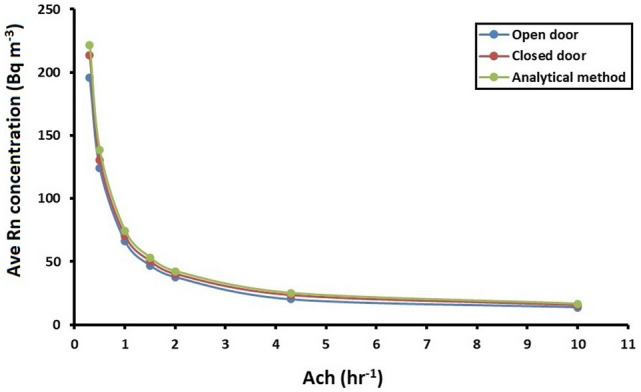
Based on the European Union Basic Safety Standards to protect people against exposure to ionizing radiation, establishing and addressing the reference levels for indoor radon concentrations is necessary. Therefore, the indoor radon concentration should be monitored and control in dwelling and workplaces. However, proper ventilation and sustainability are the major factors that influence how healthy the environment in a building is for its occupants. In this paper, the indoor radon distribution in a typical naturally ventilated room under two scenarios (when the door is closed and open) using the computational fluid dynamics (CFD) technique was studied. The CFD code ANSYS Fluent 2020 R1 based on the finite volume method was employed before the simulation results were compared with analytical calculations as well as passive and active measurements. The average radon concentration from the CFD simulation was found to be between 70.21 and 66.25 Bq m under closed and open-door conditions, respectively, at the desired ventilation rate of 1 ACH (Air Changes per Hour). Moreover, the highest concentrations of radon were measured close to the floor and the lowest values were recorded near to the inlet, resulting in the airflow velocity profile. The simulation results were in good agreement with the maxima of 19% and 7% compared to analytical calculations at different indoor air velocities in the open- and closed-door scenarios, respectively. The measured radon concentrations obtained by the active measurements also fitted well with the CFD results, for example, with a relative standard deviation of around 7% and 2% when measured by AlphaGUARD and RAD7 monitors at a height of 1.0 m above the ground in the open-door scenario. From the simulation results, the effective dose received by an individual from the indoor air of the workplace was also calculated.
基于保护人们免受电离辐射照射的欧盟基本安全标准,有必要建立并解决室内氡浓度的参考水平。因此,应监测和控制住宅和工作场所的室内氡浓度。然而,适当的通风和可持续性是影响建筑物内环境对其居住者健康程度的主要因素。在本文中,使用计算流体动力学 (CFD) 技术研究了两种情况下(门关闭和打开时)典型自然通风房间内的室内氡分布。在将模拟结果与分析计算以及被动和主动测量进行比较之前,使用了基于有限体积法的 CFD 代码 ANSYS Fluent 2020 R1。从 CFD 模拟得出的平均氡浓度在关闭和开门条件下分别为 70.21 和 66.25 Bq m,在所需的通风率为 1 ACH(每小时空气交换次数)下。此外,氡的最高浓度靠近地面测量,最低浓度记录在入口附近,这是由于气流速度分布。与不同的室内空气速度相比,模拟结果与分析计算结果吻合良好,在开门和关门情况下分别达到 19%和 7%的最大值。通过主动测量获得的氡浓度也与 CFD 结果吻合良好,例如在开门情况下,在距地面 1.0 m 处的高度使用 AlphaGUARD 和 RAD7 监测器测量时,相对标准偏差约为 7%和 2%。从模拟结果中,还计算了个体从工作场所室内空气中接受的有效剂量。