
利用CRISPR激活文库筛选淋巴瘤放疗抗性基因
Screening of Lymphoma Radiotherapy-Resistant Genes with CRISPR Activation Library.
作者信息
Luo Bi-Hua, Huang Jian-Qing, Huang Chun-Yu, Tian Pan, Chen Ai-Zhen, Wu Wei-Hao, Ma Xiao-Mei, Yuan Yue-Xing, Yu Lian
机构信息
Department of Hematology, Longyan First Hospital Affiliated Fujian Medical University, Fujian, People's Republic of China.
出版信息
Pharmgenomics Pers Med. 2023 Jan 30;16:67-80. doi: 10.2147/PGPM.S386085. eCollection 2023.
OBJECTIVE
The objective of this study was to screen lymphoma radiotherapy-resistant genes using CRISPR activation (CRISPRa).
METHODS
The Human CRISPRa library virus was packaged and then transfected into lymphoma cells to construct an activation library cell line, which was irradiated at the minimum lethal radiation dose to screen radiotherapy-resistant cells. Radiotherapy-resistant cell single-guide RNA (sgRNA) was first amplified by quantitative polymerase chain reaction (qPCR) in the coding region and then subject to next-generation sequencing (NGS) and bioinformatics analysis to screen radiotherapy-resistant genes. Certain radiotherapy-resistant genes were then selected to construct activated cell lines transfected with a single gene so as to further verify the relationship between gene expression and radiotherapy resistance.
RESULTS
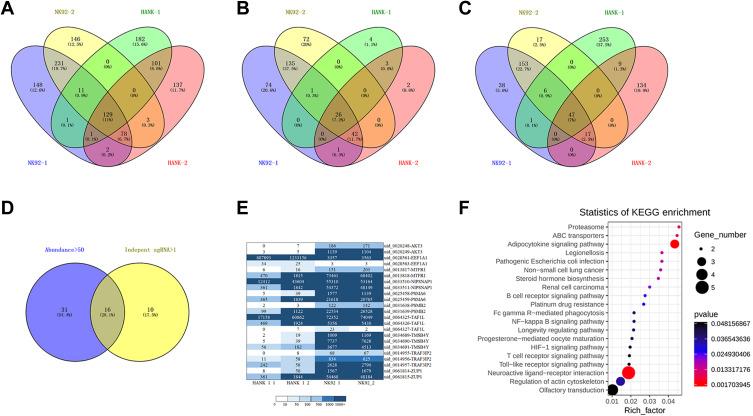
A total of 16 radiotherapy-resistant genes, namely, , and , were screened based on the NGS results and bioinformatics analysis of the radiotherapy-resistant cells. Activated cell lines transfected with a single gene were constructed using 10 radiotherapy-resistant genes. The qPCR findings showed that, when compared with the control group, the experimental group had significantly up-regulated mRNA expression of , and (p < 0.05). No significant difference in the mRNA expression of or (p > 0.05) was found between the two groups (p > 0.05).
CONCLUSION
The 16 genes screened are potential lymphoma radiotherapy-resistant genes. It was initially determined that the high expression of 8 genes was associated with lymphoma radiotherapy resistance, and these genes could serve as the potential biomarkers for predicting lymphoma radiotherapy resistance or as new targets for therapy.
目的
本研究旨在利用CRISPR激活技术(CRISPRa)筛选淋巴瘤放疗抗性基因。
方法
包装人CRISPRa文库病毒,然后转染至淋巴瘤细胞中构建激活文库细胞系,用最小致死辐射剂量进行照射以筛选放疗抗性细胞。首先通过定量聚合酶链反应(qPCR)在编码区扩增放疗抗性细胞的单导向RNA(sgRNA),然后进行二代测序(NGS)和生物信息学分析以筛选放疗抗性基因。接着选择某些放疗抗性基因构建单基因转染的激活细胞系,以进一步验证基因表达与放疗抗性之间的关系。
结果
基于放疗抗性细胞的NGS结果和生物信息学分析,共筛选出16个放疗抗性基因,即……。使用10个放疗抗性基因构建了单基因转染的激活细胞系。qPCR结果显示,与对照组相比,实验组中……的mRNA表达显著上调(p<0.05)。两组之间……的mRNA表达无显著差异(p>0.05)。
结论
筛选出的16个基因是潜在的淋巴瘤放疗抗性基因。初步确定8个基因的高表达与淋巴瘤放疗抗性相关,这些基因可作为预测淋巴瘤放疗抗性的潜在生物标志物或作为新的治疗靶点。



 Zotero 插件