Fu Zhou, Zhang Su, Gu Xiaoying, Guan Tao, Wang Chengmeng, Zhang Jiaqi, Wang Yun, Guo Hua, Wang Lu, Zhang Ti
Key Laboratory of Cancer Prevention and Therapy, Department of Hepatobiliary Surgery, National Clinical Research Center for Cancer, Tianjin Medical University Cancer Institute and Hospital, Tianjin, China.
Key Laboratory of Cancer Prevention and Therapy, Department of Gynecologic Oncology, National Clinical Research Center for Cancer, Tianjin Medical University Cancer Institute and Hospital, Tianjin, China.
Front Med (Lausanne). 2023 Jan 19;10:1095344. doi: 10.3389/fmed.2023.1095344. eCollection 2023.
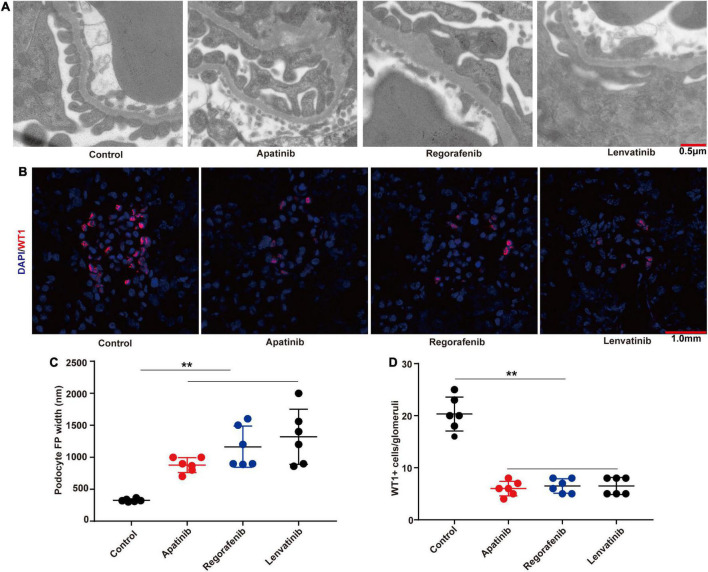
Tyrosine kinase inhibitors (TKIs), as an important tumor therapy, can induce severe proteinuria that significantly affects anti-tumor therapy. Existing therapies against proteinuria induced by other etiologies are currently ineffective for TKI-induced proteinuria. It has been shown that various types of proteinuria are related to podocyte damage caused by changes in the RelA signaling pathway. Our experiments confirmed that TKIs activate the renal RelA signaling pathway, and induce death of podocytes and destruction of the glomerular filtration barrier. Here we found that Liuwei Dihuang Pill (LDP) attenuated the inflammatory injury of podocytes through inhibiting activation of RelA, and subsequently relieved TKI-related proteinuria and prevented the progression of TMA and FSGS. Our finding indicated that LDP may be effective for the treatment of TKI-induced proteinuria, which is clinically significant.
酪氨酸激酶抑制剂(TKIs)作为一种重要的肿瘤治疗方法,可诱发严重蛋白尿,这显著影响抗肿瘤治疗。现有的针对其他病因所致蛋白尿的治疗方法目前对TKI诱导的蛋白尿无效。研究表明,各种类型的蛋白尿都与RelA信号通路变化导致的足细胞损伤有关。我们的实验证实,TKIs激活肾脏RelA信号通路,诱导足细胞死亡和肾小球滤过屏障破坏。在此我们发现,六味地黄丸(LDP)通过抑制RelA激活减轻足细胞的炎性损伤,随后缓解TKI相关蛋白尿,并预防血栓性微血管病(TMA)和局灶节段性肾小球硬化(FSGS)的进展。我们的研究结果表明,LDP可能对治疗TKI诱导的蛋白尿有效,具有临床意义。